Chef Michael Beltran on how Miami restaurants can overcome high costs and "intruders"

Add Axios as your preferred source to
see more of our stories on Google.
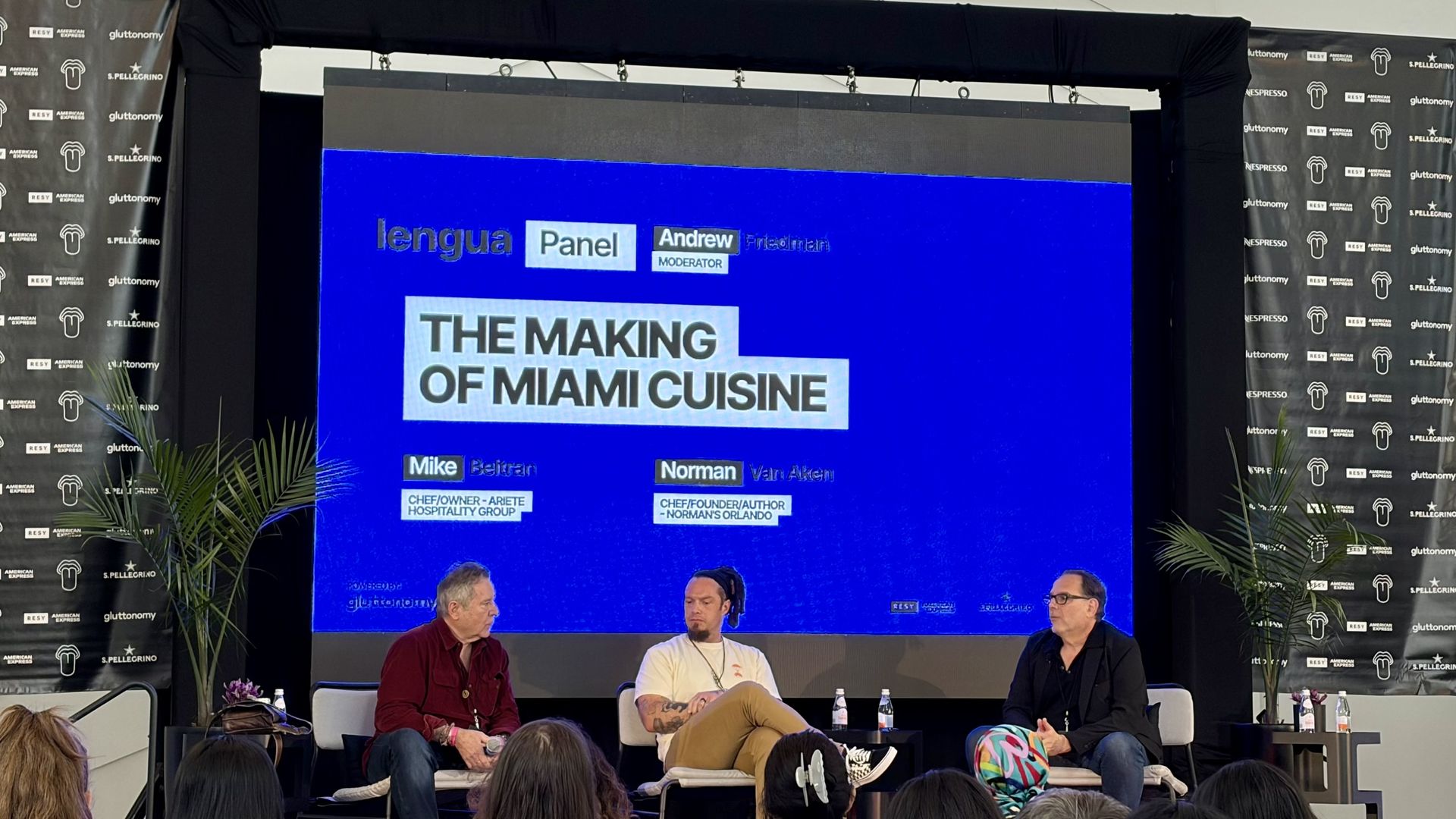
Chef Beltran (center) with Norman Van Aken (left) and Andrew Friedman (right) discuss Miami's cuisine at Lengua. Photo: Sommer Brugal/Axios
Acclaimed chef Michael Beltran isn't buying the narrative that all Miami restaurants are expensive.
- Sure, some spots charge $25+ for a cocktail, but he'd argue those restaurants don't define the city's culinary identity.
Why it matters: Born in Hialeah and raised in Little Havana, Beltran has witnessed just about every iteration of the city's culinary scene and, through Ariete Hospitality Group, he's helped shape its next generation.
- He opened Ariete, the Coconut Grove Michelin-starred restaurant, in 2016.
Axios spoke with Beltran at Lengua, Miami's leading food business conference, curated by Gluttonomy, to better understand how he views Miami's dining climate.
Questions and answers edited for clarity.
Q: How would you define "real Miami food?"
A: There's no exact style that represents Miami; it's more ingredient-driven.
We have access to incredible ingredients the rest of the country doesn't. You can really tell a regular restaurant from one that's born and bred in Miami through the ingredients they use.
What are a few examples?
What Teresa [Gallina, of Recoveco] and Luciana [Giangrande, of Boia De] do is a huge representation of "the real Miami."
Like the papaya salad at Recoveco. It uses a very Miami product in a way that's not incredibly common. It's such a common [fruit], but the way they executed it was so interesting.
With mom-and-pops, it's seen through tradition and the depth of flavors, like Clive's Cafe [a longstanding Jamaican cafe in Little River].
Numerous restaurants closed last summer, many citing rising prices of rent, food and insurance. Where does the city go from here?
Outsiders have raised the market for locals, and we need to stop saying yes. It doesn't make sense — for restaurants or for landlords, who will have to turn over a new tenant every year and a half. And we're going to see another two summers of complete collapse.
But locals wanting to open a restaurant need to say, "No more." Say no to the high rent. Find another space with a better landlord who will give you a better deal.
There seems to be growing divergence between restaurants from locals for locals and those catering to tourists. What do you think about that?
At the pandemic's onset, support was at a peak. Folks were saying, "We're going to do whatever we can to support Miami restaurants." But then folks went back to the Sexy Fish[es] of the city.
The narrative [that Miami restaurants are expensive] hasn't helped either. Are they expensive? Or are you going to the place that cost $12 million to build, so the cocktails are $25+? Ariete serves $12-$15 cocktails. During happy hour, it's $8-$9. Is it our fault or yours?
What excites you about the next couple of years?
Seeing the great food in Miami separate itself from the intruders and hearing folks say, "Oh, this is a real Miami spot." You're going to hear more of that. The menu and the people in the building will show that, and they'll separate themselves from the pack.
The hospitality group being fully entrenched in who we are and what we're about is incredibly exciting. [Ariete Group recently acquired Hoy Como Ayer.]
Acquiring [the Calle Ocho hotspot] was an opportunity to preserve a piece of Miami. Can we continue to have other people who want to preserve the culture and things that make this city special? I want to see that.
The bottom line: For Beltran, Miami has always been a culinary destination. People just weren't going to the right places.