What's next for the animals at Miami Seaquarium after marine park closes

Add Axios as your preferred source to
see more of our stories on Google.
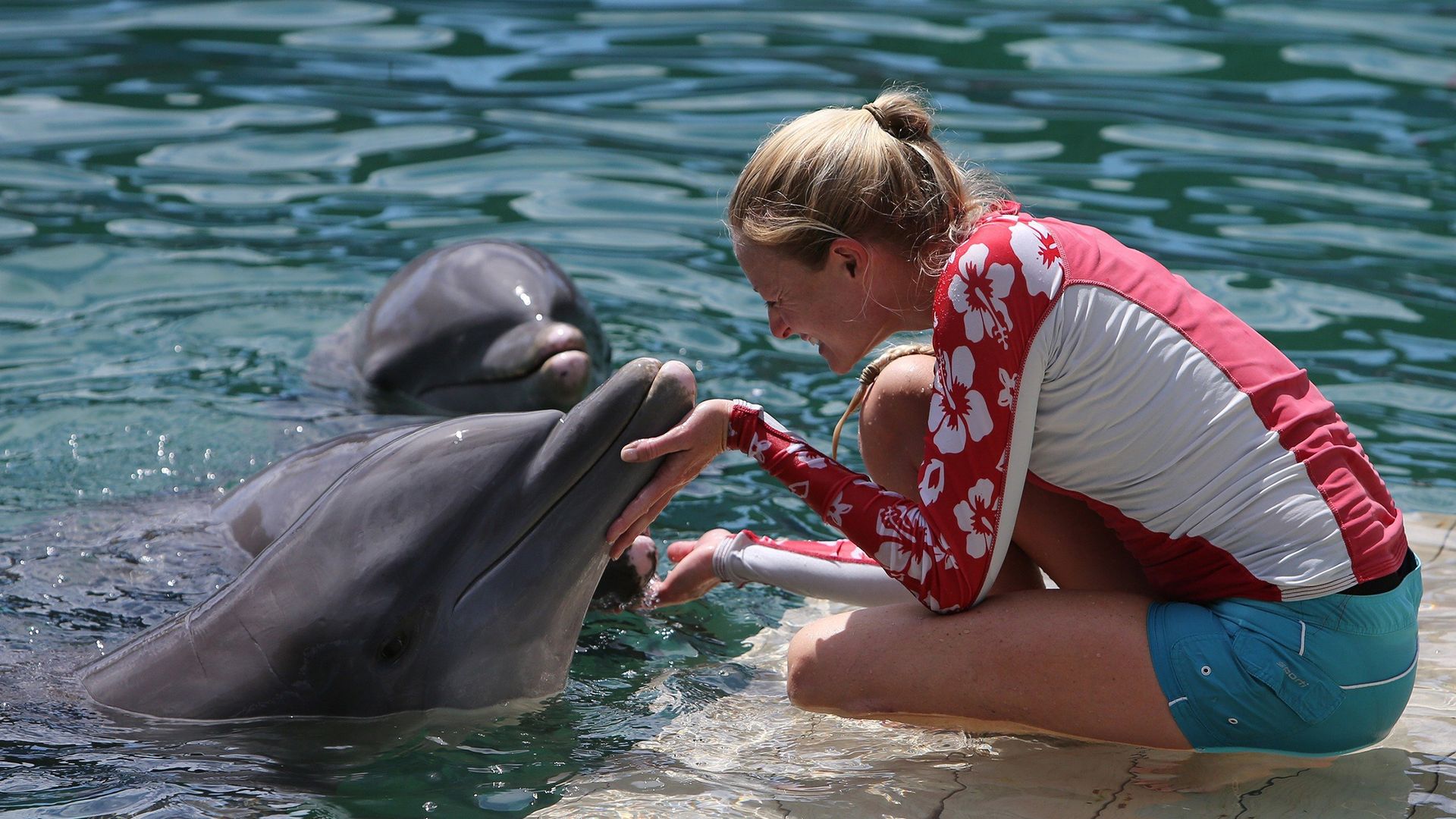
Dolphins interact with a trainer at Miami Seaquarium in 2018. Photo: Emily Michot/Miami Herald/Tribune News Service via Getty Images
Miami Seaquarium may have closed, but the dolphins and other marine animals who've spent years performing for paying audiences can't leave yet.
Why it matters: Seaquarium owner the Dolphin Company, which is proposing to sell its lease to developer Terra, has said it will continue to care for the animals as they are relocated "over the next few months."
- On Friday, a bankruptcy court will determine whether Terra can buy the Seaquarium lease for $22.5 million, a key step in the developer's plans to build restaurants, a marina and an aquarium on the publicly owned land.
State of play: It's unclear exactly how many animals are at Seaquarium, but a July inspection report from the U.S. Department of Agriculture shows the park might be holding around 90 animals — including at least 17 dolphins, 10 sea lions, nine penguins and eight seals, along with dozens of birds.
- Animal rights activists want the marine park to evaluate each animal's health and transfer them to sanctuaries if a return to the ocean is not feasible.
Catch up quick: The Seaquarium, which opened in 1955, has faced public backlash and regular protests over non-compliance with animal welfare regulations and the deaths of marine mammals in its custody.
- A 2022 USDA report found the Seaquarium cut back on daily feedings to its dolphins to ensure they would perform during guest interactions, resulting in "very thin animals."
- The Seaquarium denied altering its animals' diets for "the purpose of enhancing animal behavior during guest interactions," instead blaming "gaps in communication between departments... that were corrected."
What's next: The Dolphin Company is working with an "international animal transfer consultant" to transport its animals to "new permanent homes," which the company believes will happen in the coming months, per an FAQ page published as part of the bankruptcy proceedings.
- "The Company will prioritize the health, wellness, and safety of the animals at every opportunity."
- The Dolphin Company did not respond to an Axios request for details about relocation plans
What they're saying: Tracy Reiman, president of People for the Ethical Treatment of Animals (PETA), wrote a letter to the Dolphin Company urging that it "evaluate all remaining animals for potential release" into the wild.
- "For those who cannot be released, reputable sanctuaries would provide them with the care they need while also giving them more room to swim or fly."
- PETA staged a celebratory champagne toast outside the Seaquarium on Sunday to mark the park's final day of operation.
Charles Vinick, CEO of The Whale Sanctuary Project, tells Axios that it's unlikely the animals will be released into the wild because that would require them to re-learn how to hunt and regain their stamina.
- Vinick, who is not involved in the relocation efforts, says a more realistic approach would be for the marine animals to be released into netted enclosures in ocean waters, where they would have a sense of freedom but retain veterinary care.
- In 2023, Vinick was part of an effort to relocate the orca Lolita from the Seaquarium to a netted enclosure in the whale's native Puget Sound.
- The roughly 57-year-old orca, also known as Tokitae or Toki, died before the relocation could happen.
The bottom line: Vinick says the health of the remaining animals can determine where the animals are transported and the conditions of their stay, such as a potential restriction on performing in shows.
- "What is their health and have there been comprehensive health evaluations of each individual? I think that's the determining factor for rehoming each of them in an environment that supports their well-being."