Group wants to amend the Florida constitution to protect waters

Add Axios as your preferred source to
see more of our stories on Google.
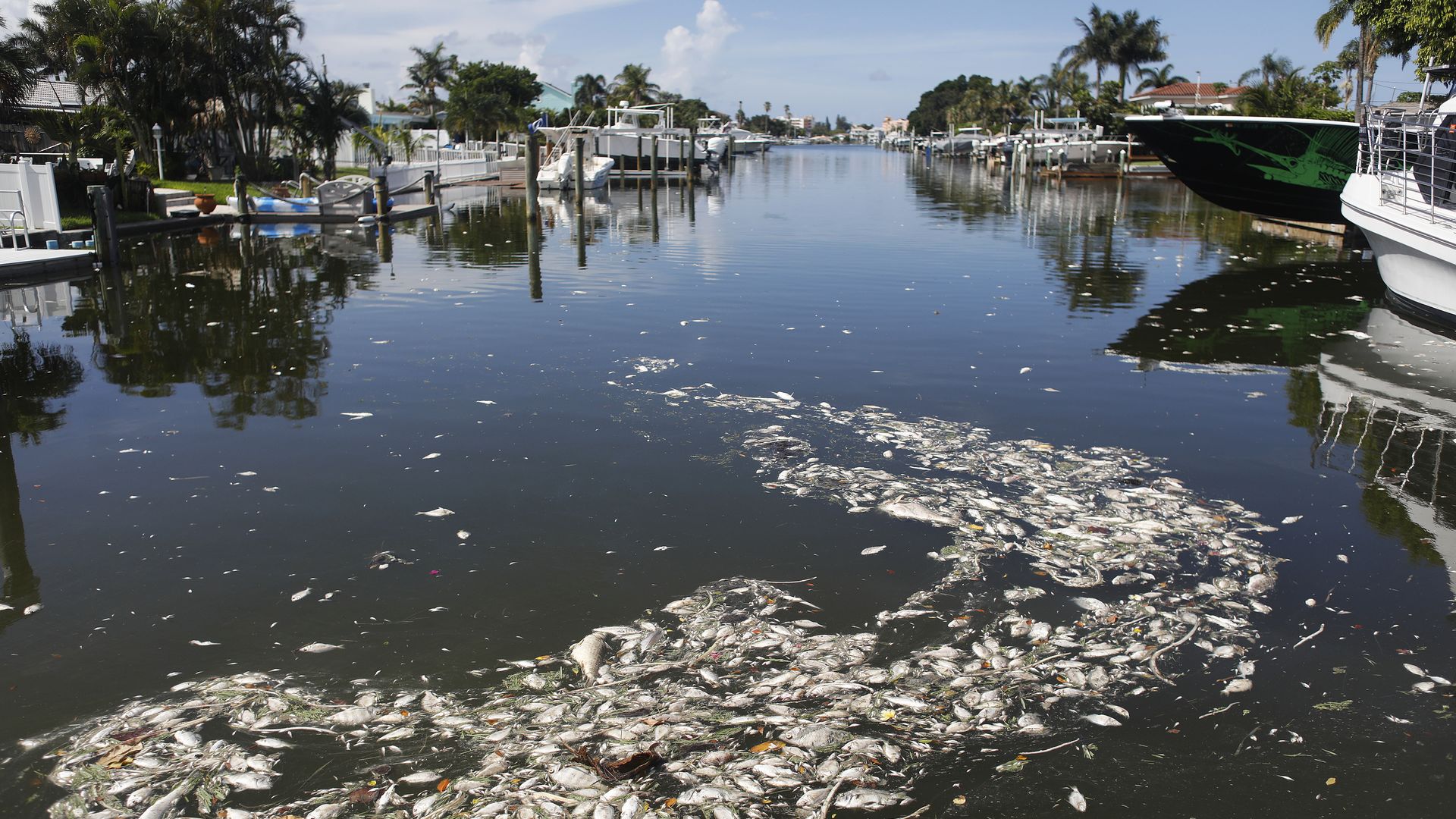
Red tide caused a fish kill in Madeira Beach in 2021. Photo: Octavio Jones/Getty Images
Hits to our state's environment — and citizens' ability to protect it — just keep coming.
What's happening: A grassroots group called Florida Rights of Nature Network (FRONN) is trying to add an amendment to the state constitution that would help protect Florida's waters.
- The amendment would codify a right to clean water by making it unlawful for a state executive agency "to harm or threaten to harm Florida waters by action or inaction."
- It specifies that Floridians can sue state agencies to enforce this right.
Why it matters: Florida's waters are in huge trouble.
- Manatees and corals are dying. Springs are polluted.
- Biscayne Bay is severely imperiled.
Background: Laws protecting the environment have gone unenforced or have been neutralized by lawmakers, FRONN chair Joseph Bonasia tells Axios.
- In Orange County, voters overwhelmingly approved a law that gave rights to waterways in 2020, but the state legislature preempted it in a bill, SB 712.
- Local comprehensive plans are supposed to keep development in check, but legislators this year passed a bill, SB 540, that will make it financially risky for anyone to sue to keep projects in line with such plans.
The other side: SB 712, the Clean Waterways Act, contained other provisions that protect the environment, Gov. Ron DeSantis' office announced when he signed it into law.
- SB 540's sponsor, Sen. Nick DiCeglie (R-St. Petersburg), contended it will reduce frivolous lawsuits.
Context: Three states — Pennsylvania, Montana and New York — have environmental rights enshrined in their constitutions, which essentially force them to protect their natural resources.
- FRONN's proposed amendment aims to have a similar effect.
- Had it already been in the constitution, it could have prevented pollution in Biscayne Bay and the environmental disaster at Piney Point affecting Tampa Bay, Bonaisa says.
What's next: By Nov. 30, 900,000 petitions must be signed and approved in order to get the proposed amendment onto the 2024 ballot.
- Electronic signatures are not allowed, so supporters must print out a petition from the website, then sign and mail it in.
- Bonaisa calls for each person who signs the petition to get five more people to do so.