FIU professor works to protect pangolins from trafficking

Add Axios as your preferred source to
see more of our stories on Google.
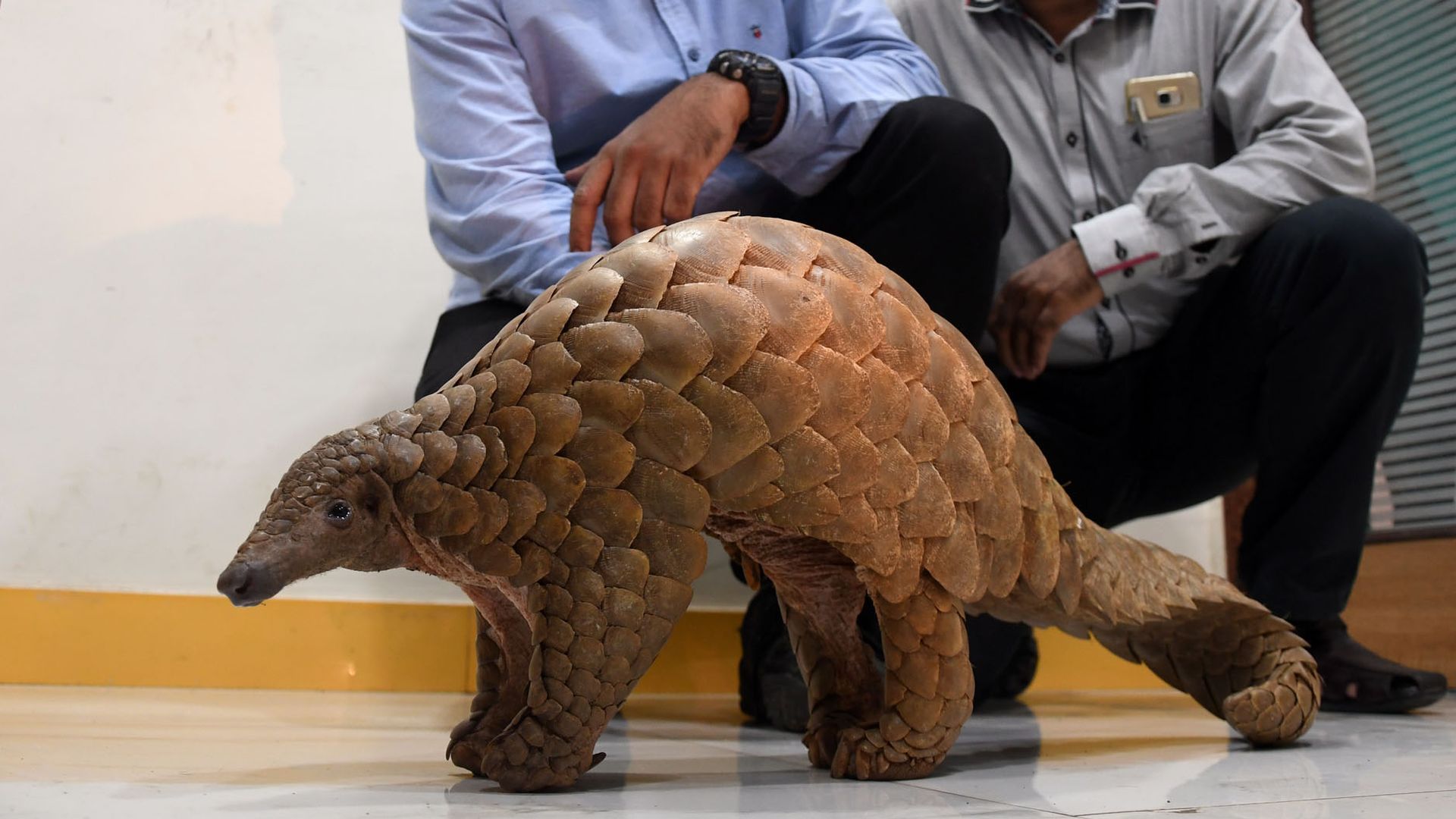
A pangolin rescued in India in 2018. Photo: Praful Gangurde/Hindustan Times via Getty Images
A research professor from Florida International University is at the forefront of saving one of the world's most unique animals: the pangolin.
Why it matters: Pangolins — scaly mammals that live in or near forests in Africa and Asia — are the most trafficked animals in the world, and all eight species are endangered or threatened.
State of play: Authorities estimate at least 1 million pangolins have been taken from the wild, but little is known about the trafficking supply chains.
- Pangolins' scales are "traded from Gabon, Cameroon, and Congo, oftentimes through Nigeria or other ports, out to Asia," conservation ecologist Matthew H. Shirley said.
What they're saying: In Africa, pangolin are "highly prized as bushmeat," Shirley told Axios over a call from Zimbabwe. "Everybody says they're better than bacon."
- It's common to see street vendors on roadsides hawking dead pangolin dangling off a stick, he said.
- Pangolin are also used in traditional medicines in Africa and Asia.
Zoom in: Shirley is leading Operation Pangolin, a six-year initiative funded by the Paul G. Allen Family Foundation to learn more about pangolin populations and how they're hunted and sold to trafficking networks.
- Once the traffickers' supply chain is better understood, conservationists will work with law enforcement, policymakers and hunters on sustainability.
Go deeper: Lessons learned from Operation Pangolin can be applied to protect other species from elephants to great apes, and to halt trade in shark fins, elephant ivory and rhino horn.
- Here in Florida, "the southeastern U.S. has been for a very long time one of the hotspots of the freshwater turtle trade," Shirley said.
Of note: Shirley, who is from Sarasota, said anyone interested in a career like his in wildlife conservation can get started right here in Miami.
- FIU "can definitely provide the training, because we have projects like Operation Pangolin and others that are really focused on conservation in the world."