Food prices stay high in Miami

Add Axios as your preferred source to
see more of our stories on Google.
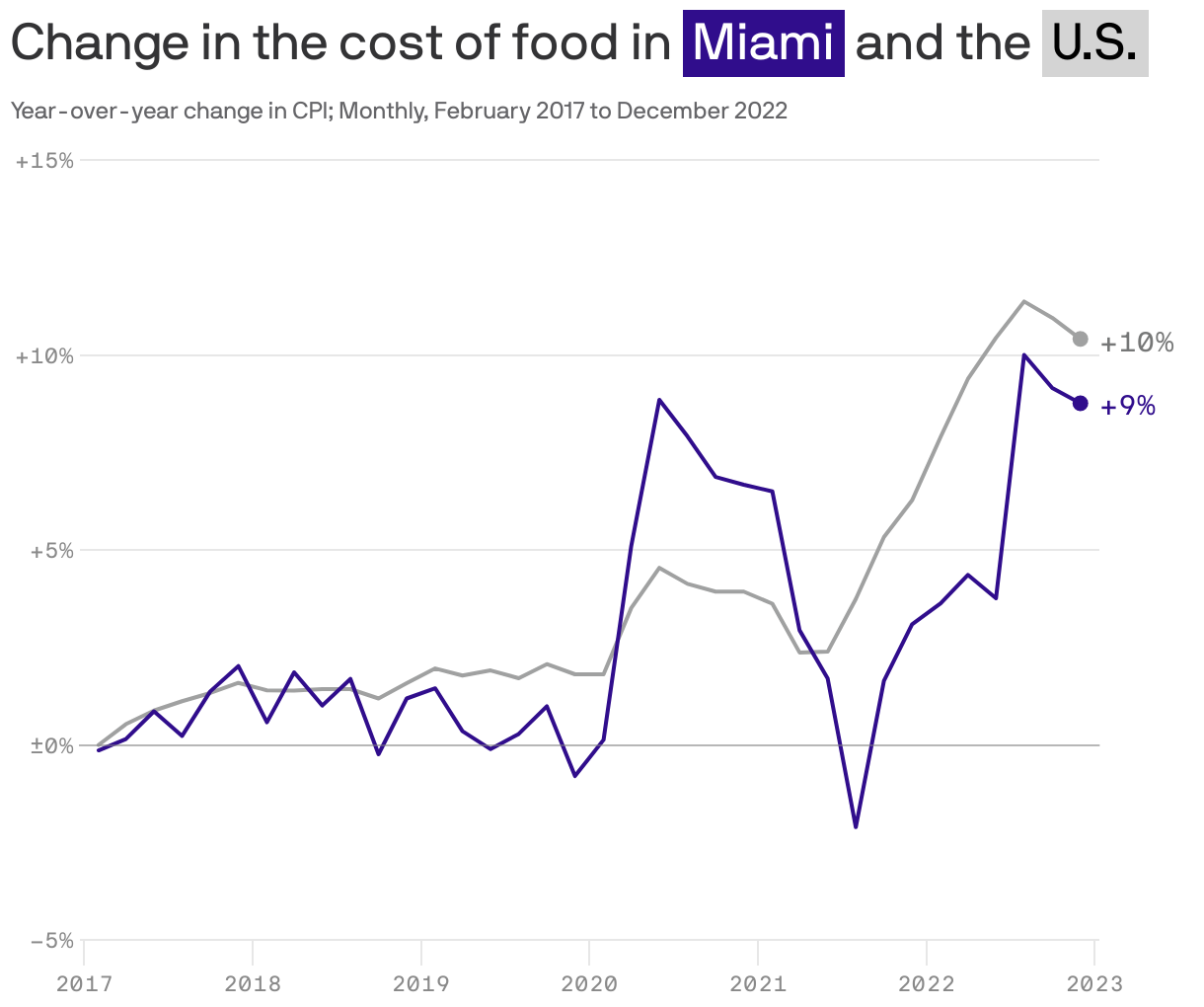
Food prices across the Miami metro area were up 8.8% in December compared with a year earlier, per a new analysis from Axios' Kavya Beheraj and Alex Fitzpatrick.
- The cost of food eaten at home was up 9.4%, while the price of food eaten away from home was up 7.4%, per the U.S. Bureau of Labor Statistics.
- These numbers have been steadily rising since 2021, down just slightly in December from a peak last summer.
Zoom in: Cereals and bakery items rose the most in price — they cost 17.6% more than the year prior.
Why it matters: Grocery bills are one of the most powerful ways in which many Americans experience inflation.
- As the cost of eggs, milk and other staples rise, families living on the financial edge are left making difficult choices about what to buy — and what to skip.
- For restaurants and other businesses, higher food prices can leave owners with the difficult choice of swallowing the costs or passing them on to customers.
By the numbers: Nationwide, the cost of all foods was up 10.4% year-over-year in December, per BLS.
- The cost of food prepared at home was up 11.8%, while food eaten at restaurants was up 8.3%.
- Those are all down just slightly from recent highs set toward the end of 2022.
Driving the news: COVID-related supply-chain disruptions, climate change and higher energy costs are just some of the factors contributing to higher food prices.
- Russia's war in Ukraine, a major wheat producer, continues to affect the global supply — and thus price — of that key foodstuff.
- The Federal Trade Commission, meanwhile, is under increasing pressure from lawmakers and advocacy groups to investigate whether egg producers are manipulating prices.
The intrigue: Some businesses have noticed that while consumers may gripe about higher costs, they're willing to pay up, as the New York Times recently reported — disincentivizing them from bringing prices back down to Earth.
The big picture: Rising food prices aren't just changing the kinds of items that Americans are buying, as Axios' Emily Peck recently reported — they're forcing families to buy less food entirely.
- "People are starting to think about what they truly need — and what can wait," Emily wrote.
What we're watching: There are some glimmers of hope on the horizon.
- Wholesale egg prices, for instance, are beginning to drop, Axios' Kelly Tyko reports. Retail prices usually follow.
The bottom line: Many of the underlying economic and political factors affecting food prices persist, making it all but impossible to predict what your grocery spending will look like this year.