Huntsville biotech boom draws national security focus

Add Axios as your preferred source to
see more of our stories on Google.
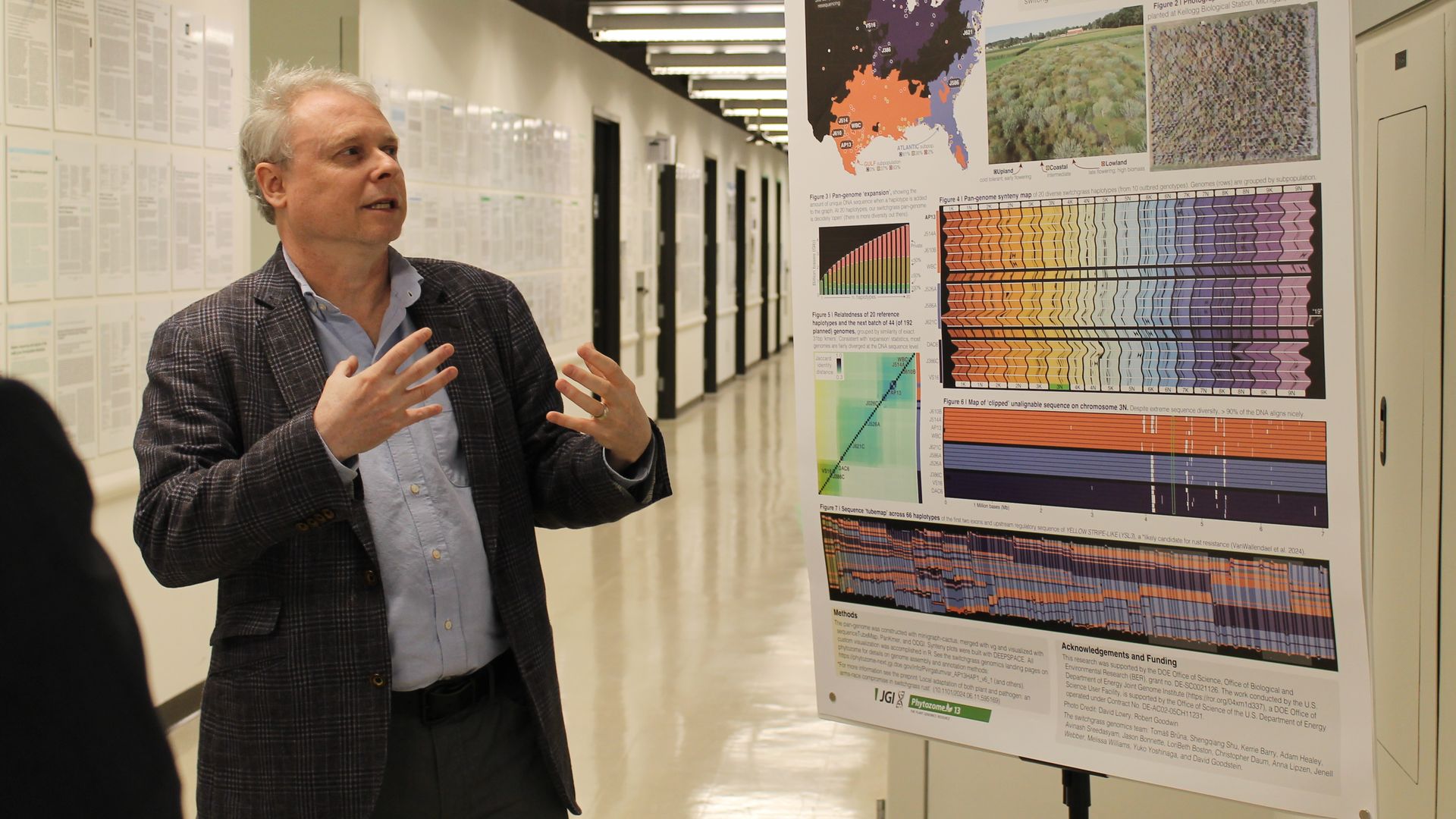
Jeremy Schmutz is co-director of HudsonAlpha Genome Sequencing Center. Photo: Derek Lacey/Axios
Huntsville is big on defense in more ways than aerospace.
Why it matters: The workforce and research engine created by HudsonAlpha Institute for Biotechnology doesn't only drive economic development such as Eli Lilly's new plant, it's key to national security.
Driving the news: On Tuesday, the National Security Commission on Emerging Biotechnology (NSCEB) and other agencies took a close look at HudsonAlpha on the 20th stop of NSCEB's national roadshow.
- The congressionally appointed 11-member NSCEB conducted years of research, culminating in its 2025 Action Plan, which made 49 recommendations.
- The report found that the U.S. risks losing its biotech edge to China, and it recommends an investment of at least $15 billion over five years to stay competitive.
What they're saying: "We live in the age of biology ... just like the information age, just like the industrial age before that," said NSCEB commissioner Paul Arcangeli, whose hometown is Huntsville.
- "If you just look at biotech: Food security is national security, health security is national security. But also, biotechnology is going to create manufacturing opportunities," he said. "The uses are endless, and all of them relate in the end to national security."
Zoom in: HudsonAlpha's cyber security training, which it does in partnership with UAH's Center for Cybersecurity Research and Education, reflects the commission's goals.
- NSCEB is urging Congress to categorize biotechnology infrastructure and data as critical infrastructure amid the threat of adversaries and malicious actors.
Catch up quick: Commissioners on Tuesday got an overview from HudsonAlpha president Neil Lamb, then toured big sites at its Research Park Campus.
- Researchers on the campus, which houses 50-plus companies, sequence genomes for a range of applications, from saving trees to using grass for manufacturing.
- HudsonAlpha also engages students with various summer camps and curriculums for students, and it trains teachers in the science behind those lessons.
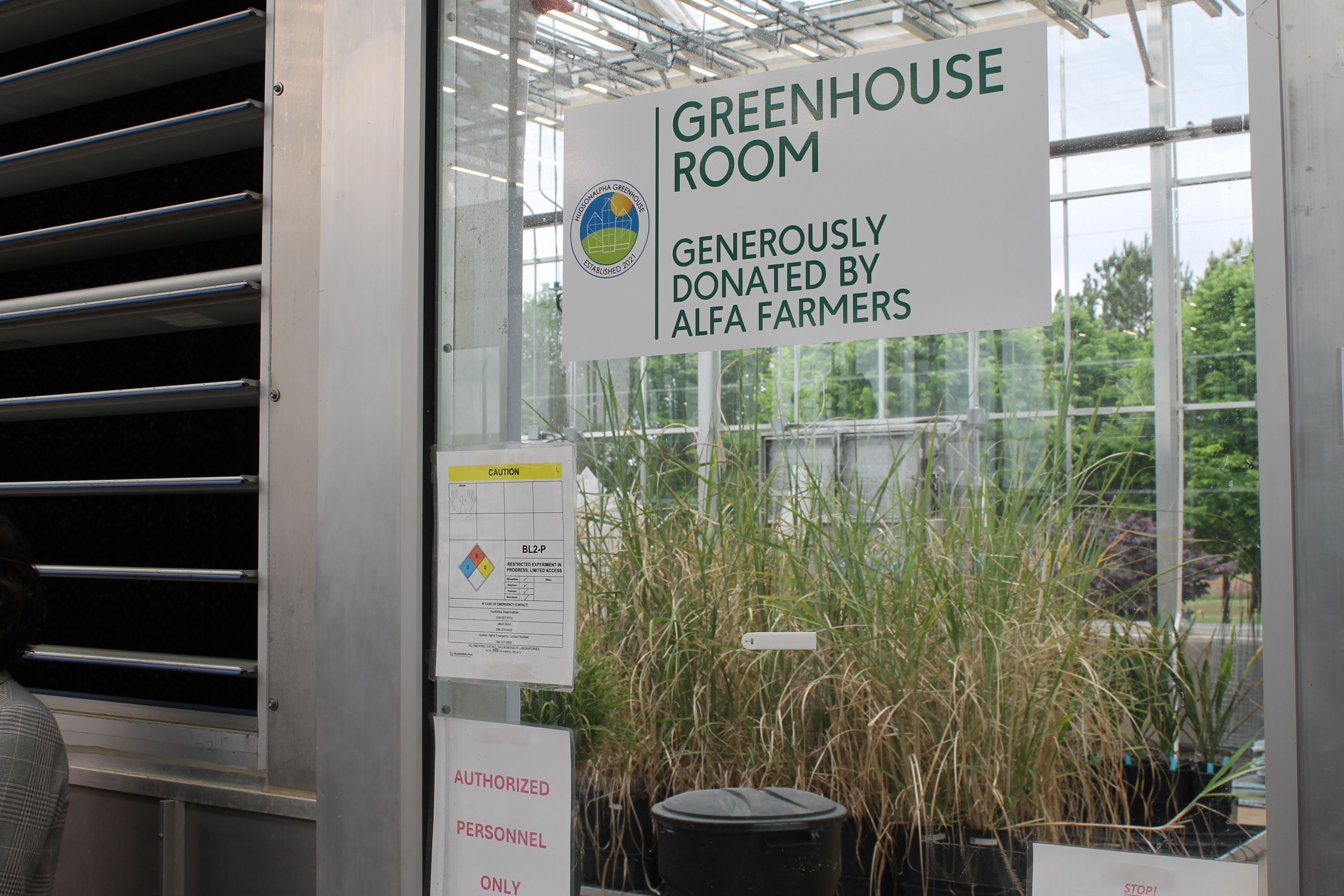
Case in point: In state-of-the-art greenhouses, research is tapping into plant genomes to accelerate breeding that can result in disease-resistant crops or establishing perennial varieties of annuals such as sunflowers.
- Researchers have mapped the genome of the entire USDA blackberry collection, said faculty investigator Alex Harkess, likely identifying the genes that let blackberries reproduce seeds without mixing genetics.
- That could pay big dividends if it applies to major crops including corn, rice or wheat.
"I think she has discovered a set of genes that is very likely going to feed a whole lot of kids in the next decade," Harkess said of the researcher working on that effort.