Huntsville-led research aims to transform manufacturing with grass

Add Axios as your preferred source to
see more of our stories on Google.
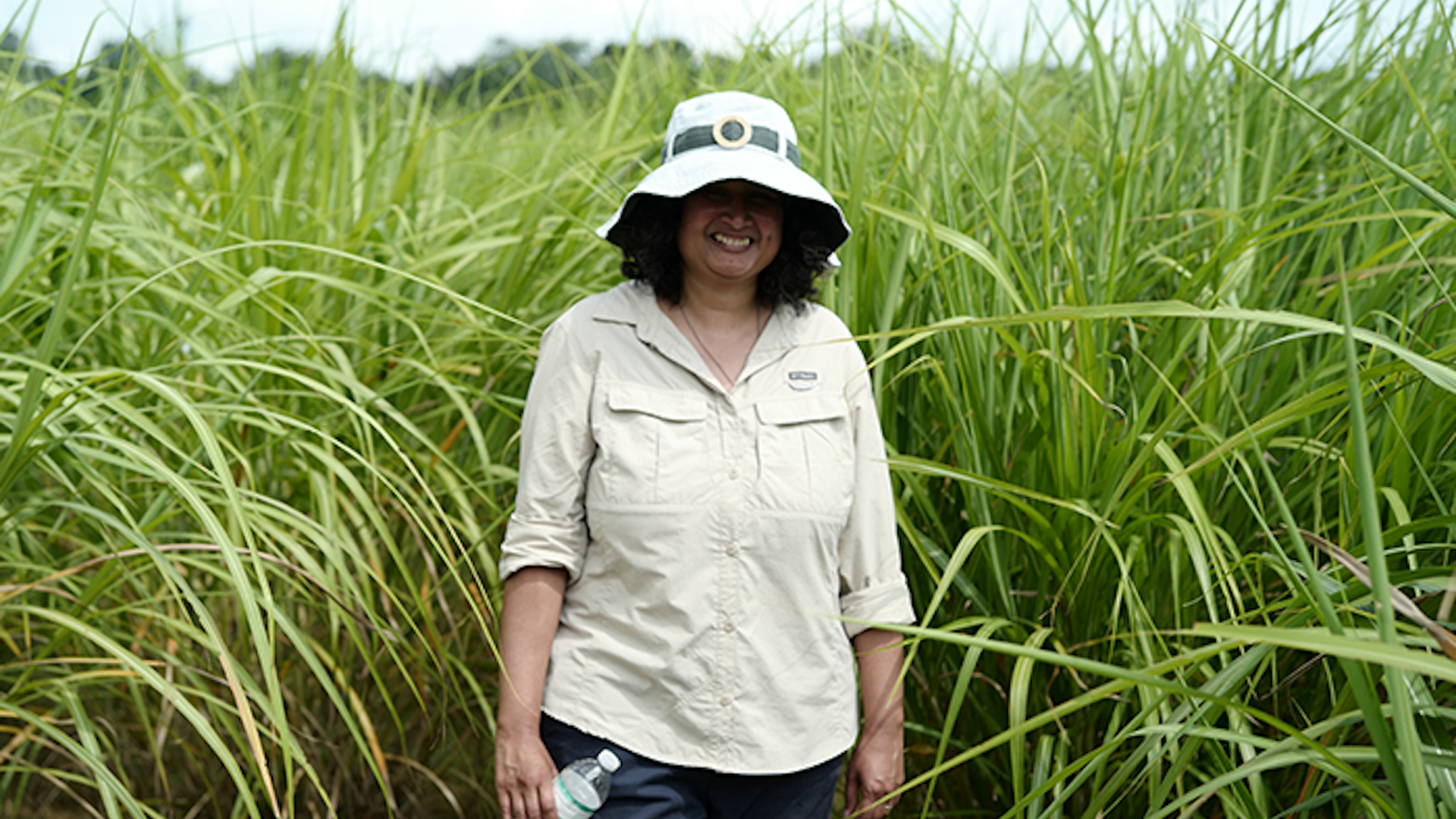
Grass can do it all. Photo: Courtesy of HudsonAlpha Institute for Biotechnology
Grass sprouting across Alabama and Tennessee may soon be used to make everything from car parts to asphalt, thanks to research underway in Huntsville.
Why it matters: Using under-productive farmland to grow grass as a sustainable raw material for manufacturers could bring billions in future-ready economic development to rural areas.
- It would also fight climate impacts by reducing the industry's reliance on petroleum and environmentally costly fibers.
Zoom out: Sam Jackson leads the BRIDGES Engine project at the HudsonAlpha Institute for Biotechnology in Huntsville, which is working on the initiative alongside nearly 80 total partners.
- The acronym stands for Bio-based Rural Innovation for Domestic Growth & Economic Security. In a nutshell, Jackson says, "the idea behind our project is rural economic development in our states."
- On July 8, the effort was named one of 29 semifinalists from an initial pool of 300 vying for up to $160 million over 10 years in federal funding through the National Science Foundation's Regional Innovation Engines program.
What they're saying: "It's a huge achievement to make it this far," Jackson tells Axios Huntsville. "But I really believe that the vision for our engine, the vision of what we can do for not only our two states, but the whole Southeastern region ... is unique."
- That's because it's tying academic research to industry with a strong commercialization pathway, he said: "We have private equity investors involved, we've got workforce development and educational programs, some sustainability efforts [and] community engagement."
Context: HudsonAlpha, alongside co-leads Auburn University and the University of Tennessee, won an initial $1 million in 2023 from the NSF Regional Innovation Engines program.
How it works: Farmers would take underused land (think overly wet swampy areas, too-dry ridges or areas of poor soil quality) and plant native perennial switchgrass or miscanthus.
- "We take those grasses and we deconstruct them down to their chemical building blocks, then we use those building blocks as bio-based feedstocks for all these different processes," Jackson said.
- In packaging, that could be takeout containers or plates and bowls that are 100% grass. In the construction material realm, a bio-based composite could be used in a window or door frame to replace plastics or used as an additive in asphalt.
- "Everybody always raises their eyebrows when we say we're going to make components for cars out of grass," he said.
Zoom in: By mixing grass fiber with other products, and by using chemicals derived from the grass, manufacturers can create plastic replacements.
- "[With] one of our core automotive manufacturing partners right now, we are developing products that are 60% grass and have lower weights, lower energy intensity to manufacture than their traditional products, but have equal durability," Jackson said.
State of play: The program is aiming to put about 50,000 acres into grass production in the first 10 years. That may sound like a lot, he notes, but among the roughly 8 million acres of farmland across the two states, he feels it's "extremely achievable," and thinks the program will beat that mark.
- If a farmer is making money on corn or soybeans, they should probably keep that land in those crops, Jackson adds. "But odds are you've got 20, 50, 100 acres somewhere on your farm that does not have the right productivity."
- It's those places where the grasses thrive, and where they can make big environmental impacts via deep roots that improve soil health, stop erosion and catch excess nutrients.
By the numbers: Putting 50,000 acres in grass production per year would amount to $30 million in direct farm revenue and $2 billion in capital investment, according to Jackson's estimates.
- "Our vision is that 20 years from now, Alabama and Tennessee are at the forefront of this innovation," he said. "We've got a booming agricultural economy with a diverse array of markets."