HudsonAlpha research helps speed chestnut restoration

Add Axios as your preferred source to
see more of our stories on Google.
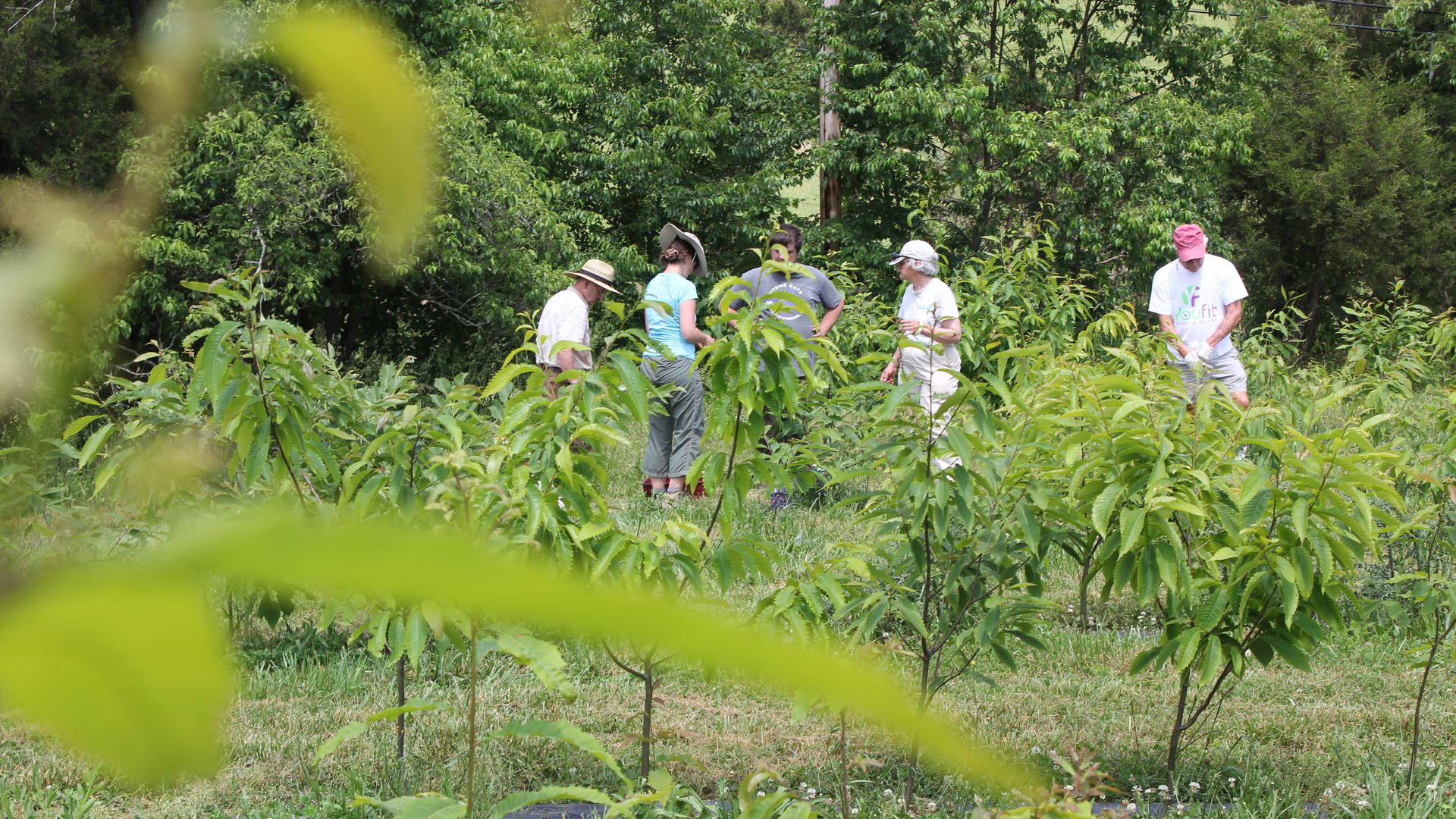
The chestnut population in the U.S. has contracted about 90%. Photo: Courtesy of the American Chestnut Foundation
Huntsville researchers working with the American Chestnut Foundation are driving a leap forward in efforts to restore the trees that once dominated the East Coast.
Why it matters: The findings will focus and accelerate efforts to breed blight-resistant chestnut trees and ultimately restore populations of the functionally extinct species.
What they're saying: "I think we can probably double the level of resistance," Jared Westbrook, TACF director of science, told Axios Huntsville.
Catch up quick: American chestnut trees once dominated the eastern United States, until the chestnut blight, caused by a fungus brought in with imported chestnut trees in the early 1900s, decimated populations.
- The U.S. Forest Service estimates more than 4 billion trees were destroyed across 81 million acres in fewer than 50 years, and trees that grow today are crippled by the blight.
- "The species is in a kind of evolutionary stasis where it is no longer reproducing," Westbrook told Axios. "It's a relic of the past."
What's happening: Researchers at HudsonAlpha Institute for Biotechnology and TACF, in a study published Thursday in Science, show that genetic markers can predict the success of chestnut trees in resisting the blight.
- Led by faculty investigator Jeremy Schmutz and research faculty investigator John Lovell, HudsonAlpha scientists built three of the earliest and most complete chestnut genome assemblies.
- Using data from thousands of hybrid trees— bred from American chestnuts and the more blight-resistant Chinese chestnut — researchers discovered that trees with roughly 70% to 85% of American chestnut ancestry provide "significant resistance gains."
How it works: Genomic models now allow scientists to sample a seedling's DNA and plug it into a statistical model to predict how it will fare against blight, Westbrook said.
- Instead of waiting to see how seedlings perform against the blight as they grow, then selecting the few trees that perform well, researchers can now select seeds they know will be resistant and grow them under optimal conditions, Westbrook explained.
- That efficiency can pay big dividends because it takes a chestnut tree about seven years to reach maturity and start producing seeds.
"Having that foundation of picking the best 'parents' and then selecting the best 'kids' with the DNA, it's going to really increase the gain that we get from resistance," Westbrook, lead author on the paper, said.
- Those trees are expected to begin producing large quantities of seed for restoration within the next decade, he said in an statement.
Zoom in: It's not about a "pure" American chestnut tree, Lovell said, but about one that can succeed in American forests, mainly with the height of the American tree and resistance of the Chinese chestnut.
- "What we're trying to do is build trees that fill the former ... ecological service that that tree provided: the nuts, the tall stature, the place in the forest, the animal interactions," Lovell told Axios.
The bottom line: "It has nothing to do with purity and everything to do with solving the problem of the loss of this really keystone element in the forest," he said.