How to help your Front Range community breathe easier this summer
A message from Simple Steps. Better Air.
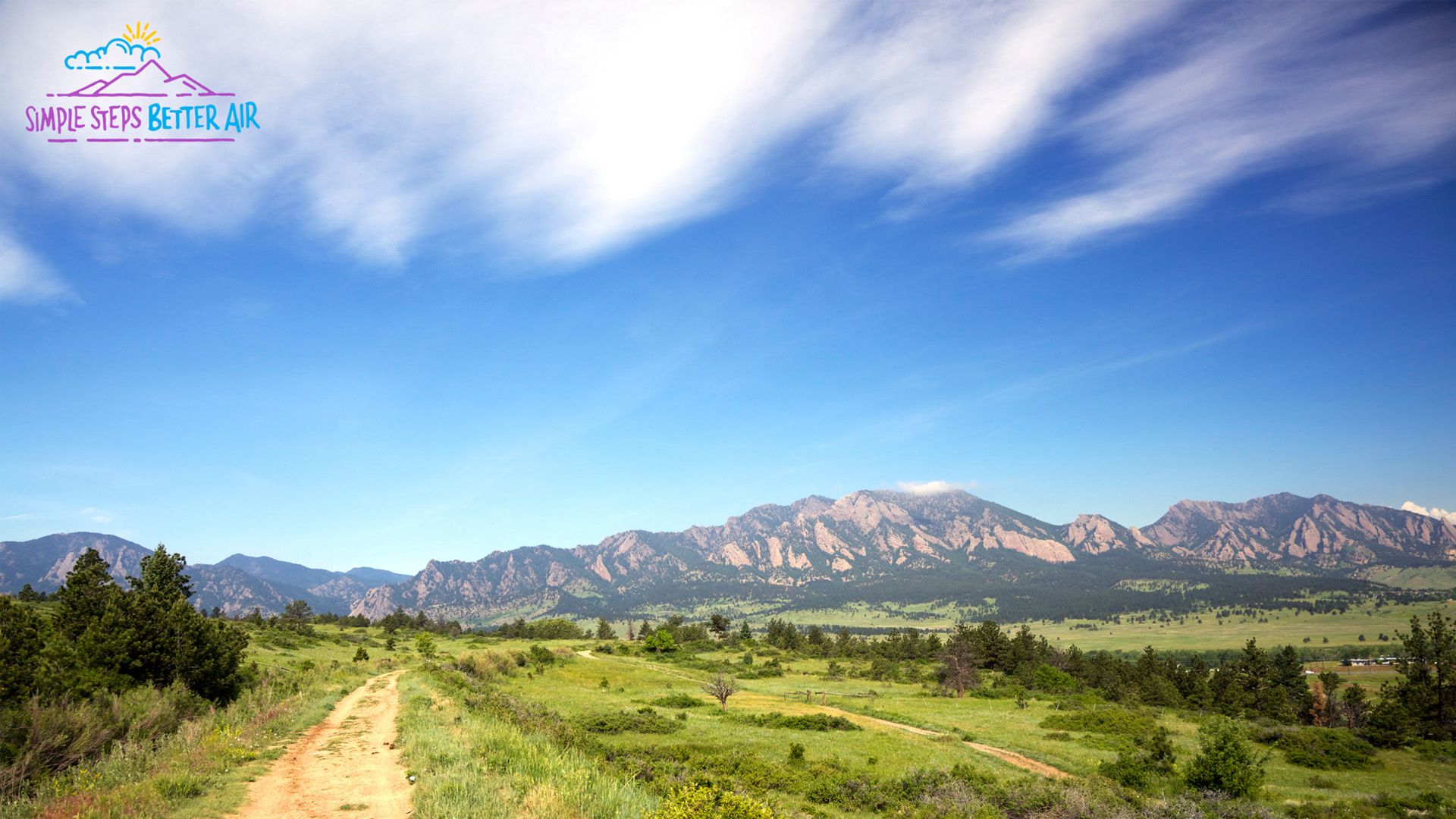
The challenge: Ozone (O3) levels peak yearly during the summer, often on sunny, blue-sky days when Coloradans love to enjoy the outdoors.
This pollutant is odorless and invisible, but ground-level ozone impacts health and the environment — in fact, it's the Front Range's most pressing air quality problem and a leading cause of respiratory issues.
The background: O3 is a gas molecule composed of three oxygen atoms — and ground-level ozone forms when volatile organic compounds and nitrogen oxides, mostly from fossil fuel emissions, combine with heat and sunlight.
- High up in the atmosphere, the ozone layer is key and offers protection from the sun's ultraviolet radiation. Yet, breathing in ground-level ozone irritates throats and lungs, increases the susceptibility to respiratory infections, and exacerbates ailments like asthma.
- People most impacted by this air pollution are the elderly, those with respiratory conditions, outdoor workers and athletes, and especially children, whose lungs are still developing and are more likely to be active outdoors.
The positive news: Simple Steps. Better Air. is a public awareness and outreach program created by the Regional Air Quality Council (RAQC) to educate Colorado Front Range residents about ground-level ozone and the simple steps they can take to help improve local air quality.
- RAQC works with state agencies to create plans and run programs that benefit the Front Range community, including the nine-county region currently out of compliance with federal standards for ground-level ozone: Adams, Arapahoe, Boulder, Broomfield, Denver, Douglas, Jefferson, Larimer, and Weld Counties.
An example: Between late May and mid-September, the Colorado Department of Public Health and Environment (CDPHE) issues daily ground-level ozone advisories around 3 p.m.
- When CDPHE issues an "Ozone Action Day Alert" for ground-level ozone that forecasts higher levels, the RAQC and Simple Steps. Better Air. also send an email and text alert.
These alerts help inform people when it matters most to:
- Protect their health by avoiding outdoor exercise or heavy exertion between noon and 8 p.m. on Ozone Action Day Alert days.
- Reduce emissions to help prevent a high ozone forecast and keep levels low, helping everyone breathe easier.
💡Get involved: Text "BetterAirCO" to 21000 to sign up for text or email ozone alerts from the RAQC and Simple Steps. Better Air.
Why it's important: Solving the ground-level ozone air quality problem in the Front Range is multifaceted — and the RAQC is one of many groups working on planning and policy to improve air quality to support Coloradans.
Okay, but: Individuals play an important part, too. 🔑
Here's how you can help:
- Combine car trips to reduce emissions — or take public transportation.
- Walk, bike, e-bike or use a scooter for shorter distances.
- Work remotely or locally to skip the commute.
- Upgrade your lawn mower and handheld tools to electric with a 30% state discount at participating retailers.
- For gas-powered lawn and garden equipment, mow the lawn after 5pm.
- Upgrade to a high MPG, plug-in hybrid or electric vehicle and benefit from state tax credits.
- Fill up your car after 5pm — and stop at the first click.
- Roll down the windows and turn the engine off while waiting in parking lots or lines. (Each minute of idling releases 150 balloons' worth of air pollution!)
The takeaway: The geography, weather, population and emissions of Front Range industries and residents all contribute to why the region surpasses the official ozone national limit.
Still, there are ways to help.

Get a free daily digest of the most important news in your backyard with Axios Denver.