How Denver Health trauma care helped a mountaineer return to Everest

A message from: Denver Health
Denver Health
For those whose lives revolve around outdoor pursuits, a serious orthopedic injury has higher stakes, putting years of training and their daily activities out of reach.
- Outdoor recreation contributes billions to the state's economy, reflecting how deeply skiing, hiking and climbing are woven into life here.
The story: The function a patient regains after a complex injury is determined by the quality of trauma care they receive, and Rich Draves put his recovery to the ultimate test.
In February 2024, a skiing accident in Vail broke Draves' hip socket and kneecap, dislocated his femur, tore his ACL and PCL and damaged his meniscus.
- An ambulance brought him to Denver Health's Level I trauma center, where orthopedic trauma surgeon Cyril Mauffrey, MD, chair of Denver's only Orthopedic Center of Excellence at Denver Health, took on his surgical care.
The challenge: Draves had little interest in defining success as the ability to walk around the block.
- Before the accident, Draves climbed mountains at an elite level.
- In 2023, he had already attempted Everest and reached Camp 4, the final major stop before the summit, before a severe respiratory illness forced him to turn around.
His goal was to return to mountaineering with the same intensity.
The positive news: Denver Health houses Denver's only certified Orthopedic Center of Excellence, and its orthopedic trauma program treats complex injuries that require specialized surgical expertise.
The goal: Mauffrey needed to reconstruct a badly damaged hip and leg with enough precision to give Draves the strongest possible foundation for recovery.
- Restoring basic function would mark progress, but Draves wanted a body capable of carrying him through thin air, steep terrain and weeks of sustained physical strain — all the qualities it would need to summit Everest.
The breakdown: Draves spent five nights in the hospital after surgery. For the next three months, he could not put weight on his right leg.
- Through physical therapy, pool exercises, cycling and eventually walks with trekking poles, Draves slowly recovered his strength and gently tested what his reconstructed hip and leg could handle.
The results: Draves' reconstructed hip and leg eventually carried him back to some of the world's highest terrain.
- By December 2025, he summited Aconcagua in Argentina, the highest mountain in South America.
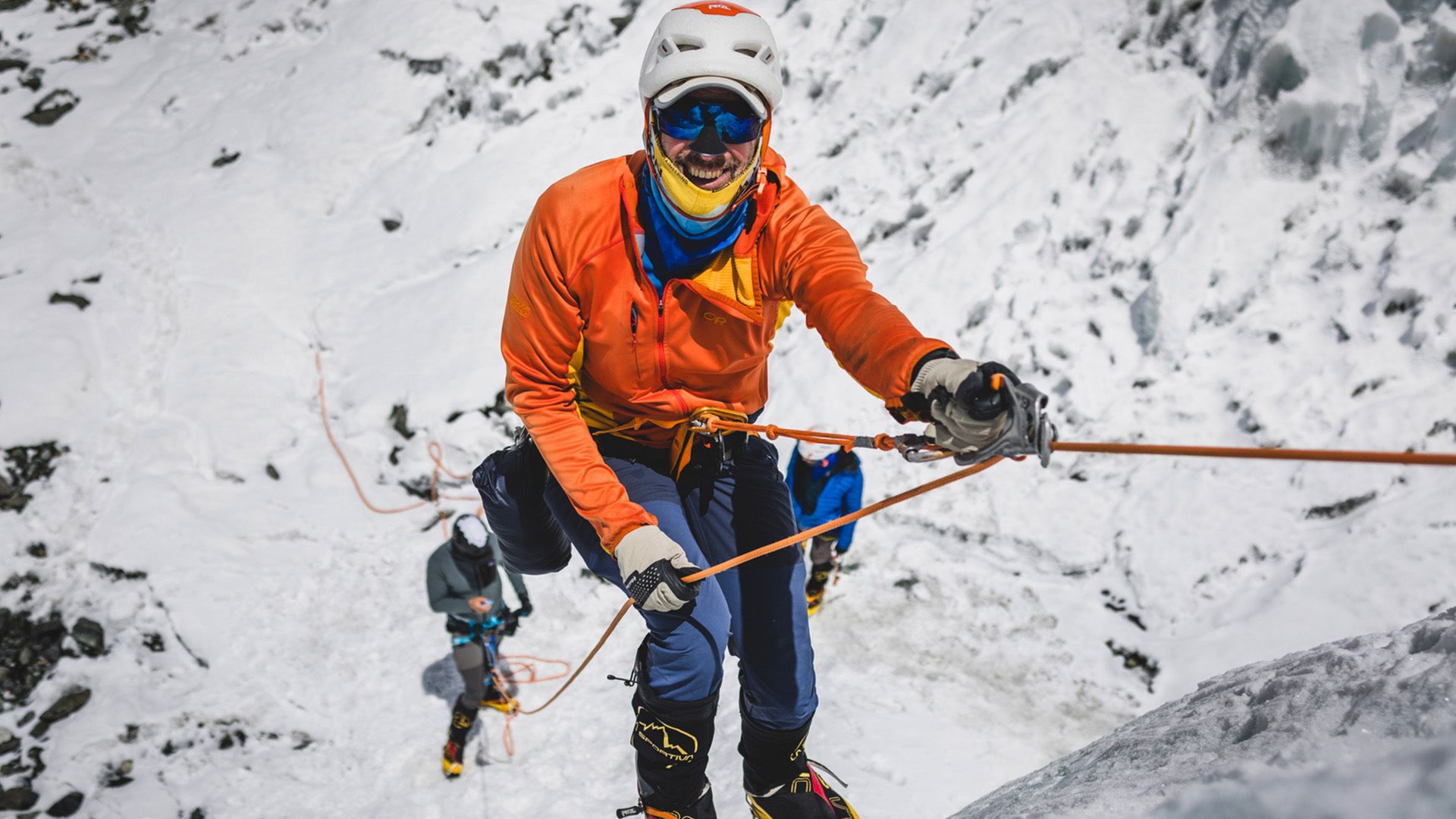
- Then came the bigger test: On May 25, 2026, at age 62, Draves reached Everest's summit, standing at 29,032 feet a little more than two years after the accident.
The impact: "Working with him, I felt like he really understood that my goals were more than just walking," Draves said of Dr. Mauffrey. "My goals were to really get back to this high level. I really think I got the best result possible."
- "It's so rewarding to see patients return to what they love to do, especially after such a significant injury," Mauffrey said. "He got to the top of Everest; we can only imagine what's next."
Draves already has an answer — he plans to hike in the Alps, climb Alpamayo in the Peruvian Andes and return to skiing on Mount Vinson in Antarctica.
The takeaway: A severe orthopedic injury does not have to mean the end of an active life. For patients with complex trauma injuries, specialized care can help create a path back to the lives they want to live.
Learn how Denver Health's orthopedic trauma team helped Draves return to the summit.