Denver scientists discover first adult T. rex trackway

Add Axios as your preferred source to
see more of our stories on Google.
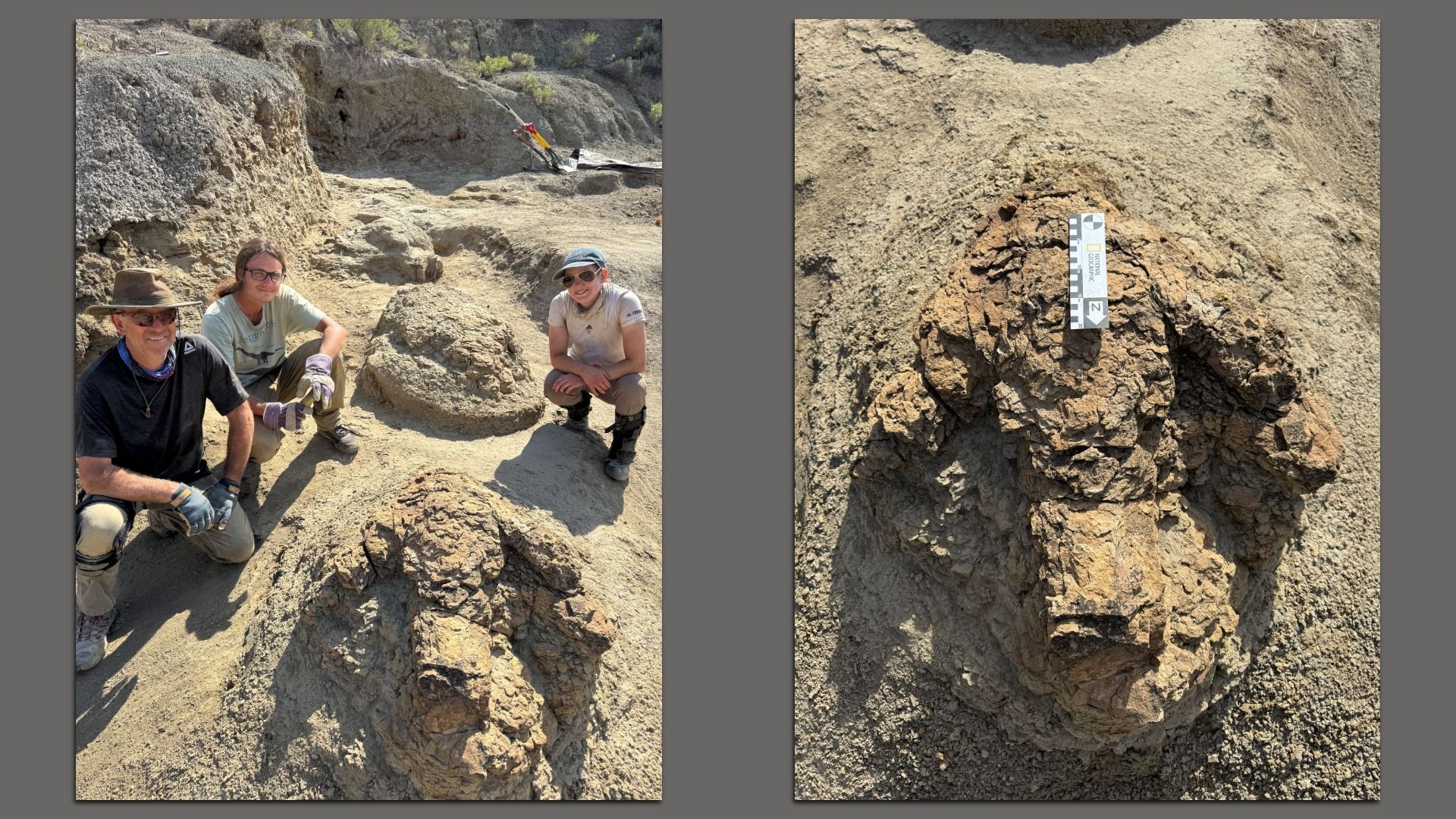
Left: The excavation crew with the trackway. Right: An isolated track. Photos: Courtesy of Tyler Lyson
Sixty-six million years ago, a Tyrannosaurus rex went for a stroll across what's now North Dakota.
Why it matters: Denver scientists just retraced its steps, unearthing what they say is the first known trackway left by an adult T. rex.
Paleontologists from the Denver Museum of Nature & Science and Liverpool John Moores University, who jointly made the discovery, say the trackway offers a rare look at how the dinosaur actually moved.
- Their discovery was published Tuesday in the Journal of Vertebrate Paleontology.
By the numbers: The 23-foot path holds four three-toed prints, each about 3 feet long — with a 13-foot stride.
- Scientists clocked the dinosaur's pace at 3.5–4.5 mph, roughly a brisk human walk.
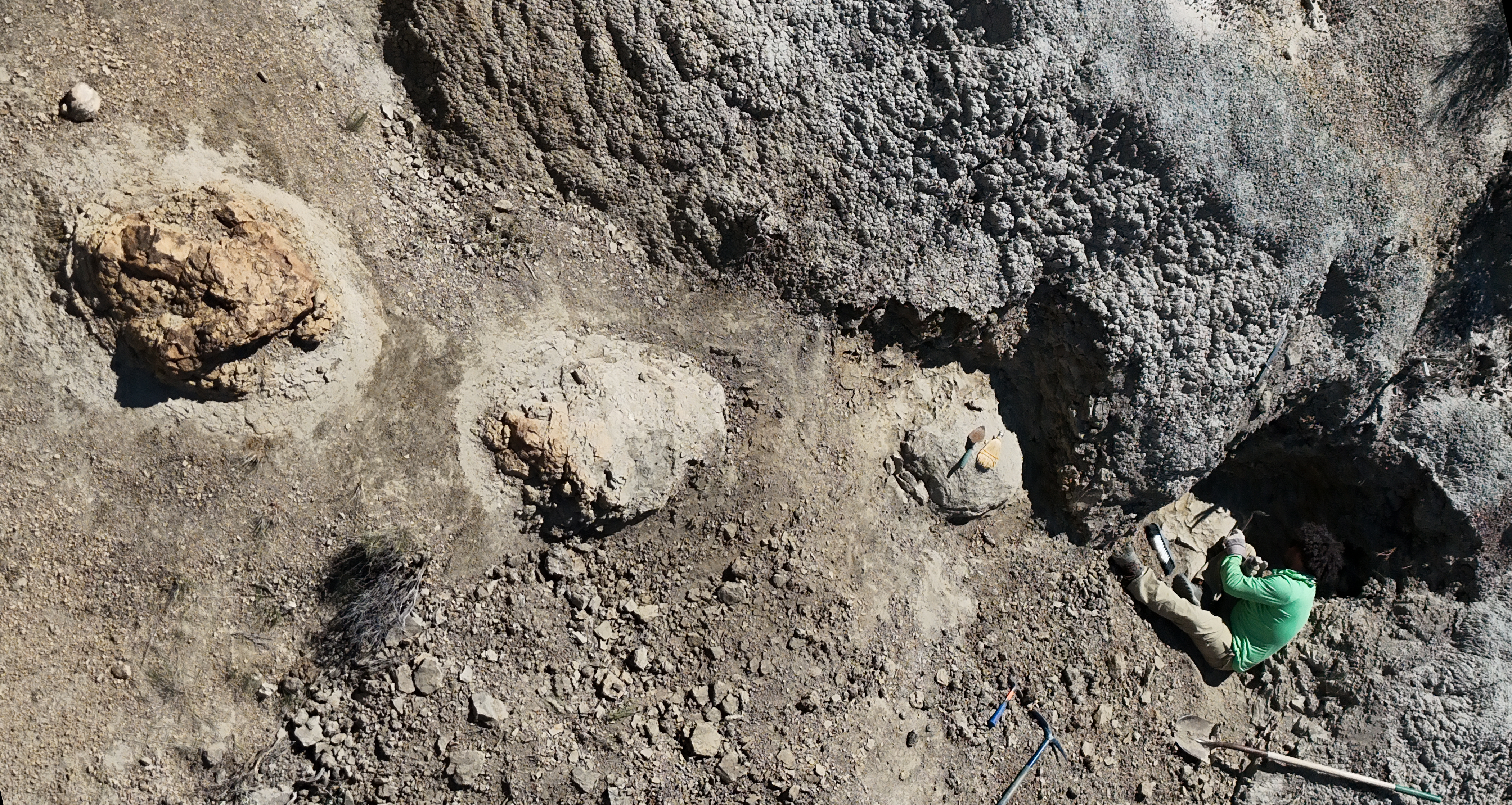
The intrigue: The remarkable find started with a Colorado teacher recovering from knee replacement surgery.
- Longtime museum volunteer and Northglenn High School teacher Kent Hups was hunting for an easier route out of a rocky valley in 2025 when three giant toes stopped him in his tracks, he told National Geographic.
- "Hey just found a t Rex footprint!!!!!!" Hups texted Tyler Lawson, DMNS' senior curator of vertebrate paleontology.
- Lyson was skeptical — until he predicted exactly where a second print should sit if Hups was right. The crew dug there, and struck it, National Geographic reports.
Context: Researchers say the iconic predator is the likely culprit based on the footprints' enormous size and narrow toes, plus the abundance of T. rex fossils nearby.
- The museum's "Teen Rex" was discovered just over 10 miles from the trackway, while a fragment of a tyrannosaur tooth was found less than half a mile away.
- Dinosaur footprints are exceptionally rare in the Hell Creek Formation because its ancient streams and swamps typically erased tracks before they could be preserved, National Geographic reports.
What's next: Three of the prints are expected to be airlifted by helicopter from the site this fall and transported to the DMNS for further study.
- The museum says it plans to share updates from the recovery with visitors this winter.