How modular housing could help solve Denver's affordability crunch

Add Axios as your preferred source to
see more of our stories on Google.
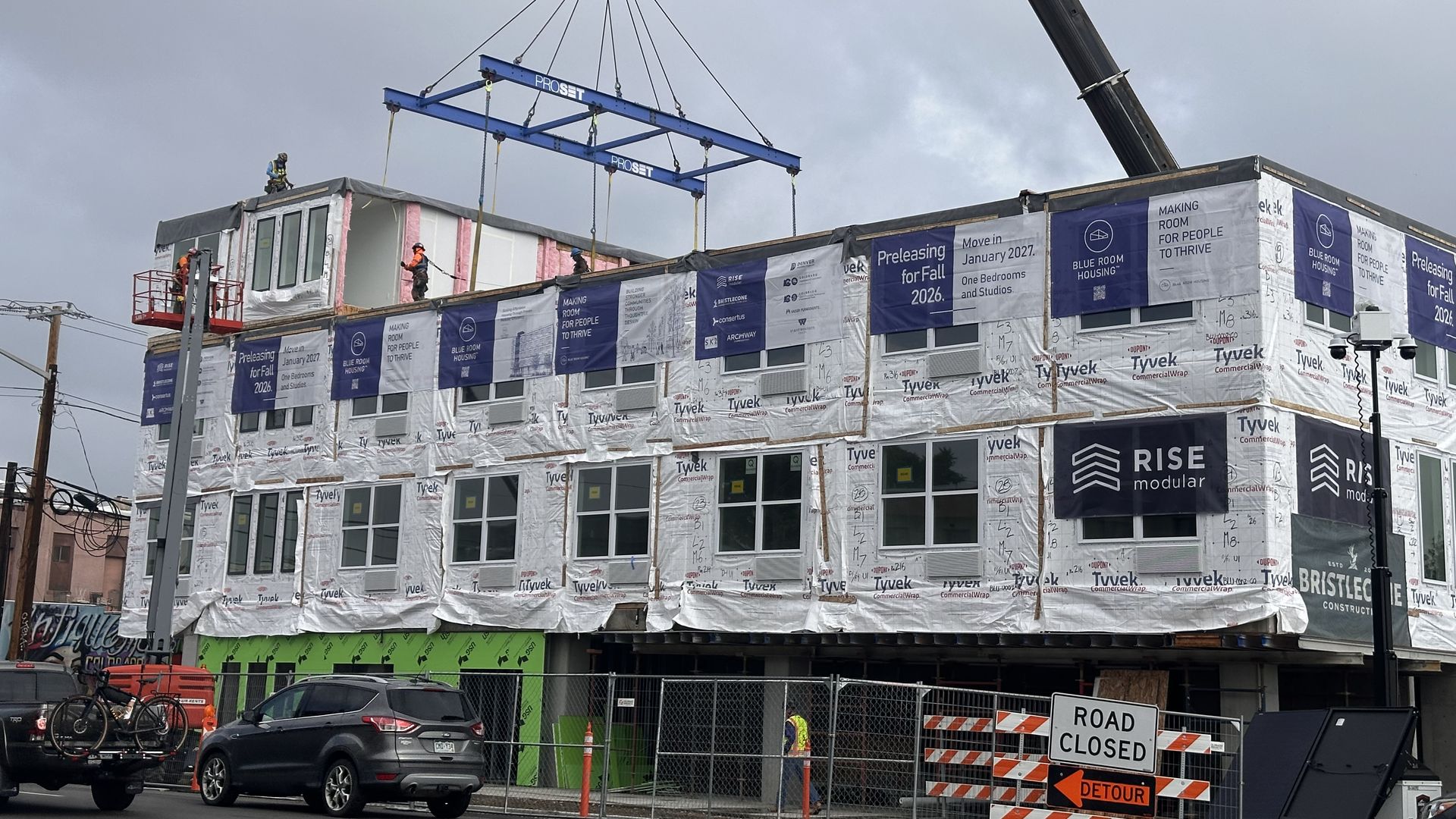
The Blue Room House One development project in Denver's Santa Fe Arts District. Photo: Alayna Alvarez/Axios
In the Santa Fe Arts District, a towering crane is stacking apartment units like LEGO blocks, transforming a concrete slab into a four-story building in just days.
Why it matters: The project offers a glimpse at how Denver could build affordable housing faster — and cheaper — as the city confronts a shortage one recent analysis found could take nearly a century to erase at today's pace.
The big picture: Instead of building apartments piece by piece on-site, Blue Room Housing is assembling nearly finished units that are built in a factory, then shipped to Denver to be stacked into place.
- Construction began Jan. 19. Residents are expected to move in next January — a timeline Blue Room founder Minyoung Sohn says would be difficult to match with traditional construction.
Zoom in: The development will include 54 units for households earning 30%–80% of the area median income, plus ground-floor retail.
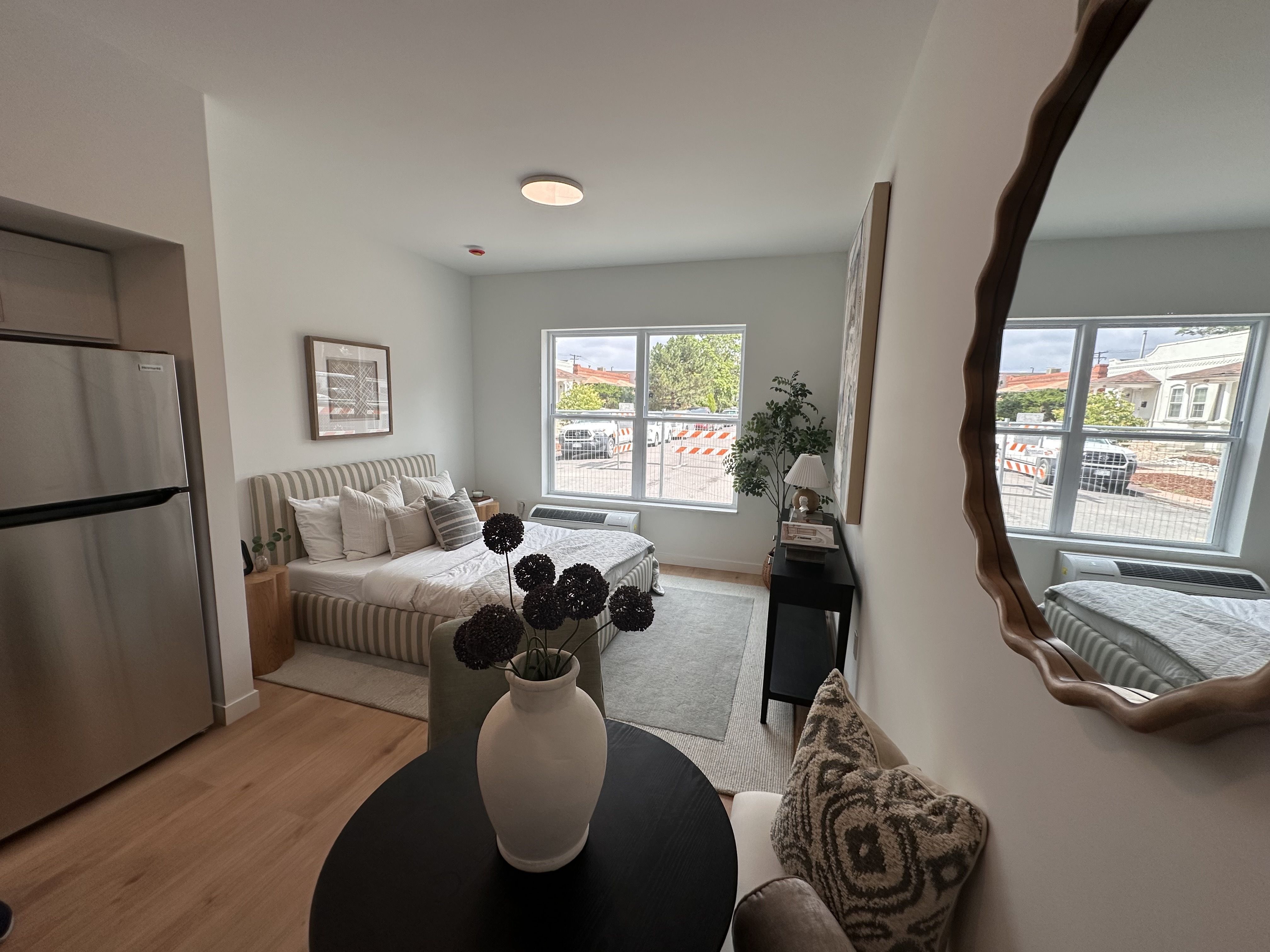
What they're saying: "It's really a model for our future," Hilary Cooper, Colorado's director of innovative funding for housing programs, said at a Thursday event.
- "This is one of the most innovative projects ever built in Denver," added Christian Lawrence, CEO of Minneapolis-based Rise Modular, which manufactured the units.
By the numbers: Modular construction can reduce costs by an estimated 20%-30% and shorten timelines by 30%-50%, according to a new JPMorganChase analysis. Those savings can translate into affordability.
The other side: Modular housing isn't a silver bullet. Financing can be trickier. Designs need to be locked in earlier. And local building rules can make it tougher for manufacturers to scale enough to deliver promised savings, per JPMorganChase's analysis.
That hasn't been Denver's experience, Lawrence tells Axios.
- The biggest obstacle isn't construction — it's convincing developers to try it.
- "We're still a new technology," he says. "It's an education process."
Follow the money: The project carries a $17.35 million price tag, according to Blue Room Housing.
- It's funded in part by the Colorado Health Foundation, Kaiser Permanente, the city of Denver and Colorado's voter-approved Proposition 123 affordable housing program, which awarded $3.8 million.
Zoom out: Denver isn't alone in experimenting.
- A separate 329-unit modular apartment project broke ground in Centennial last month and is expected to finish in late 2027, the Denver Business Journal reports.
What we're watching: Whether modular construction can move from novelty to norm.