Wellness Brief
Where doulas are covered by Medicaid

Add Axios as your preferred source to
see more of our stories on Google.
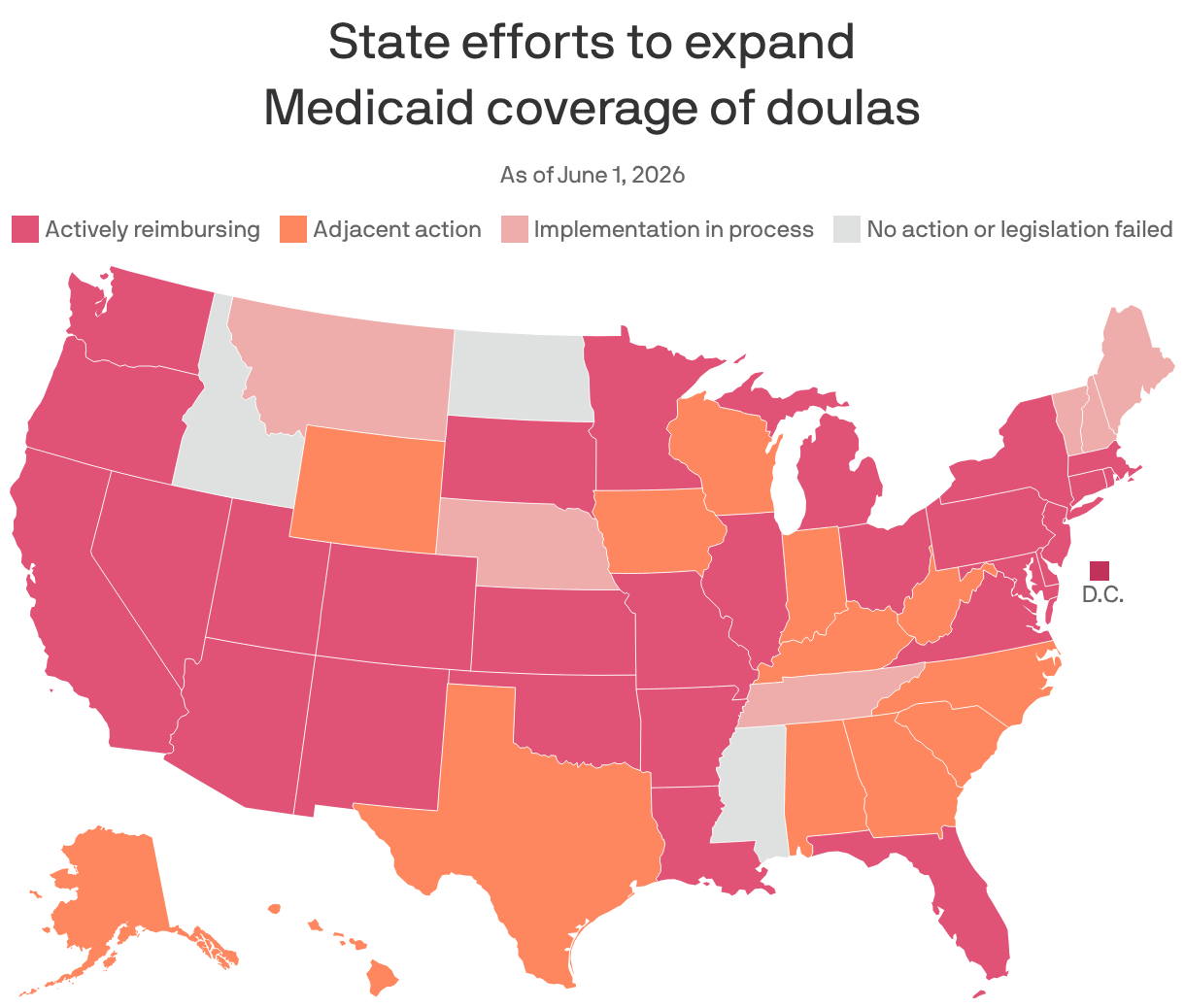
More than half of U.S. states now reimburse for doula care under Medicaid — a dramatic shift from just a few years ago.
By the numbers: 28 states and D.C. are actively reimbursing, according to the National Health Law Program. Before 2020, only Oregon and Minnesota did.
- That's "a lot of progress" in a few years, says Amy Chen, senior attorney at the National Health Law Program.
Zoom in: As of July 2024, Colorado's Medicaid program expanded to cover doula services.
- A year later, the state began requiring large employer health plans to cover doulas, too.
Between the lines: "In process" states have a defined path toward coverage but aren't reimbursing yet. "Adjacent action" states have taken related steps without a concrete plan to cover doula services through Medicaid, Chen says.
Yes, but: Expanding coverage could create a catch-22.
- The more doulas get folded into insurance systems, the more regulated they become. Their effectiveness, however, may stem precisely from being unregulated and fully answerable to patients, says Nicole Sessions, a doula and maternal mental health researcher in Atlanta.
- "The insurance model isn't quite savvy enough to hold the nuances of the profession just yet," she says, citing limits insurers may place on billable postpartum hours.
- Reimbursement maximums vary widely — from less than $800 to more than $3,000. Experienced doulas may not sign on if rates fall below their typical charges.
The big picture: Sessions worries that doula care is becoming a temporary fix — absorbing pressure that should be driving deeper changes to the obstetric system.
What we're watching: Whether "in process" states follow through or quietly stall, as Montana already has amid the Trump administration's cuts to Medicaid.