Colorado's Artemis moment

Add Axios as your preferred source to
see more of our stories on Google.
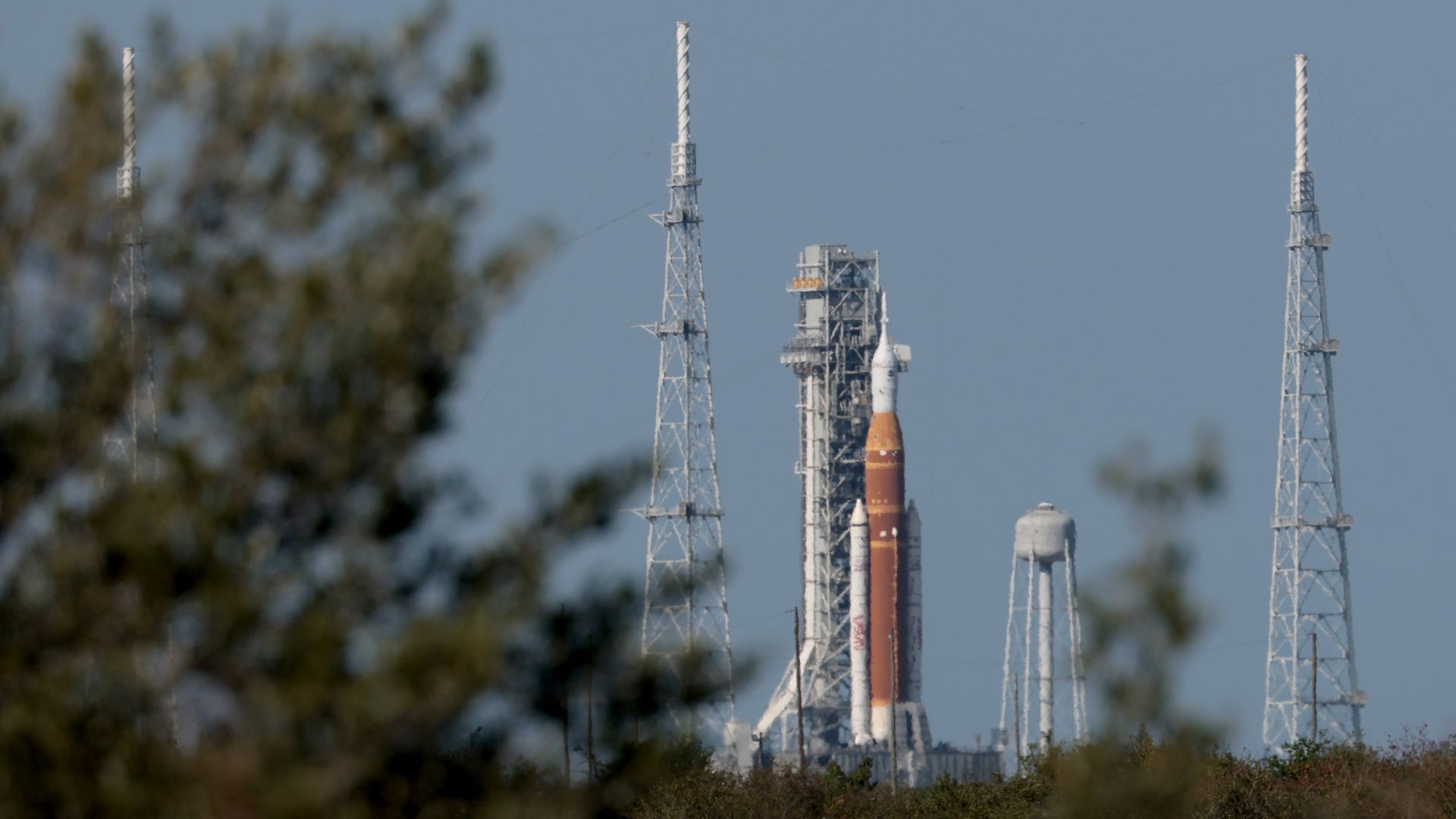
NASA's Artemis II Space Launch System rocket and Orion spacecraft. Photo: Joe Raedle/Getty Images
Colorado's aerospace industry is playing an outsize role in Wednesday's Artemis II mission — a high-stakes crewed test flight for NASA's return to the Moon.
Why it matters: Florida may get the glory for hosting the launch, but Colorado's status as a hub for space innovation stands to get a boost from the mission's ripple effects.
Zoom in: Lockheed Martin has based Orion — Artemis' spacecraft system and crew capsule — in Colorado since the early 2000s, and Artemis II supports more than 600 Colorado employees and 400-plus in-state suppliers — about half of them small businesses. Those firms built everything from high-tech avionics to mission-critical hardware such as brackets.
- Boulder's BAE Systems developed the phased array antenna, a critical communications system integrated into the Orion spacecraft.
- Meanwhile, Longmont's Honeybee Robotics (a subsidiary of Blue Origin) supplied the mechanism that opens the craft's side hatch.
"Programs like Orion provide a solid footprint for other [aerospace] companies in the state to grow," Paul Benfield, the Lockheed Martin Artemis II mission manager, tells Axios.
By the numbers: Colorado ranks No. 1 nationally in per capita aerospace employment.
- More than 2,000 aerospace companies operate in the state.
- The industry employs 55,000 people directly and another 184,000 indirectly.
- It generates $15 billion annually in Colorado — up more than 26% over the past five years.
Catch up quick: If all goes as planned, Artemis II will send four astronauts on a roughly 10-day mission around the Moon to test Orion, NASA's Space Launch System rocket and mission operations.
- It won't land, but the mission will mark the first time humans have traveled to the Moon's vicinity since Apollo 17 in 1972.
Behind the scenes: Lockheed will have an engineering support team at its high-fidelity Integrated Test Lab in Littleton throughout the Artemis mission to run real-time "what if" scenarios in case NASA's Houston-based control center needs extra analysis or advice.
What's next: Artemis III — targeted for next year — aims to test key systems for a lunar landing as soon as 2028, and Lockheed is already assembling spacecraft for future Artemis missions.
The bottom line: Artemis II is a lunar mission for NASA, but for Colorado, it fosters long-term jobs, grows the supplier base and expands the state's role in the future of U.S. spaceflight.