Embattled Opportunity Caucus in Colorado faces pending open records lawsuit

Add Axios as your preferred source to
see more of our stories on Google.
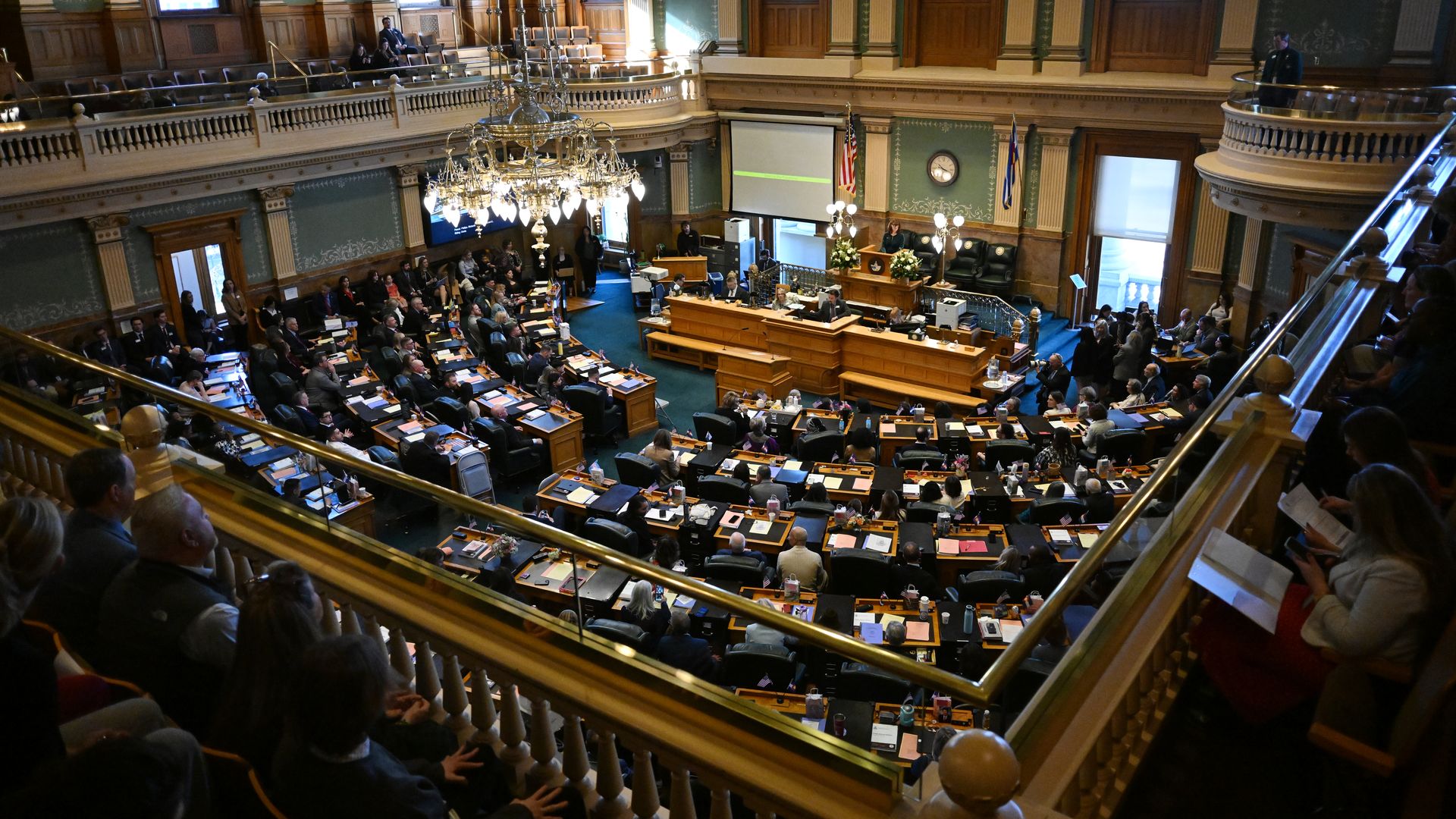
The Colorado House of Representatives chamber. Photo: RJ Sangosti/Denver Post via Getty Images
A pending lawsuit is targeting state Democratic lawmakers for refusing to release records related to a pricey weekend retreat they attended last fall in Vail with lobbyists.
Why it matters: The legal complaint against the Opportunity Caucus and its leaders, Sen. Lindsey Daugherty and Rep. Sean Camacho, is the latest setback for the organization's members, who are also facing an investigation by the state's Independent Ethics Commission.
Catch up quick: More than a dozen moderate Democratic state lawmakers attended a high-dollar two-day Vail retreat in October with lobbyists, including private prison contractor GEO Group, Xcel Energy, Chevron, hospitals and realtors.
- The corporate interests are alleged to have funded the trip through donations to a dark-money group, One Main Street Colorado, and the caucus, per a legal filing. The donation levels to attend ranged from $25,000 to $100,000.
The left-leaning watchdog organization Colorado Common Cause filed ethics complaints against 16 lawmakers who attended the event, saying the trip violated the state's ban on large gifts.
- The caucus members deny the allegations, even as the controversy creates a major rift with more progressive members of the Democratic Party.
The latest: In the lawsuit served to the parties this week, the caucus and its leaders face a complaint for refusing to disclose documents related to the event under the state's public records law.
Attorney Scott Moss, who is representing progressive activist Derrick Blanton, sought written communications, financial records, a list of attendees and fundraising materials linked to the retreat.
- The Opportunity Caucus and its two organization leaders refused to provide any documentation, saying they are not subject to the public records law because they were operating in a private capacity, not as lawmakers, documents indicate.
Yes, but: In other filings, the caucus has claimed to be a governmental body, a blatant contradiction. "They either misrepresented [their purpose] to the ethics commission to get out of ethics rules or they misrepresented [it] to get out of open records law," Moss told Axios Denver. "They can't have it both ways."
The other side: A memo Wednesday from the Office of Legislative Legal Services to Moss' client rejected the notion that the records requested are public.
- Daugherty said in a statement that she didn't turn over any records because she followed the legislative attorneys' advice.