Fatal fentanyl overdoses spike in Denver

Add Axios as your preferred source to
see more of our stories on Google.
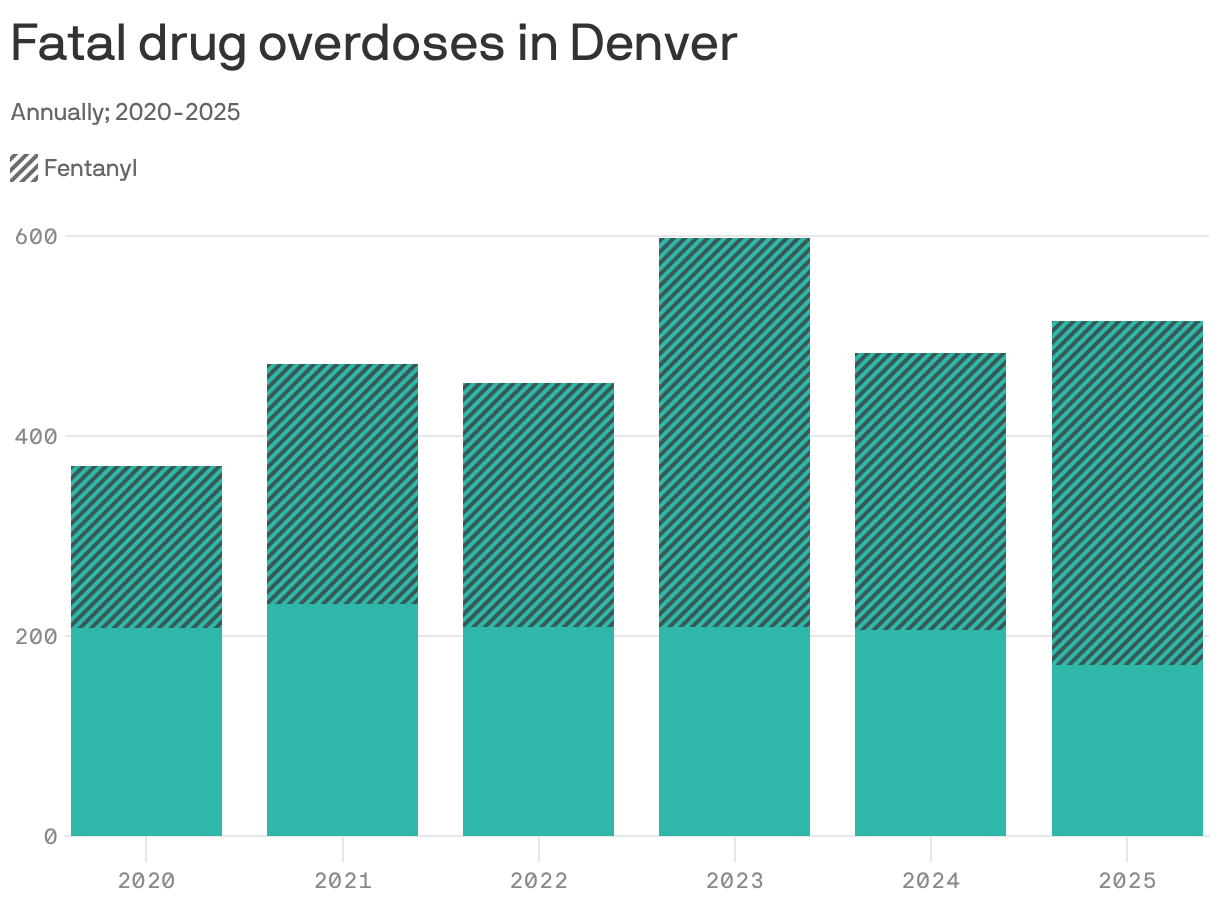
Fatal overdoses in Denver rose last year, despite national figures showing a dip in drug deaths, possibly tied to a Chinese crackdown on fentanyl.
By the numbers: Denver recorded a 24% increase in drug overdoses involving fentanyl last year compared to 2024, preliminary data from the medical examiner's office shows.
The city tallied 515 total drug overdoses last year, a 7% jump from 2024.
- Most were accidental. Overdoses labeled as a suicide have dropped every year since 2023, data shows.
Why it matters: The toxic illicit drug supply in Denver continues to run rampant, devastating vulnerable populations like unhoused people and people unable to access treatment.
State of play: Providing free naloxone at libraries, free fentanyl testing strips, and the Roads to Recovery program are ways the city is trying to combat drug deaths, Denver overdose prevention coordinator Ally Arnaiz tells us.
- She wants to remind the public about the Good Samaritan Law, which shields people from criminal penalties when helping others suffering from an overdose.
- Mayor Mike Johnston's Roads to Recovery program — part of the All in Mile High initiative (AIMH) — is one way the city tries to provide services to unhoused people with mental illness and substance use disorders.
Context: Denver's geography may help explain why the national drop in overdoses isn't reflected locally.
- Trends that emerge on the East Coast can take years to appear in Denver, Arnaiz tells us.
Zoom in: "There was a major disruption in the illicit fentanyl trade, possibly tied to Chinese government actions, that translated into sharp reductions in overdose mortality beginning in mid- or late-2023," researchers wrote in a paper published in the peer-reviewed academic journal Science last week.
- The trend continued into 2024 in the U.S. and Canada, per the researchers.
Yes, but: Drug overdoses remain the leading cause of death for people experiencing homelessness in Denver, an issue Arnaiz says the city wants to alleviate by connecting people to treatment.
Zoom out: Roads to Recovery currently has about 300 participants, city public health department spokesperson Ryann Money tells us.
What's next: Arnaiz, whose role involves educating the public about drug use, says she wants people to show compassion for those who use drugs.
- "I would love to see less stigma and more support for this crisis," Arnaiz tells us.