Colorado food banks face "crisis" as SNAP expires

Add Axios as your preferred source to
see more of our stories on Google.
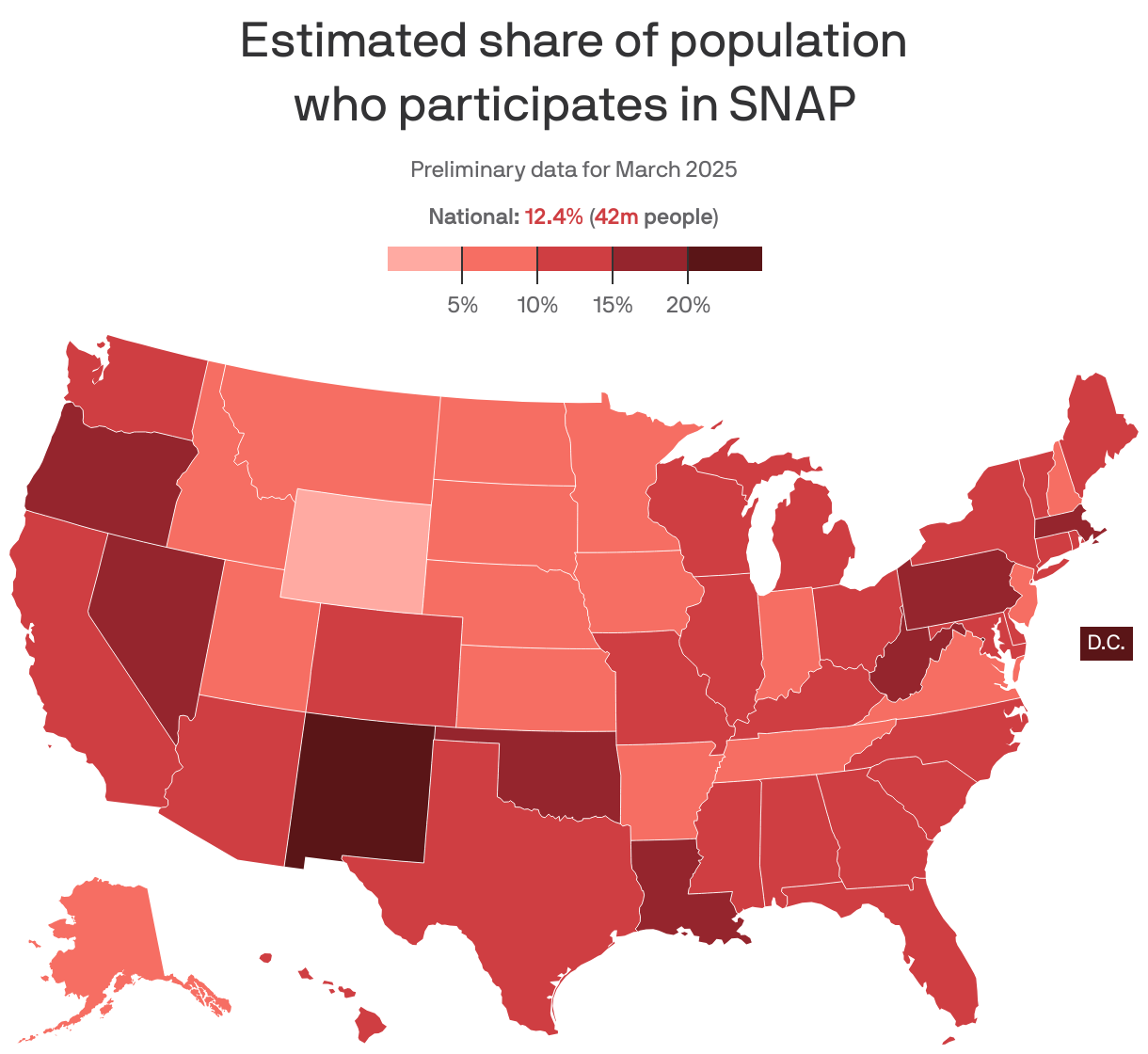
Colorado food banks are preparing for record demand as the federal government shutdown is poised to leave more than 600,000 residents without money for groceries.
Why it matters: Not only are families at risk of going hungry, but the temporary suspension of the Supplemental Nutrition Assistance Program, known as SNAP, will reverberate through the state's economy.
Driving the news: If the government shutdown continues past Nov. 1, Colorado will not receive $120.5 million in food assistance benefits for low-income residents.
- The average household receives $367 a month, and every dollar spent by recipients creates $1.50 of economic impact in the state, Colorado officials said.
By the numbers: Of the 600,000 currently receiving food stamps, half are children, 10% are elderly and 15% have a disability, according to state officials.
What they're saying: "We are facing a crisis unlike anything we've ever seen," said Erin Pulling, CEO of the Food Bank of the Rockies, which serves half the state.
The latest: At a briefing yesterday before he toured a food bank in Colorado Springs, Gov. Jared Polis said the state's crippled budget cannot cover the cost of the food benefits.
- But he announced $10 million in spending from an unspecified account to help food banks prepare for the heightened demand through mid-December.
- He also asked legislative budget writers to extend funding for the Women, Infants and Children nutrition program that supports food access for nearly 100,000 women and children.
The intrigue: The governor called upon Colorado companies and residents to help address the funding gap by making monetary donations to food banks.
- A $1 donation to food banks equals three meals given their discount purchasing power.
The bottom line: "We have a role to play to fill the gap created by the closure of the federal government, and so do you," Polis implored.