Study projects hundreds of wildfire smoke deaths a year in Colorado by 2050


Add Axios as your preferred source to
see more of our stories on Google.
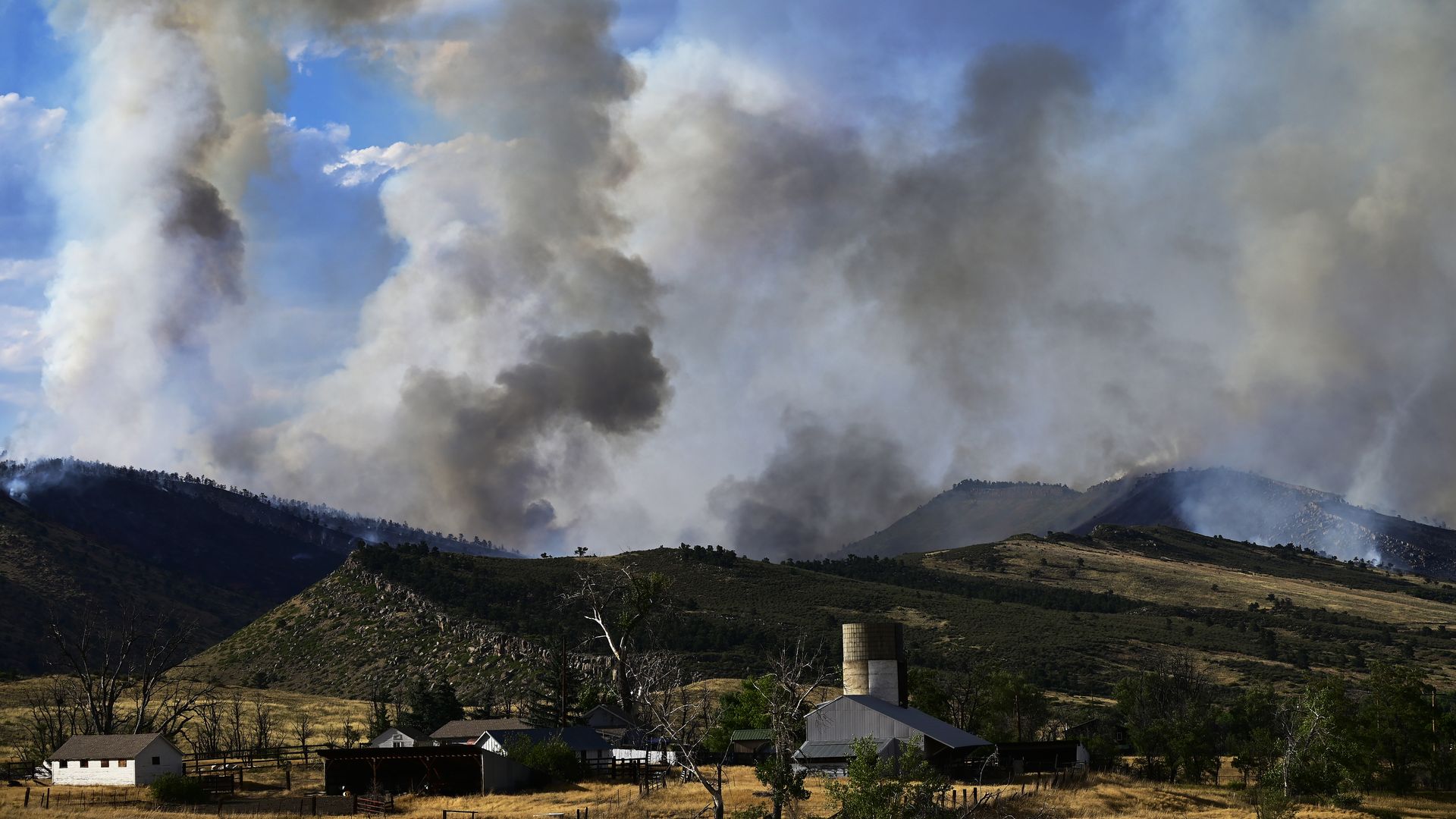
Smoke rises from a wildfire near Lyons, Colorado, in July 2024. Photo: Hyoung Chang/The Denver Post via Getty Images
Wildfire smoke could cause tens of thousands more deaths annually across the U.S. by midcentury — and hundreds in Colorado — without stronger environmental protections, a new study in Nature warns.
State of play: On Friday, members of Colorado's Democratic congressional delegation announced over $26 million in new federal funding to reduce wildfire risk across Colorado.
- The dollars come from the $5.5 billion in the Bipartisan Infrastructure Law earmarked for forest management and fire preparedness.
- Top recipients include Larimer County ($9.9 million), Jefferson County ($9.7 million), Montezuma County ($2.6 million) and Grand County ($2.5 million).
- Meanwhile, Gov. Jared Polis on Friday officially requested a major disaster declaration from President Trump to unlock FEMA funding for recovery efforts from the Elk and Lee Fires in Rio Blanco County that ignited in August.
What they're saying: "Colorado has faced increasingly devastating threats from the largest wildfires in our state's history," Sen. Michael Bennet said in a statement. "Investing in wildfire mitigation and preparedness is critical to safeguarding our communities, public lands, and way of life for future generations."
Why it matters: The fresh government action comes as new research underscores the deadly risks of wildfire smoke in a warming climate. The grim findings provide some of the strongest warnings yet that climate change isn't just fueling bigger fires, but also putting more lives at risk, the study's authors say.
Threat level: Under the worst climate scenarios, wildfire smoke could cause more than 70,000 excess deaths per year nationally by 2050, the study projects.
- The projection estimates that in a moderate warming scenario, Colorado would see 529 additional deaths annually around midcentury.
What they did: Researchers analyzed 20 years of death records, satellite and ground data and climate models to trace the connection between smoke exposure and mortality.
The big picture: The study's projected impacts "are much larger than anything else that has been measured," Marshall Burke, an environmental economist at Stanford University who contributed to the study, told the New York Times.
- The authors called smoke-related health effects "among the most important and costly consequences of a warming climate in the U.S."