DIA eyes nuclear energy to fuel future growth

Add Axios as your preferred source to
see more of our stories on Google.
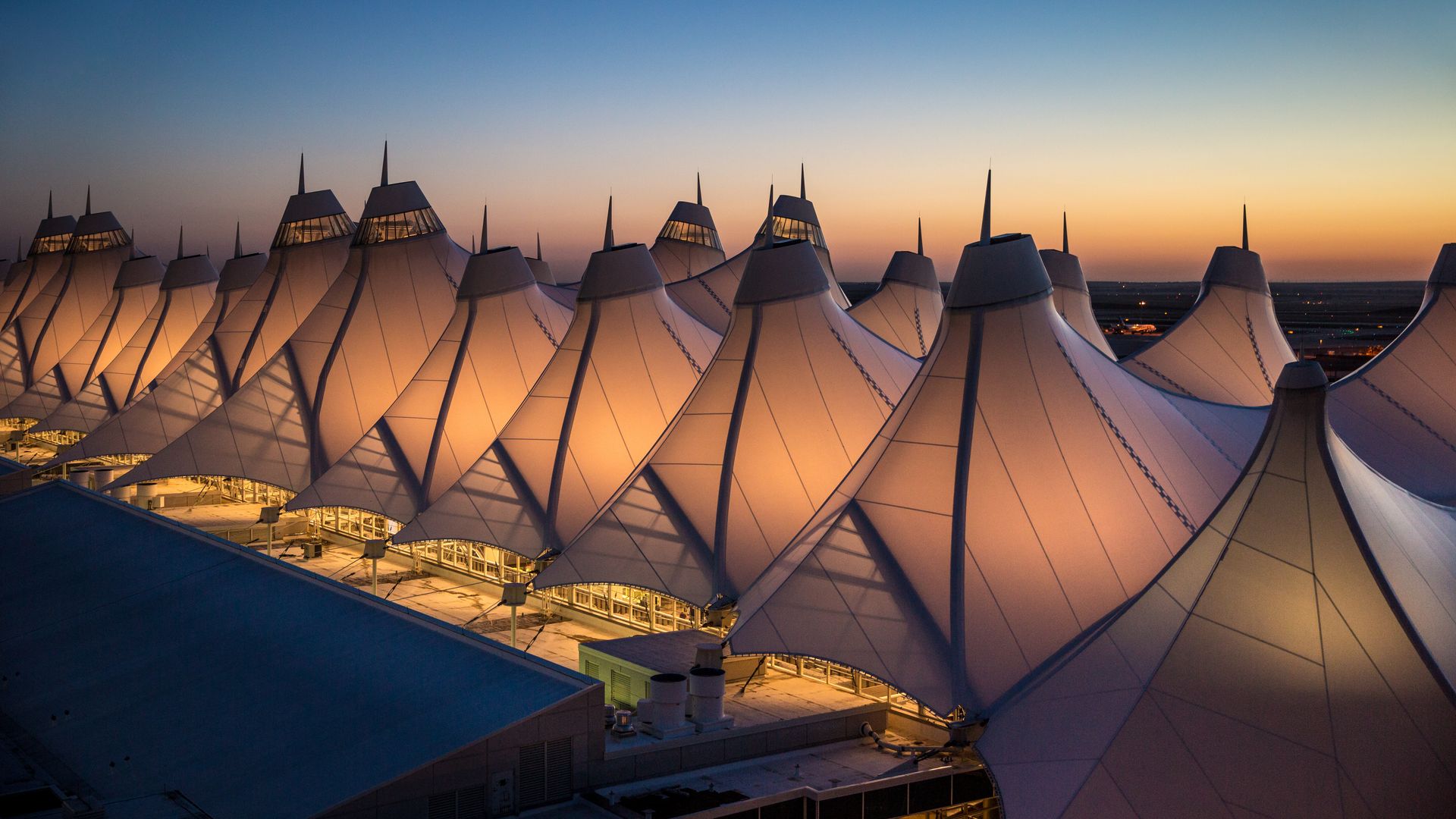
Denver International Airport's iconic white-tent roof. Photo: George Rose/Getty Images
Denver International Airport wants to go nuclear — literally.
Why it matters: DIA's energy needs are skyrocketing as the third-busiest airport in the U.S. and sixth-busiest in the world. CEO Phil Washington says only massive, clean and reliable power can keep pace.
The latest: Washington on Wednesday announced a plan to study the feasibility of building small modular nuclear reactors (SMRs) to help make DIA the greenest airport in the world.
- Denver's airport has put out a request for proposals to conduct the study, which Washington said will cost about $1 million and take six to 12 months.
How it works: SMRs are advanced nuclear power plants with a smaller footprint, faster build time and lower safety risks than traditional reactors.
Friction point: Councilmember Stacie Gilmore, who represents the district that includes DIA, raised concerns over nuclear power's water use — then slammed Washington for bypassing her and area residents before launching the effort.
- "You're not communicating with me and you're not communicating with my community," she told him in a tense exchange during a City Council committee meeting Wednesday.
By the numbers: DIA currently uses 45 megawatts of electricity — largely powered by Xcel Energy — but airport officials estimate the facility and operations could require up to 400 megawatts by 2050.
- SMRs generate up to 300 megawatts each and require 10–100 acres of land, per DIA officials. Water usage varies depending on the design and cooling system.
The big picture: DIA's nuclear push reflects a growing trend. A new Colorado law — effective Wednesday — reclassified nuclear energy as "clean energy."
- At the same time, the White House is moving to fast-track nuclear development, while Big Tech chases SMRs to power data centers.
Yes, but: Critics argue nuclear isn't truly clean — and it's expensive and risky.
- Nuclear energy "is creating waste that lasts countless generations," Chris Allred, nuclear guardianship coordinator at Rocky Mountain Peace and Justice Center, told CBS4.
What's next: The airport plans to select a vendor to conduct the feasibility study by the end of 2025, pending City Council approval. DIA officials expect to complete the study by mid-2027.