Colorado sees dangerous heat waves increase


Add Axios as your preferred source to
see more of our stories on Google.
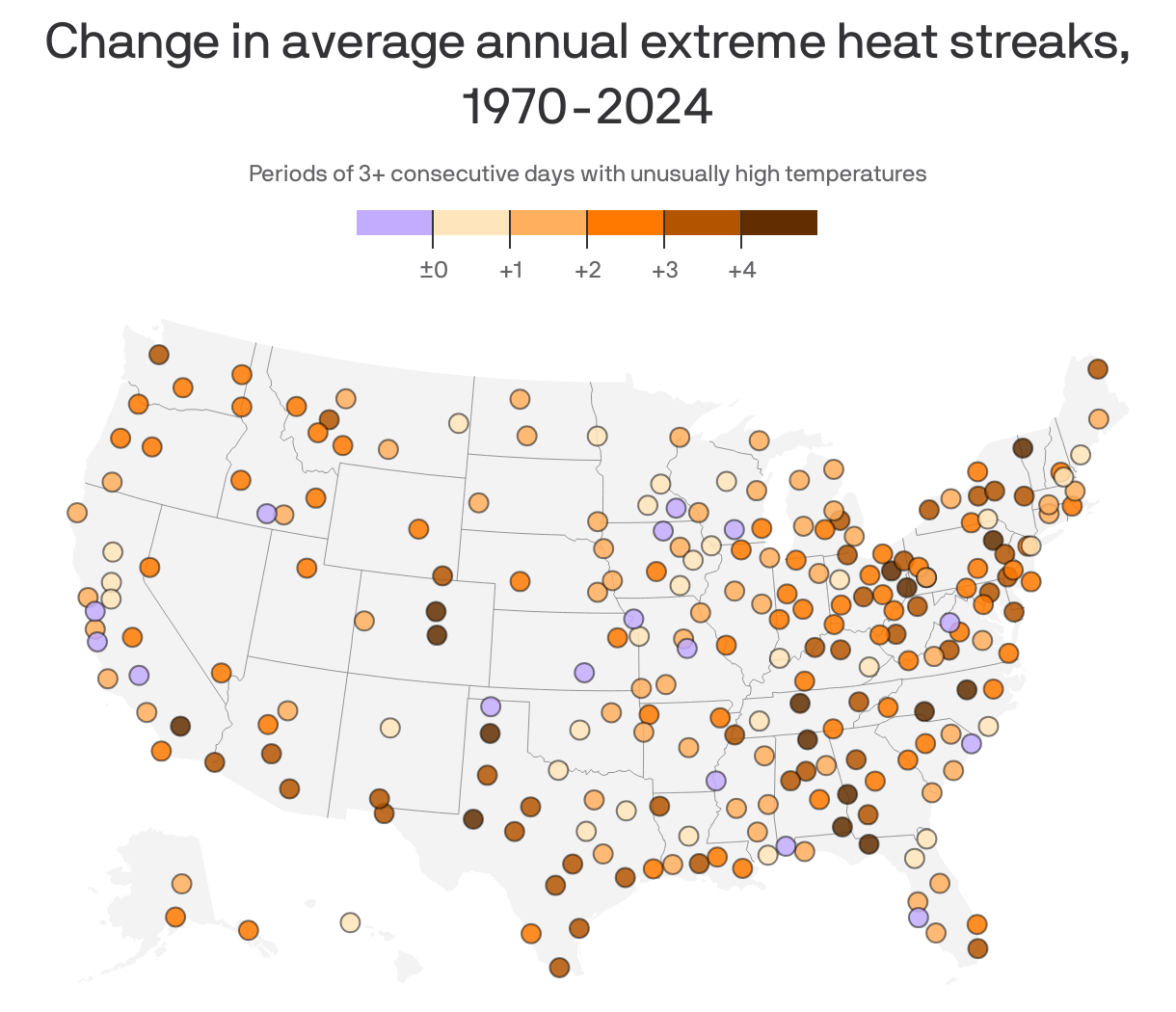
The two largest cities in Colorado are getting more heat streaks, raising health risks for residents, a new analysis finds.
The big picture: Denver and Colorado Springs both had four additional heat streaks on average between 1970 and 2024, per a new report from research group Climate Central.
- Nearly 200 U.S. cities recorded more heat waves. Some areas, including Nashville, Tennessee, and Raleigh, North Carolina, now see a whopping five more heat streaks on average each year.
Why it matters: Prolonged heat — which much of the U.S. has experienced this summer — is particularly hazardous to human health.
- The effects of extreme heat on the body tend to be cumulative, and warm nights offer little reprieve for those without air conditioning.
- Multiday heat streaks are also challenging for power grid operators and can worsen air quality.
By the numbers: The average number of annual extreme heat streaks rose in 80% of the 247 U.S. cities analyzed in the Climate Central report.
State of play: While this week may not register any heat waves, Denver's particular brand of sporadic weather will be on full display.
- Incoming storms could prompt flash floods, per the National Weather Service, just one day after 90-degree temperatures engulfed the metro area.
The latest: Tuesday got off to a historically muggy start in Denver, with the city recording its highest dew point in 17 years — an indicator of potentially severe weather, according to 9News.
How it works: Climate Central defines an "extreme heat streak" as three or more consecutive days with maximum temperatures over the 90th percentile of the daily max temperatures of a given location.
Between the lines: Climate change is making extreme heat more intense and more frequent, studies have shown.
- Many urban neighborhoods, including several in Denver, face the "urban heat island" phenomenon, where buildings, roads and other structures trap heat, making it even hotter.