Denver composting grows, but enforcement lags

Add Axios as your preferred source to
see more of our stories on Google.
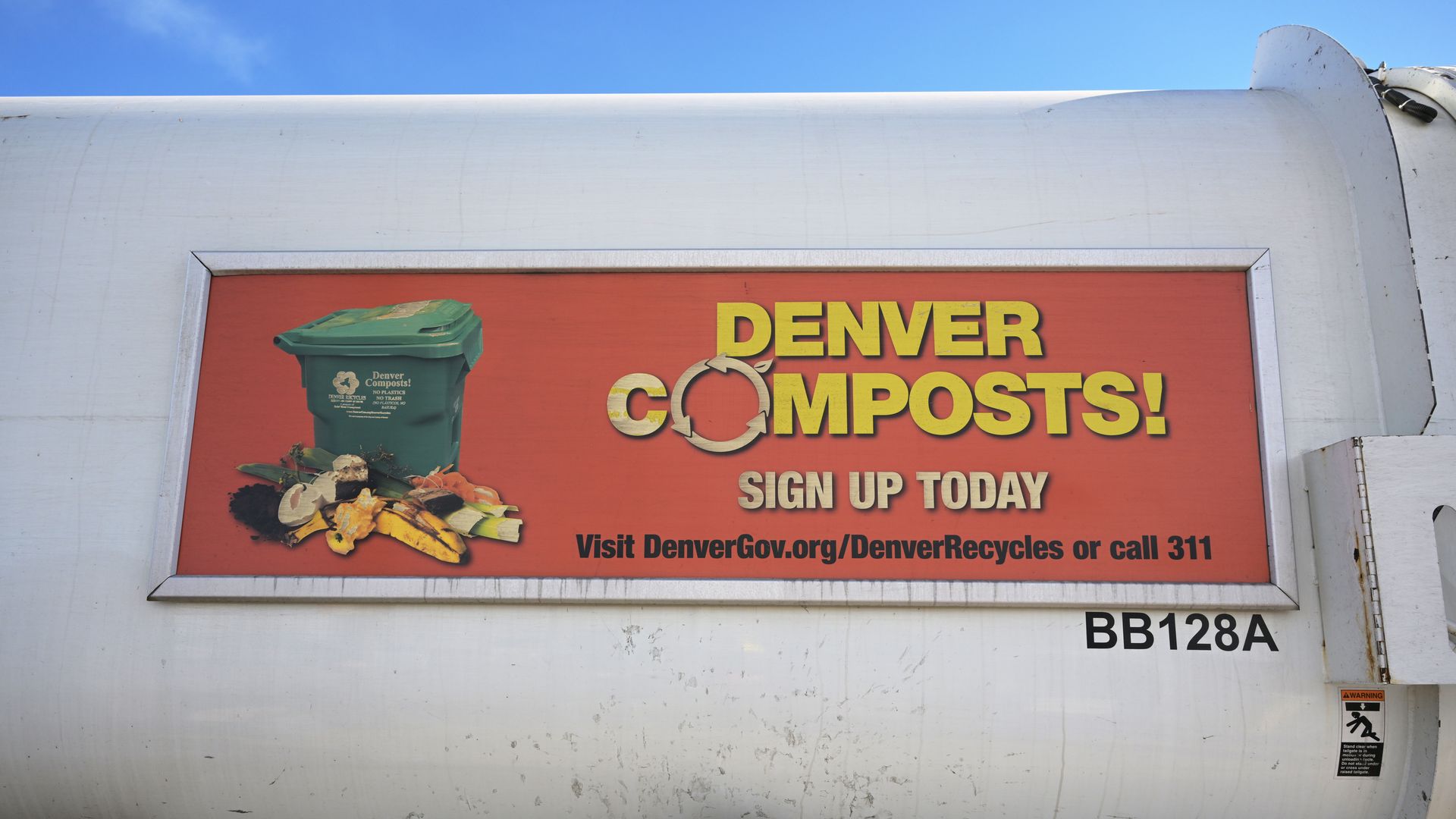
A composting sign on a Denver recycling truck. Photo: Hyoung Chang/The Denver Post via Getty Images
Denver's composting program is catching on, but changing habits — and hitting ambitious waste-diversion goals — will take more than free green bins.
Why it matters: Food and yard waste that gets composted instead of landfilled dramatically cuts potent methane emissions.
- Huge volumes of that organic waste, however, are still heading to Denver's dump — raising questions about how the city is measuring success, closing enforcement gaps and ensuring real change.
By the numbers: 7,700 tons of compost were collected this year in Denver between January and May — a 72% jump from the same period last year, per city figures provided to Axios Denver.
- More than 73,000 households, totaling roughly 180,000 people — about a quarter of the city's population — now have compost carts since the citywide rollout wrapped in March.
The big picture: Denver expects to end 2025 with an overall 28.8% recycling and composting diversion rate, Department of Transportation and Infrastructure spokesperson Nancy Kuhn tells Axios Denver.
- That's on target for the year, Kuhn says, but remains well short of the city's 50% goal by 2027.
What they're saying: City officials are calling the growth a win. "Overall, the compost program is going well," Kuhn says.
State of play: Composting isn't mandatory in Denver, and the city's enforcement approach is more of a gentle nudge than a punitive crackdown.
- Inspectors check bins and leave reminder tags for contamination — but that's about it.
- "We are not fining anyone right now," Sean Brown, manager of the transportation department's diversion and education program, told the Colorado Sun. "You'll get upwards of 20 to 25 opportunities and notices before anything happens."
What we're watching: As major budget cuts and staff layoffs loom, Denver's already light oversight could get even lighter.
The bottom line: Composting in Denver is growing, but the practice is far from mainstream.
- Until participation is required and contamination is enforced, most food scraps may end up where they always have: the landfill.