By the numbers: Who gets Medicaid insurance in Colorado

Add Axios as your preferred source to
see more of our stories on Google.
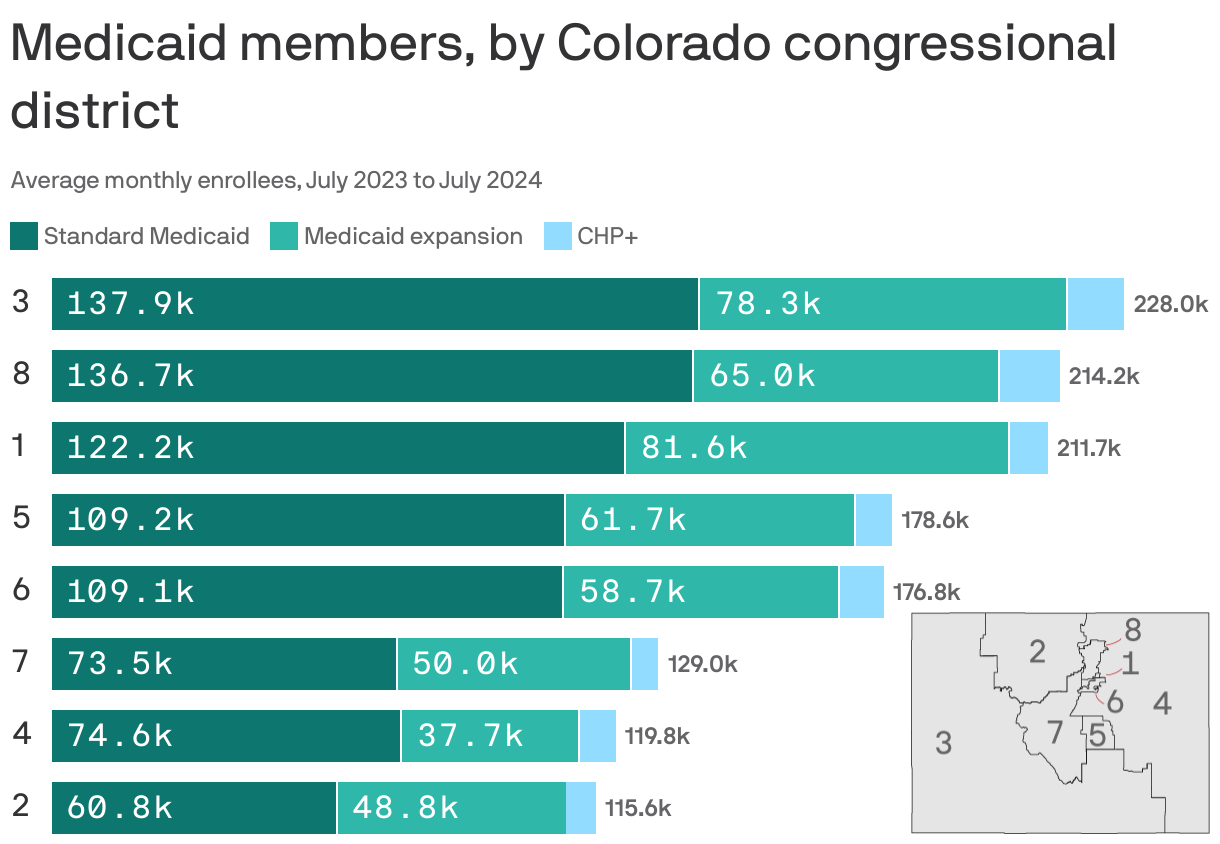
About 1 in 5 Colorado residents receive Medicaid insurance and 39% are children, while another 6% are 65 and older.
Why it matters: The numbers reflect the potential far-reaching effects of Medicaid cuts from President Trump's One Big Beautiful Bill Act, and raise the stakes for Democratic state lawmakers who are scrambling to preserve the safety-net program known as Health First Colorado.
By the numbers: Here's a look at who benefits from Medicaid insurance and who would be most vulnerable to changes in the program.
- The figures are based on the latest state estimates from fiscal year 2023-24.
📉 1.22 million Colorado residents receive Medicaid coverage, state officials reported in July.
📊 39% are white, 33% are Hispanic or Latino. 7% are Black.
👶 44% of the state's births were covered by Medicaid and CHP+.
♿ The largest portion of expenditures, more than 40%, covers individuals with disabilities, who are 5% of those enrolled in Medicaid.
🏨 Colorado hospitals receive $3 billion in Medicaid, the largest share of payouts.
🚨 An estimated 377,000 Colorado residents are at risk of losing Medicaid coverage because of the new work requirements, and administrative costs to monitor employment status would cost the state $57 million a year.
🚩 Rural communities will take the brunt of the cuts. In five southern Colorado counties, more than 50% of the population received Medicaid.
- In Denver, 35% of the population is enrolled in the program, while in El Paso County it's 31%.
❗ The two congressional districts with the largest proportion of Medicaid enrollees are represented by Republicans who voted for the reconciliation bill.
- 228,000 live in the 3rd District, represented by Jeff Hurd.
- 214,200 live in the 8th District, represented by Gabe Evans.