How much Colorado is losing in federal funding

Add Axios as your preferred source to
see more of our stories on Google.
Colorado has lost $76 million in federal grants in the first half of the year, and the state is at risk of forfeiting $56 million more in the near future, according to the governor's office.
Why it matters: The potential $132 million hit, charted in a new dashboard, is leading to the termination of state programs related to climate change, food assistance, environmental justice and boating safety, an Axios Denver review finds.
State of play: The single largest take-back from the Trump administration so far is $36 million to build out electric vehicle charging stations across the state.
- The other major loss is $19 million to assist farmers with climate-smart production of crops, a priority for the Biden administration.
What they're saying: "This is federal funding that has already been allocated to states by Congress, and now the administration is working to take it away," Gov. Jared Polis, a Democrat, said in a statement. "We are doing everything in our power to protect this funding … including pursuing legal action when necessary
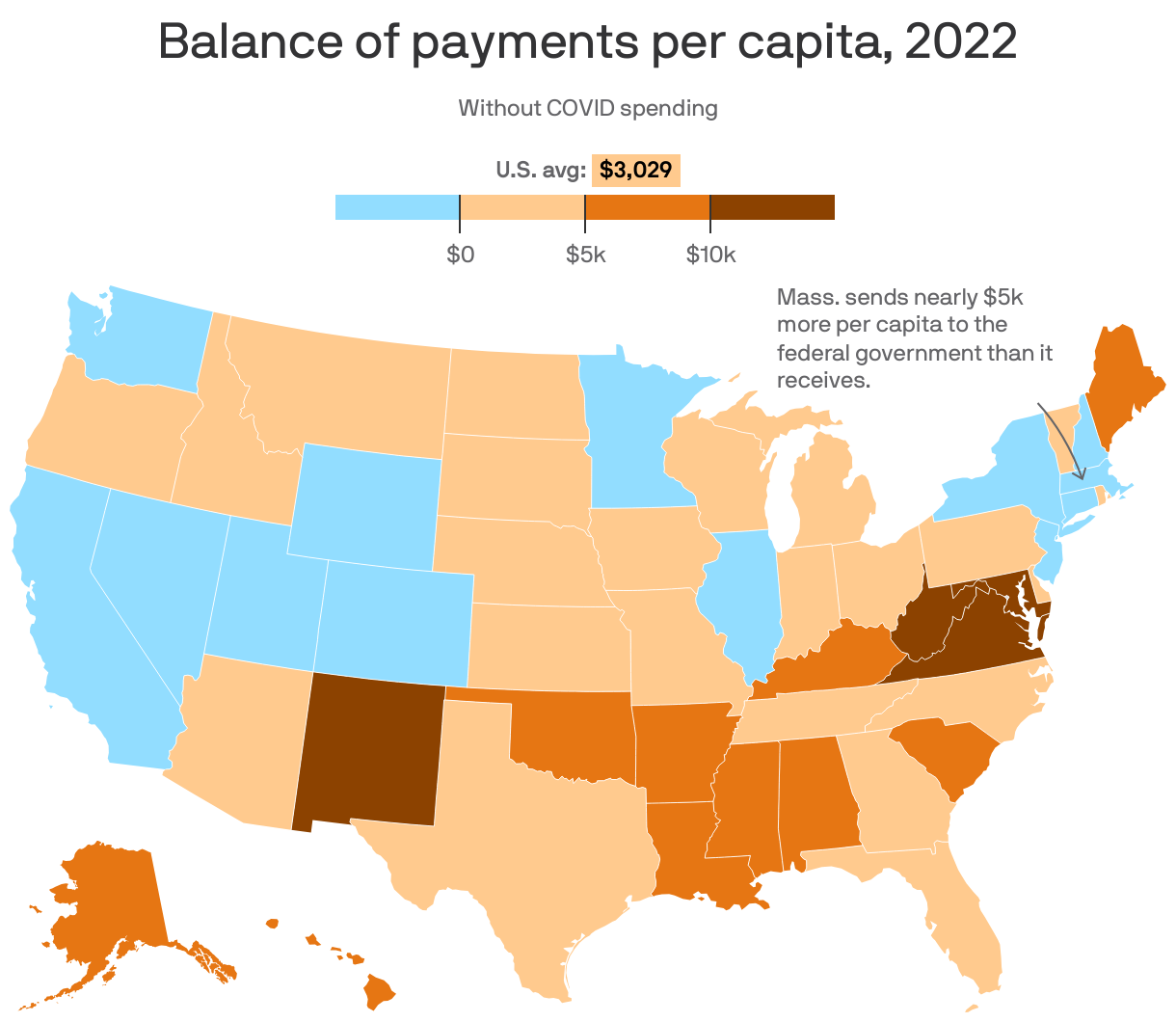
The big picture: For every dollar in federal taxes paid by Colorado residents, the state received 90 cents in federal grants, a losing proposition compared to other states, a recent study shows.
Yes, but: The Polis administration is celebrating the restoration of $282 million in federal money revoked but later reinstituted.
- Colorado nearly lost $173 million to track infectious diseases and another $33 million to boost immunization rates.
- Other renewed programs include mental health and substance abuse treatment, funding for AmeriCorps and a Federal Emergency Management Agency initiative to reduce flood damages.
What we're watching: At risk is $52 million from Homeland Security and FEMA, including grants to prevent and respond to terrorist attacks and other major threats.
- Another $4 million in limbo involves American Rescue Plan dollars to address unemployment.
The bottom line: The Trump administration's cuts are just a preamble to the potential impacts of the Republican-drafted reconciliation bill, which is still being debated.