Colorado Democrats gut Uber and transgender bills ahead of adjournment

Add Axios as your preferred source to
see more of our stories on Google.
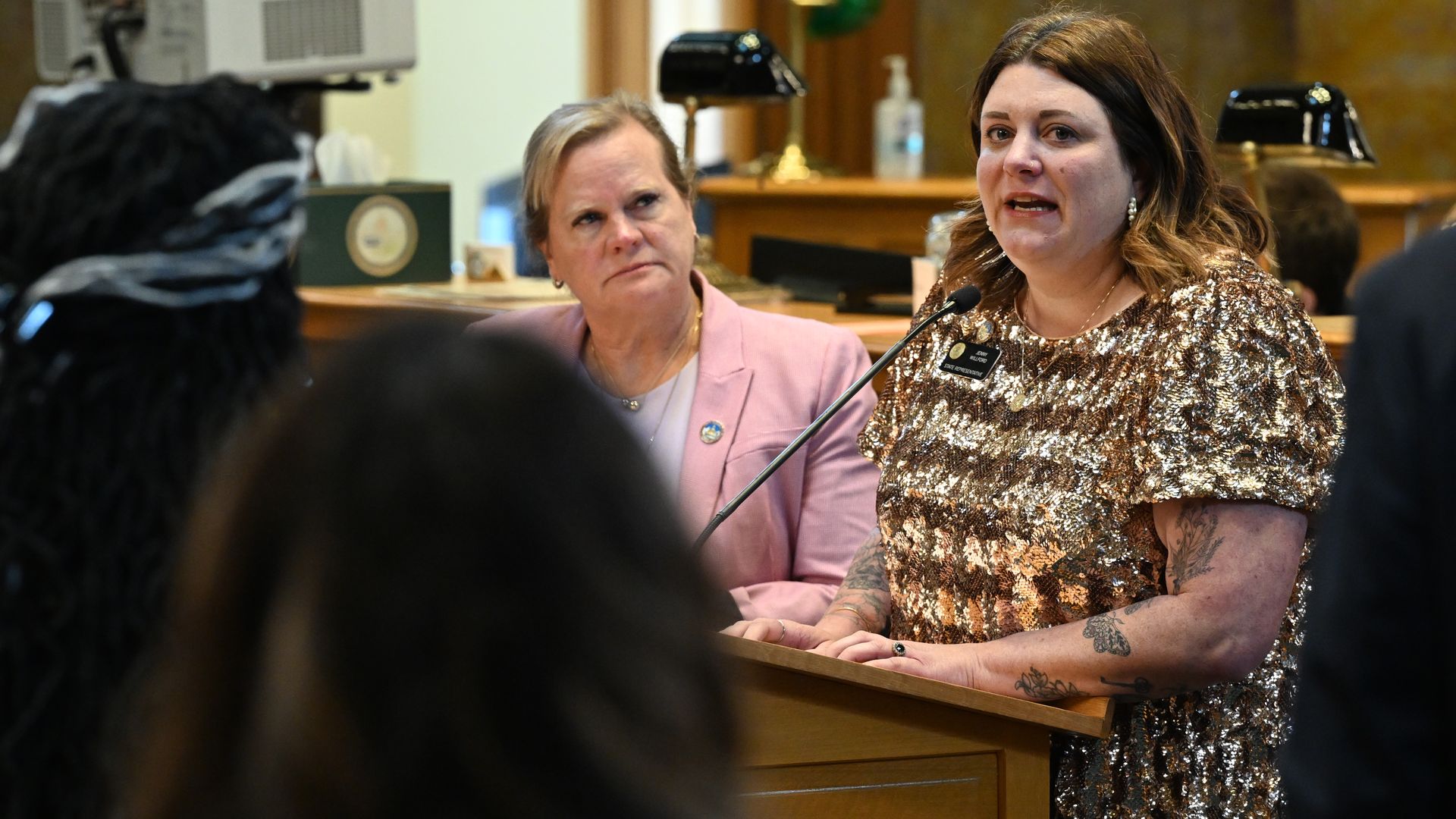
State Rep. Jenny Willford (D-Northglenn) talks about her bill to increase safety measures for ride-sharing services. Photo: Helen H. Richardson/Denver Post via Getty Images
Colorado lawmakers blared "Final Countdown" from the state Senate's speakers and rushed three dozen bills to the finish line Wednesday before adjourning at 7:22pm.
Why it matters: The last day of the legislative session is the most important — the make-or-break moment for hundreds of proposed new laws.
State of play: The rush rescued legislation for K-12 school funding and free school meals, but required Democrats to make compromises on other flagship legislation.
Case in point: The sponsors of a measure to address safety concerns on ride-sharing platforms, like Uber and Lyft, gutted their own legislation at the behest of the companies that called the new rules unworkable.
- The version approved along party lines in the final hours no longer requires in-ride audio and video recordings and removes most of the provisions holding the companies legally liable for bad actors.
Bill sponsor Sen. Jessie Danielson (D-Wheat Ridge) acknowledged the "drastic changes and compromises" but asked her colleagues "to stand with the survivors … to help regulate these companies in the name of safety, real safety."
- The bill still would require ride-share companies to prohibit drivers from sharing food or drinks with passengers and force companies to conduct driver background checks every six months.
- The companies and Gov. Jared Polis are still expressing concerns about the language, making its future uncertain.
Friction point: Two bills approved to protect transgender individuals also came down to the wire and survived hours of opposing debate from Republicans.
A weakened House Bill 1312 would add gender identity to the current anti-discrimination law and prohibits deadnaming.
- Other provisions require schools with policies on names to consider transgender students and allow students to choose either option available in a school dress code.
The second bill would put a current rule that insurance companies cover gender-affirming care into state law. The move is designed to protect against adverse federal action on the topic.
The other side: Republicans argued the transgender bills involve "experimental medicine" and infringe on the role of parents.
- "We should be uniting families, not driving wedges between them," Sen. Scott Bright (R-Platteville) said during the debate.
What's next: A special session later this year is not out of the question. Democratic leaders may need to address a major budget hole if the Trump administration reduces the state's Medicaid dollars, or consider other pressing issues, such as artificial intelligence.