Colorado lawmakers advance tax breaks for data centers


Add Axios as your preferred source to
see more of our stories on Google.

Illustration: Sarah Grillo/Axios
Colorado is prepared to offer tax breaks worth millions to lure data centers that power AI despite evidence questioning their economic impact.
Why it matters: The proposed incentives — valued at nearly $17 million when implemented — represent a big bet at a time when Colorado lawmakers are pinching pennies.
State of play: Colorado is behind the curve on data centers, especially compared with its northern neighbor Wyoming, but lawmakers here are hoping a state sales and use tax break will draw more development, as well as jobs and improvements to the power grid.
- The exemption is equal to 100% of expenses and will stay in place for 20 years.
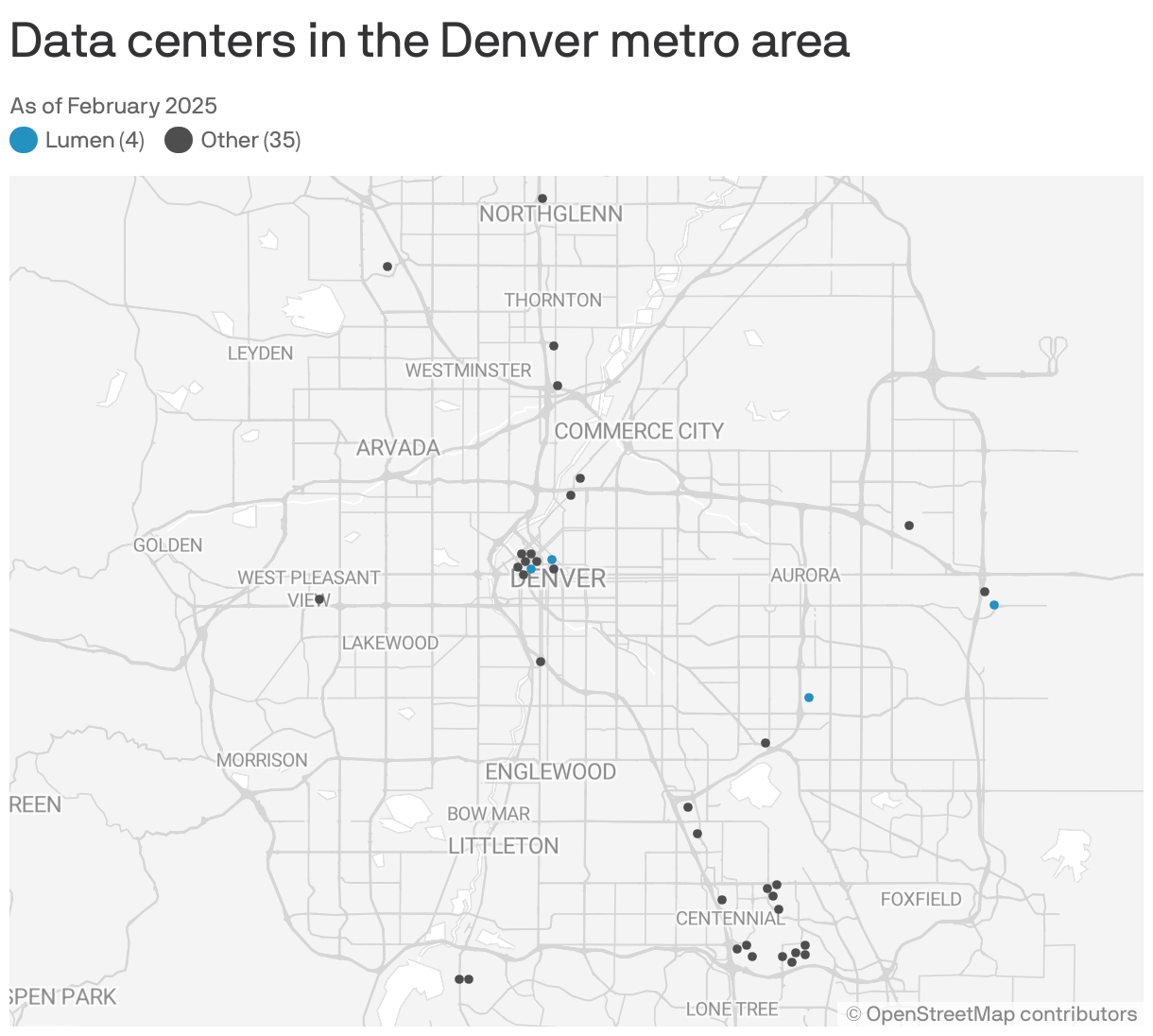
Friction point: The question is who benefits from data centers given their soaring energy and water demands, unproven benefits for local communities and minimal permanent jobs created.
- If leaders prioritize jobs, there are better industries for which to compete, says Peter Orazem, an economics professor at Iowa State University.
- But future property tax revenue for local governments could justify the investment, he says.
Context: A 2023 state-commissioned report in Virginia, the country's data center hub, found that the initial construction phase delivered economic benefits, but they drop off sharply once the centers are built.
- Building a 250,000-square-foot data center employs up to 1,500 local employees for 12-18 months. But that declines to 50 full-time workers, half of them contracted.
The other side: A recent Data Center Coalition report touts the economic benefits of data centers beyond the jobs inside them.
- Those include bolstering supply-chain businesses, employees' spending in the community, and companies' state and local tax contributions — which come without straining public services like schools.
What's next: The Colorado bill won approval at a contentious legislative hearing last week and now moves to the appropriations committee for consideration.