Downsizing state government is slow-moving, new report shows

Add Axios as your preferred source to
see more of our stories on Google.
The state Department of Labor and Employment recently relocated to a smaller space in downtown Denver and the Department of Human Services sold a 10-acre property in Wheat Ridge.
Why it matters: Both are part of a pandemic-era initiative by Gov. Jared Polis to reduce the physical space the state government occupies to save money, all the more important given the state's roughly $1 billion budget shortfall this year.
Yes, but: Five years in, the state is struggling to hit its goal.
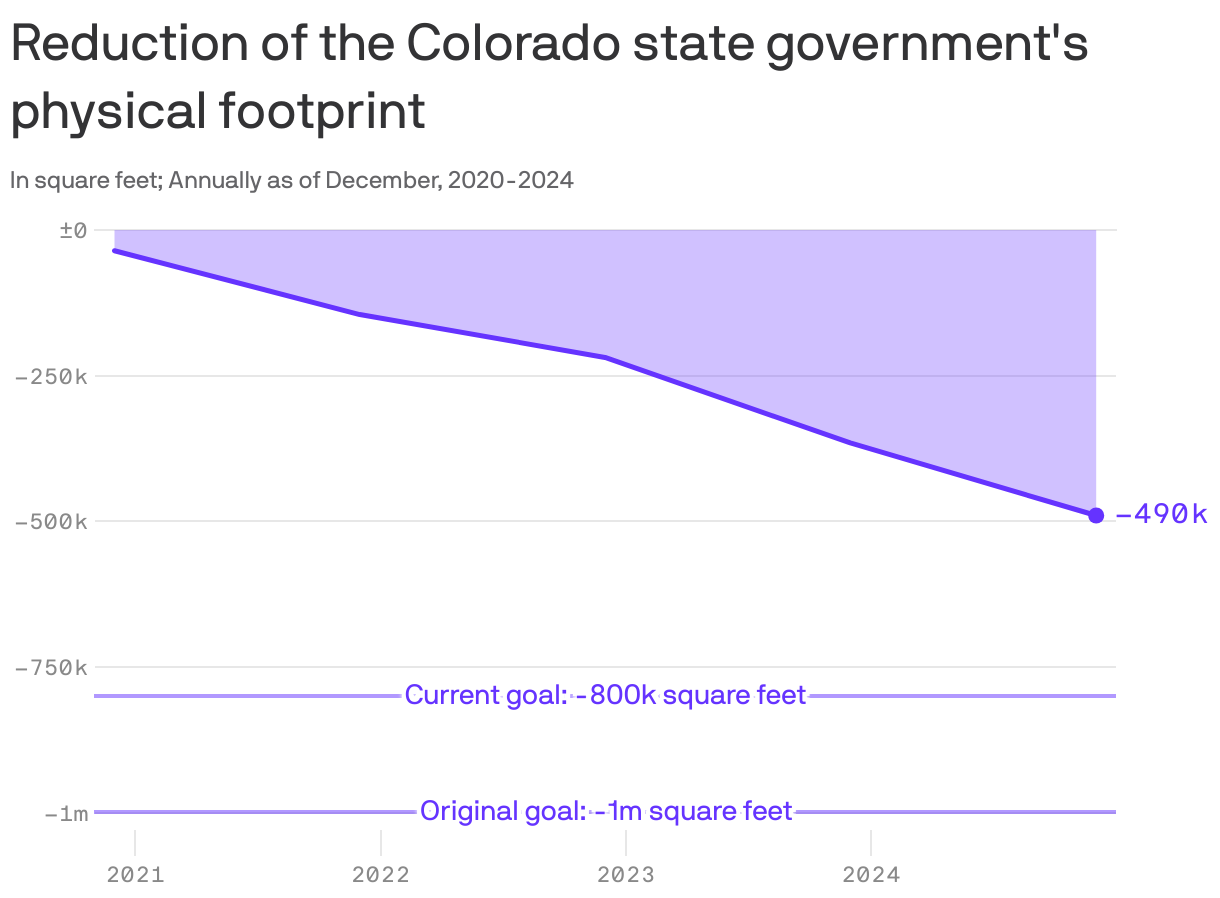
By the numbers: The original objective to eliminate 1 million square feet by July 1, 2026 is far off.
- The latest numbers show the administration only cut 490,000 square feet to date.
The intrigue: The goal has since been reduced to 800,000 square feet and the deadline pushed to July 1, 2027. The state estimates total savings at $15.2 million, or $19 a square foot.
The latest: The slow progress in reducing the physical footprint is due to long-term leases that require negotiations and fees to terminate ahead of the contract date, said Doug Platt, a spokesperson for the Department of Personnel and Administration.
- The Polis administration is asking state budget writers for $692,189 to shed even more space and consolidate an unspecified state agency into the Capitol complex by October.
- Much of the money would cover early lease termination fees, projected to save an estimated $1.5 million in remaining rent payments for underutilized office space.
Friction point: The space-saving effort creates a ripple effect and contributes to the glut of vacant office space, particularly in Denver, where empty buildings are hurting downtown businesses and restaurants.
- The vacancy rate is more than 24%, above the national average of 20%, the latest figures show.
Between the lines: The downsizing is possible with the Polis administration's flexible work plan that allows government agency directors to create policies that permit employees to work from home.
- The policy is driven by employee choice and designed to help the state recruit and retain a talented workforce, per the administration.
Context: The state's approach runs counter to the White House's new mandate that federal agencies bring employees back to the office.
- And for some, it's more flexible than the city of Denver, where employees are expected to work in the office at least three days a week.