How Colorado's AG is fighting Trump in court


Add Axios as your preferred source to
see more of our stories on Google.
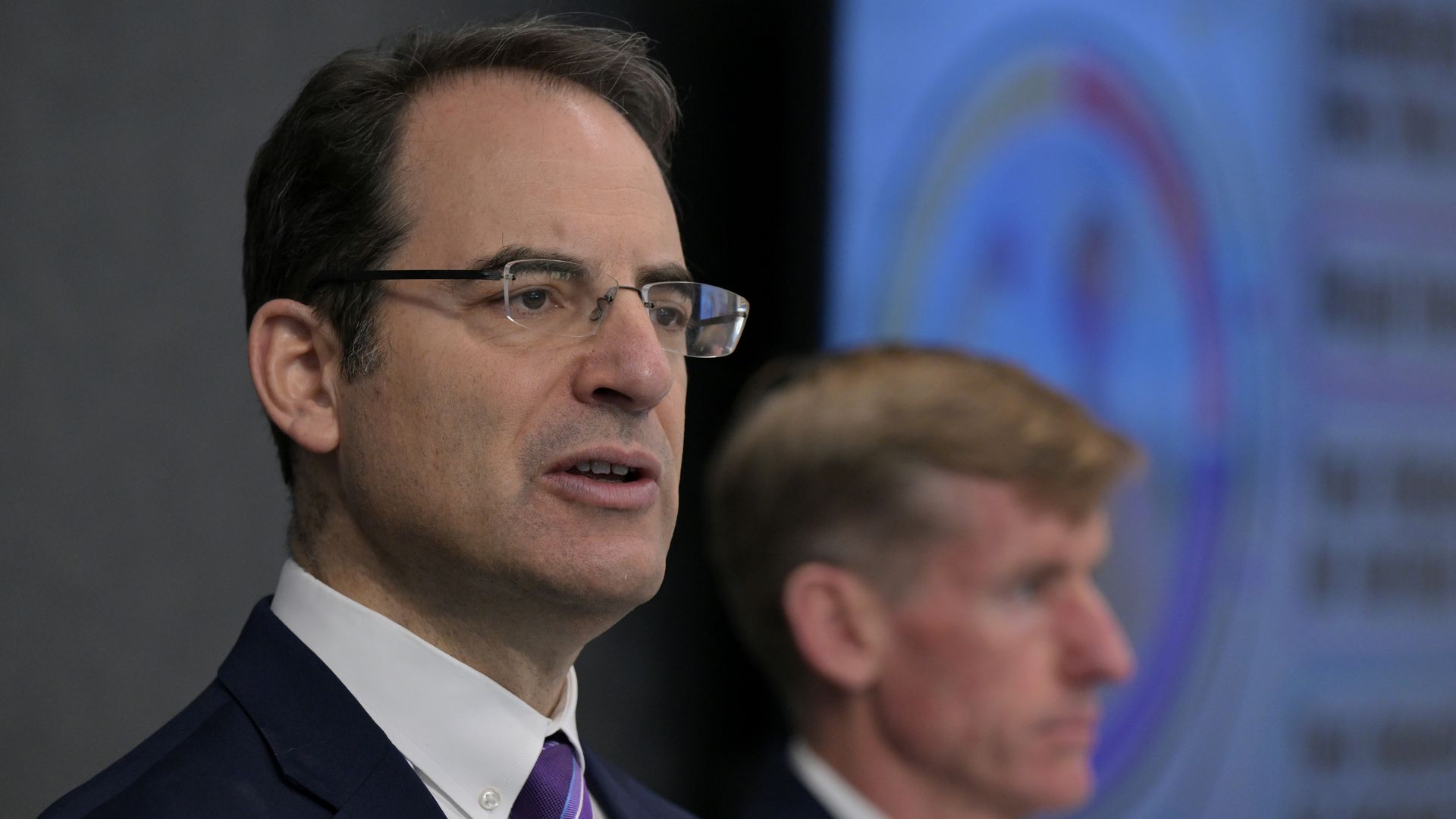
Colorado Attorney General Phil Weiser, left. Photo: Hyoung Chang/Denver Post via Getty Images
Attorney General Phil Weiser is fulfilling his pledge to block President Trump's policy agenda with more than three dozen lawsuits.
Why it matters: Weiser, a Democratic candidate for governor, is putting Colorado on the frontlines of the blue-state resistance and expending taxpayer dollars to wage the legal battles.
By the numbers: As of early October, Weiser has joined nearly 40 lawsuits on behalf of Colorado against the Trump administration.
State of play: Here's a rundown of the legal challenges:
Domestic violence victim support: Weiser is co-leading a coalition of 21 attorneys general suing the U.S. Department of Justice, accusing it of illegally restricting federal assistance that supports survivors by barring the use of those funds for services to undocumented immigrants. States say the move upends decades of practice and violates federal law and the Constitution.
Sexual health education programs: Colorado — part of a coalition of 16 states and D.C. — has sued the U.S. Department of Health and Human Services, accusing it of threatening to pull funding for longstanding teen sexual health education programs unless states strip language affirming young people's gender identity.
Crime victim support: Weiser is one of 21 AGs suing the DOJ over allegations it's unlawfully tying roughly $1 billion in Victims of Crime Act grants to cooperation with federal immigration enforcement. They argue the agency is forcing states to choose between protecting crime victims or acting as immigration agents.
Energy programs: Weiser is co-leading a coalition of 19 states and the District of Columbia in suing to stop the U.S. Department of Energy from imposing a new policy that caps reimbursement for state energy grants, which the coalition argues threatens the future of "critical" clean energy programs.
Planned Parenthood: Weiser and other attorneys general are seeking to block a provision in the latest federal spending bill that keeps Medicaid patients from receiving health care services from Planned Parenthood.
SNAP funding: A 20-state coalition that includes Colorado is suing the Trump administration to block its demand for personal information about people enrolled in the Supplemental Nutrition Assistance Program (SNAP).
Public benefits: Weiser joined other states in challenging Trump's new rules that block people living in the country illegally from receiving state safety net services, such as education and health care.
Health insurance exchanges: The lawsuit challenges a rule that makes it harder for people to purchase health care coverage on federal and state marketplaces.
- 300,000 Colorado residents used the marketplace for 2025 enrollment.
FEMA funding: Joined by 20 other states, Weiser is challenging the federal termination of a pre-disaster mitigation fund known as the Building Resilient Infrastructure and Communities.
Education funding: The Trump administration froze $80 million in education funding for Colorado schools, prompting Weiser and other attorneys general to challenge the move.
- The lawsuit argues that freezing funds violates federal law because the money was already allocated by Congress.
Medicaid enrollee data: Weiser joined 19 state attorneys general in suing the U.S. Department of Health and Human Services over its transfer of personal Medicaid data to Homeland Security and Immigration and Customs Enforcement.
- The lawsuit claims the move violates federal privacy laws and weaponizes health care information for immigration enforcement.
Youth mental health funds: Weiser is one of 16 AGs suing the U.S. Department of Education and its secretary, Linda McMahon, over the termination of more than $1 billion in federal funding for school-based mental health programs.
- The funding was meant to help permanently hire 14,000 mental health professionals at schools, primarily in low-income and rural communities. The AGs are calling the cuts "arbitrary and capricious" and in violation of federal law and the U.S. Constitution.
NPR and PBS: Weiser is co-leading a lawsuit against the Trump administration in support of legal challenges filed by National Public Radio and the Public Broadcasting Service to prevent proposed funding cuts.
- Weiser's brief argues the stations provide a critical role in delivering information to the public.
Clean Car Program: Colorado joined a lawsuit in June to preserve the waiver California and Colorado received to adopt restrictions on vehicle emissions after the EPA removed them.
- "The Trump administration's attack on clean air is breathtaking," Weiser said.
ATF: In his second lawsuit on gun restrictions, Weiser joined other states in suing to restrict forced reset triggers that increase the firing rate of semi-automatic weapons.
- A Trump order repealing rules on the device would violate federal and state law, Weiser argues.
National Science Foundation: The Trump administration is cutting the foundation's projects related to diversity and inclusion and capping indirect costs at 15%.
- Weiser is one of 16 AGs fighting this, saying the arbitrary moves violate federal law and the U.S. Constitution.
DEI executive order: Colorado and 17 state attorneys general are fighting Trump's executive orders aimed at eliminating equity and diversity programs in higher education and the private sector.
- Weiser called the orders a "government-sanctioned intimidation campaign designed to undermine our civil rights laws."
DOT and DHS spending: Colorado joined two lawsuits against the Trump administration for threatening to withhold money for transportation projects and emergency services if states don't follow guidance for his immigration crackdown.
- In 2024, Colorado received more than $26 million in federal dollars from the Department of Homeland Security and over a billion in money from the Department of Transportation.
EV infrastructure: Colorado is leading a lawsuit on behalf of 17 states to reverse the Trump administration's order that terminated a $5 billion federal program to build more electric vehicle charging stations.
- Colorado stands to loose tens of million if the grants are ended. The state was awarded $33 million and has guarantees for $18 million more, per the AG's office.
- Weiser contends the president cannot revoke funding approved by Congress.
Health and Human Services: Weiser and 19 other attorneys general are objecting to Robert F. Kennedy Jr.'s dismantling of the federal Health and Human Services agency and want a judge to restore key programs.
- Undermining the agency hinders Colorado's ability to address health issues like the opioid crisis.
- "These sweeping actions are in clear violation of hundreds of federal statutes and regulations, and ... the Trump administration does not have the authority to make these reckless changes," Weiser argued in a statement.
Wind energy: A new lawsuit filed May 5 is questioning a Trump administration memorandum that froze the development of wind energy
- About one-third of Colorado's electric energy came from wind in 2023 and the industry supports about 9,000 jobs, the attorney general's office says.
- The state attorneys argue the memorandum violates the Administrative Procedure Act and violating laws about permitting new turbines. They want a judge to vacate Trump's order.
AmeriCorps: Weiser, joined by attorneys general in other states, announced a lawsuit against the Trump administration for gutting the civil service agency. The massive reduction in workforce effectively ceased the agency's operations.
- AmeriCorps volunteers in Colorado contributed over a million service hours in 2024, working in all 64 counties. The work include wildfire mitigation and expanding mental health care access, according to the governor's office.
- The attorneys are arguing that Trump's move to gut the organization violates the Administrative Procedure Act and the separation of powers under the U.S. Constitution because AmeriCorps was created by Congress.
Tariffs: The lawsuit challenges Trump's sweeping tariffs on dozens of countries, notably China, where the president have placed 125% levies.
- Colorado is being hit by the impacts of tariffs, increasing the price of goods from other countries, notably Canada and Mexico, two key trade partners.
- In their filing, the states argue Trump's tariffs are unlawful because Congress did not give him the authority to impose them.
Social Security Administration cuts: This multi-state lawsuit filed April 15 seeks to reverse staffing cuts that jeopardize the payment of benefits.
- Nearly one in six Colorado residents receive Social Security benefits, totaling more than 950,000 people, and personnel cuts have led to longer lines at offices and call centers.
- Weiser argues the reorganization measures are delaying benefits and limiting the agency's ability to meet beneficiaries needs and violates federal law.
Federal election changes: Weiser is among 19 Democratic attorneys general suing Trump over his sweeping changes to federal elections, which they say is a "blatantly unconstitutional attempt to legislate-by-fiat."
- Trump's order threatens to undermine Colorado's vote-by-mail election system that voters on both sides of the aisle support. Trump has long railed against mail-in voting and said he believed his action would go "a long way toward ending" election fraud.
- The attorneys general argue in their lawsuit that that Trump does not have constitutional or congressional authority to issue the order, which includes a proof of citizenship requirement and aims to prevent states from counting mail-in ballots that arrive after Election Day.
Health and Human Services grant cuts: Weiser is co-leading a coalition of 23 states and the District of Columbia in suing HHS and Health Secretary Robert F. Kennedy Jr., for terminating $11 billion in public health grants to states.
- Colorado could lose more than $229 million for public health programs — including immunization distribution and training for local public health agencies focused on infectious disease surveillance — at a time when measles and bird flu are on the rise, Weiser warned.
- "This action of Secretary Kennedy to defund committed grants for public health and behavioral health purposes is inexplicable, illegal, and will cause untold damage to Colorado," Weiser said in a statement.
Department of Education gutting: Weiser and 20 other Democratic attorneys general sued to stop plans to dismantle the U.S. Department of Education, arguing that that the recent mass layoff of department staff was unconstitutional.
- Although only about 10% of education spending comes from the federal government — with the rest covered by state and local governments — the case takes on particular urgency right now as Colorado grapples with a billion-dollar deficit this year and state lawmakers contemplate cuts to local schools as a result.
- Weiser argued in a statement that Coloradans rely on funding and support from the Department of Education for a range of programs, including special education, student loan services and rural teacher training.
K-12 teacher preparation grants: The lawsuit seeks to reinstate grants canceled by the Department of Education for training teachers in rural school districts.
- Colorado is owed $2.8 million in grant money it was promised as part of the teacher preparation programs.
- Weiser and seven other state AGs say the immediate termination of the grant violates the Administrative Procedure Act.
Defending Consumer Financial Protection Bureau: Colorado and other states with Democratic attorneys general sued to block the Trump administration from disbanding and defunding the federal consumer protection agency.
- The CFPB's mandate is far-reaching. It oversees big banks, lenders and credit card companies to ensure they follow consumer protection laws.
- The lawsuit argues without regulation, the nation's banking system may run into trouble as it did in the 2008 financial crisis.
Gender-affirming care: Colorado joined a lawsuit with three other states to void a Trump executive order that ends federal spending to hospitals that provide gender-affirming care and criminalizes doctors who assist.
- Colorado hospitals temporarily suspended these services after the order but recently resumed after a judge temporarily blocked it.
- The lawsuit argues the executive order violates the Fifth Amendment's equal protection guarantee by singling out transgender individuals for discrimination.
Defunding medical and public health research: Weiser joined 21 other states Feb. 10 to sue the Trump administration after the National Institutes of Health announced cuts to indirect cost rates to a maximum 15%.
- The indirect cost rate is what universities and institutions use to cover operating expenses that support the research grants.
- The move violates the Administrative Procedure Act put in place during the first Trump administration to protect cuts to research projects.
Federal worker buyout: In an amicus brief on Feb. 9, Colorado and other states challenged the so-called "Fork in the Road" directive that offered federal workers eight months of pay in a deferred resignation plan.
- Colorado is home to the largest concentration of federal workers outside Washington, D.C., numbering approximately 40,000 employees, officials say.
- Federal worker unions filed the original lawsuit saying the offer is legally questionable and coercive.
DOGE access to payment system: The Department of Government Efficiency (DOGE), led by Elon Musk, obtained access to the U.S. Treasury's central payment system, a move Colorado and 18 other states contend is illegal.
- Musk could freeze payments from the system, such as Social Security, Medicare and Medicaid, as well as billions that states use for essential services, in just a click, the lawsuit alleges.
- Federal law only allows a select group of civil servants with security clearances to access the system. The lawsuit filed Feb. 7 challenges a policy change allowing access for Musk's group.
Federal funding freeze: Colorado and a score of other states filed a lawsuit and are seeking a preliminary injunction to block Trump and the federal budget office from pausing $3 trillion in federal assistance.
- The money is mission-critical for states, universities, research institutions, hospitals and others, all of whom rely on federal dollars to operate.
- Despite court orders blocking the initial executive order, Weiser and other attorneys general contend payments are still being withheld.
Birthright citizenship: A coalition of states and cities filed a legal challenge Jan. 21 to Trump's executive order ending citizenship for U.S.-born children of undocumented immigrants.
- Without citizenship, these individuals will lose basic rights and access to public services, as well as risk deportation.
- The lawsuit asserts citizenship is protected by the 14th Amendment of the U.S. Constitution and federal law. "The idea that a president could override the Constitution with the stroke of a pen is a flagrant assault on the rule of law," Weiser said.
Firearm safety measures: Weiser and more than a dozen other states announced Jan. 16 their intention to intervene in a lawsuit to protect two policies by the Bureau of Alcohol, Tobacco, Firearms, and Explosives that restrict firearms.
- Trump has repeatedly criticized two rules — a prohibition of forced reset triggers that convert firearms into fully automatic weapons and a policy ensuring background checks on gun purchases — and is expected to repeal them.
- Weiser argues the rules are critical to protecting communities from gun violence.
ACA access for DACA recipients: On Jan. 15, before Trump took office, Colorado and other states filed a motion to intervene in a lawsuit to protect access to Affordable Care Act insurance exchanges for Deferred Action for Childhood Arrivals, DACA, recipients.
- The preemptive action was designed to thwart any attempt by the new administration to roll back Biden administration rules.
- Because the Trump administration won't defend the rule, the states are pledging to do so.
Editor's note: This is story is ongoing and will be updated as new lawsuits are filed.