Colorado's spending reserve targeted in tight budget year

Add Axios as your preferred source to
see more of our stories on Google.
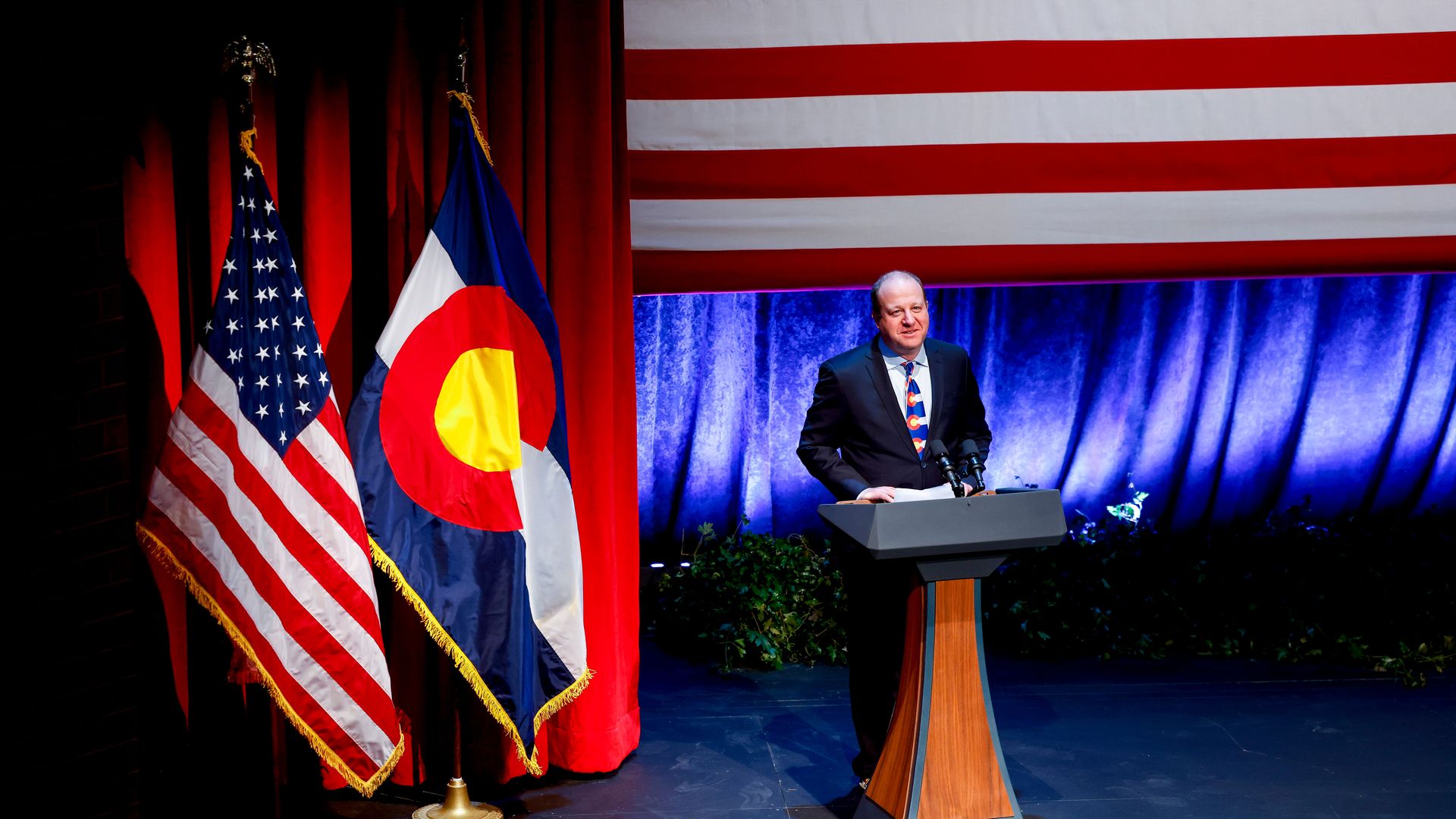
Colorado Gov. Jared Polis in 2023. Photo: Michael Ciaglo/Bloomberg via Getty Images
Even in a tight budget year, Gov. Jared Polis vowed three times in his November budget announcement to maintain the state's 15% budget reserve, calling it vital "because of the great economic uncertainty that can exist."
Yes, but: The dire fiscal picture is changing Polis' tune.
- The governor is now proposing a one-time reduction to the reserve to 13.5% to cover a roughly $200 million deficit in the current budget year.
- In the next budget year, Polis wants to pull $350 million from the reserve to satisfy a voter-mandated increase in law enforcement spending, paid back incrementally over seven years.
Why it matters: The reversal is drawing pushback from the Democratic state treasurer and questions from lawmakers who are concerned about risks to the state's financial stability.
State of play: Colorado lawmakers are scouring the state's annual $40 billion spending plan for ways to make cuts without hurting services, digging into all pots of cash to balance the budget.
- The $200 million deficit is largely attributed to overspending on Medicaid, but the problem compounds for the 2025-26 fiscal year where economists are projecting a roughly $750 million shortfall.
What they're saying: The governor has proposed numerous cuts and defended his use of the reserves, saying the current year is just a temporary reduction. As for pulling $350 million from the savings account next year, he told lawmakers it still leaves the state with "robust reserves" over $2 billion.
The other side: Treasurer Dave Young, a former lawmaker on the budget committee, however, is sounding the alarm. In an interview, he told Axios Denver that tapping the reserve could jeopardize Colorado's credit rating and leave the state unprepared for future downturns.
- The state's two credit rating agencies want the state to have a larger reserve to cover existing obligations, such as the underfunded pension system. A lower credit rating would cost the state more interest to borrow money.
What's next: The legislative Joint Budget Committee will decide about where to find money to close the state's deficit in coming weeks.