Denver's neighboring cities signal support for mass deportations

Add Axios as your preferred source to
see more of our stories on Google.
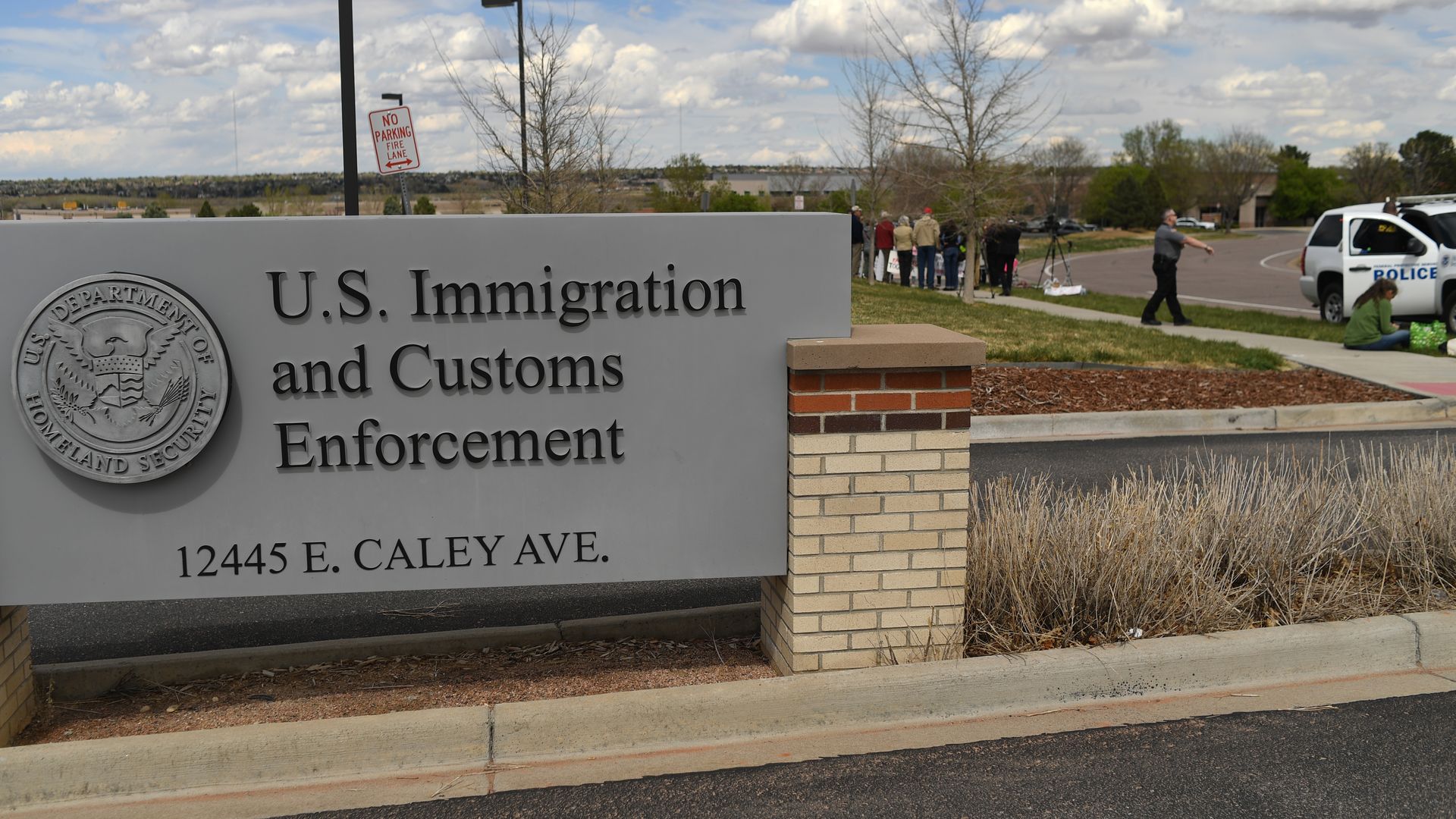
An ICE processing center in Centennial pictured in 2017. Photo: RJ Sangosti/The Denver Post via Getty Images
Leaders in Aurora, Castle Rock and Colorado Springs are committing to comply with what President-elect Trump has called "the largest deportation operation in American history."
Why it matters: Colorado law prohibits local police from working with federal immigration agents, setting up a conflict between state and city policies.
The big picture: Denver's neighbors sharply diverge from the capital city, where Mayor Mike Johnston has vowed to resist Trump's deportation efforts.
- Johnston's defiance has drawn threats from Trump's border czar nominee, Tom Homan, who warned the mayor could be jailed for his position.
Driving the news: This month, the town council in Castle Rock unanimously passed a measure to "comply and assist" with federal immigration enforcement under Trump's plan.
- In Aurora — where Trump has planned to start his immigration crackdown — Mayor Mike Coffman told CBS4 this month he wants statewide restrictions lifted so the city can cooperate with Immigration and Customs Enforcement officials on mass deportations.
- In Colorado Springs, the city council recently passed a second resolution reaffirming its status as a "non-sanctuary city."
State of play: Earlier this year, El Paso County — where Colorado Springs is the county seat — joined Douglas, Elbert, Garfield, Mesa and Rio Blanco counties in suing the state.
- The lawsuit challenges two state laws that restrict local governments from aiding federal immigration authorities.
The latest: Stephen Miller, Trump's incoming deputy chief of staff for policy, on Sunday revealed more details about the administration's immigration plan.
- It includes a "massive increase" in ICE officers and a "historic increase" in border agents to carry out deportations, Miller said.
What we're watching: Trump on Sunday said that families with mixed immigration status should be deported together, which could have sweeping consequences in Colorado and nationwide.
- An estimated 4.7 million households in the U.S. are defined as "mixed-status," meaning they house at least one undocumented resident and at least one citizen or legal noncitizen resident, per the Center for Migration Studies.