Why ballot measures dominate 2024 election

Add Axios as your preferred source to
see more of our stories on Google.
The race for the White House is drawing most of the attention this year, but it's down-ballot referendums where voters will make the most impact.
Why it matters: Direct democracy is hot – particularly in an era where partisan gridlock thwarts the lawmaking process.
- Moreover, ballot measures on abortion rights, voting methods, legalizing marijuana and educational choice hold the potential for major policy shifts nationwide.
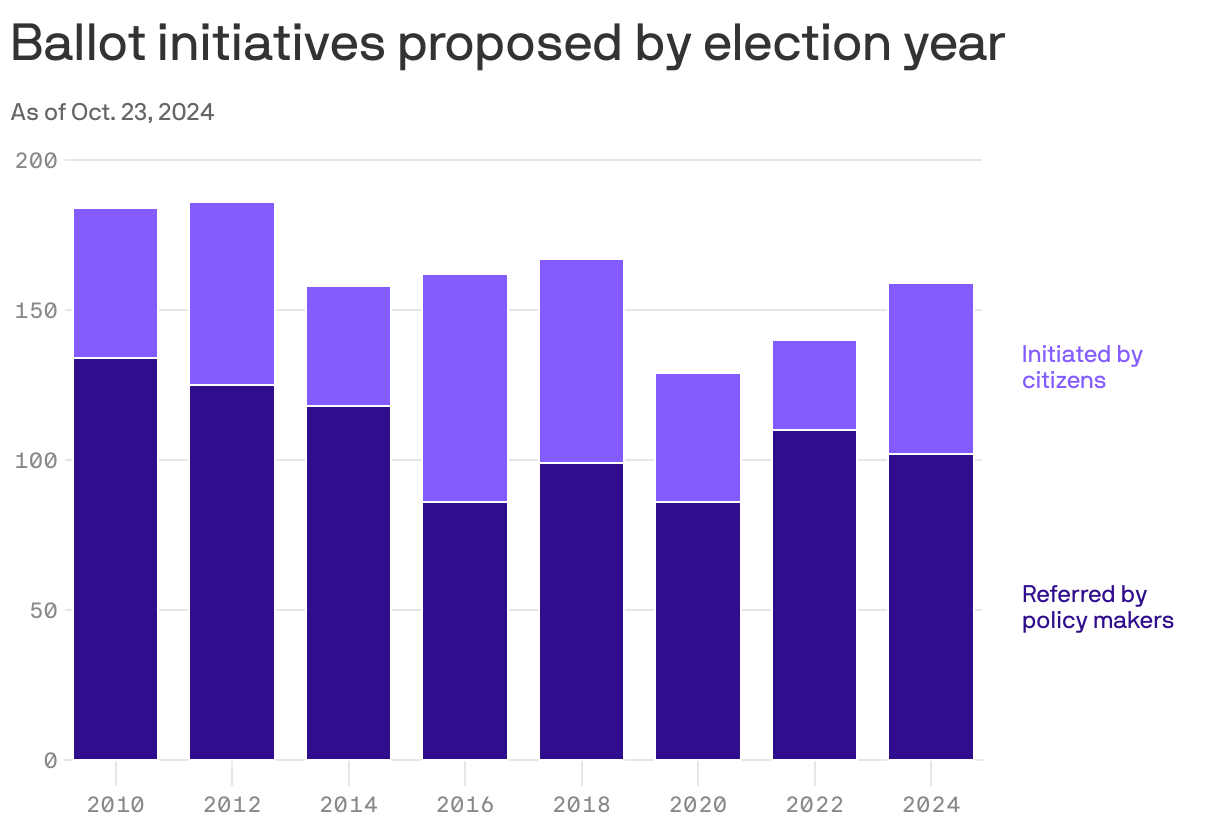
By the numbers: This year, voters in 41 states will have considered 159 ballot measures, with most appearing on Nov. 5, according to Ballotpedia, a tracking service.
- The vast majority were referred to voters by state lawmakers and commissions, while the remainder came from citizens who collected petitions to qualify.
What they're saying: The presidential election is a prime time for ballot measures because of the high turnout, said Chris Melody Fields Figueredo, the executive director at the Ballot Initiative Strategy Center, a progressive group.
- Other factors include partisan blockages at the state level, political parties trying to turn out issue-driven voters and the Dobbs decision, which has led to a record number of abortion-related referendums.
The big picture: The referendum count is on par with even-year elections when the average number of ballot measures is 161, said Ryan Byrne at Ballotpedia.
- 10 states — including Arizona, Colorado, Florida and New York — are deciding whether to protect access to abortion or place limits on it.
- Five states and Washington, D.C., are considering overhauls to how elected leaders are picked, whether through changes to primary elections, ranked choice voting or both.
- Three states — Florida, North Dakota and South Dakota — are weighing whether to legalize marijuana.
The intrigue: Though the overall numbers are consistent, the 57 citizen-led initiatives this year are the most in a presidential election year since the 76 in 2016.
What's more striking is the high stakes behind the questions voters face.
- "The ballot measures have a potentially significant effect," Byrne said in an interview. "They are important issues in and of themselves."
Zoom in: Colorado is a microcosm for many ballot trends.
- There, voters will decide 14 statewide initiatives — ranging from abortion and ranked choice voting to hunting mountain lions and taxing firearms — matching the record and exceeding the average in even-year elections.
- Another roughly 100 measures must be decided at the local level.
Between the lines: Colorado upped the ante to get constitutional measures on the ballot in 2016 by requiring 55% approval.
- So far, it hasn't worked as hoped, nor did it deter lawmakers from referring measures to voters.
- In a Democratic-dominated state, the ballot remains the one way Republicans can get their issues before voters.
What we're watching: Now the question is whether voters will take the time to cast votes on each of the down-ballot questions.