Denver's Asian chefs talk culture, criticism and what defines authenticity

Add Axios as your preferred source to
see more of our stories on Google.
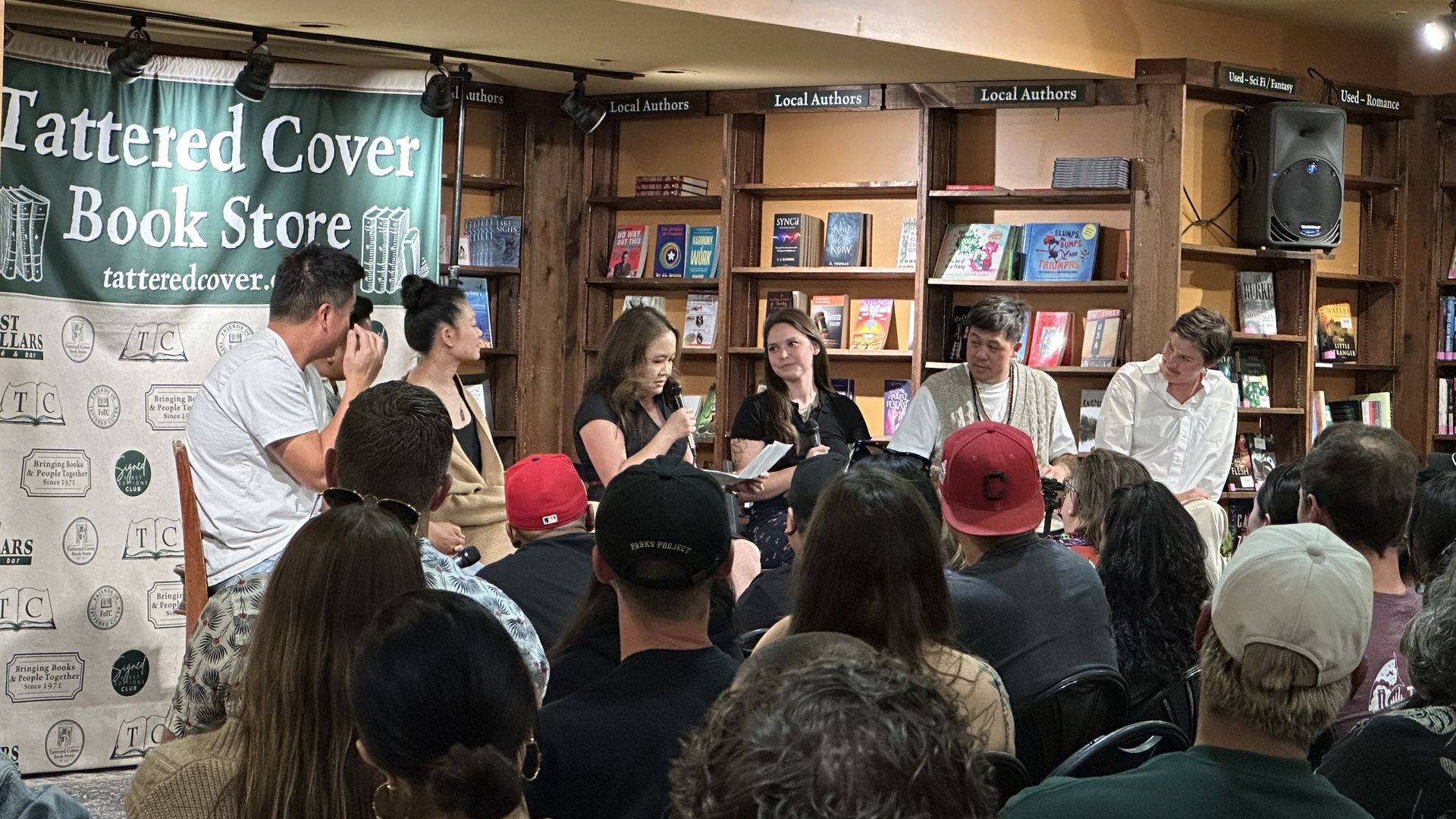
The panel discussion "How Asian Is Asian Enough" was held Oct. 6 at Tattered Cover's Colfax location in Denver. Photo: Alayna Alvarez/Axios
Some of Denver's top Asian chefs recently gathered to explore the question: "How Asian is Asian enough?"
Why it matters: The panel discussion aimed to create a safe space for local chefs and address challenges Asian-owned businesses face, including racism and doubts about their cultural representation.
Zoom in: The conversation stemmed from frustrations felt by Ni Nguyen, star chef and co-owner of the hit Vietnamese spot Sắp Sửa, after his restaurant was criticized for not offering chopsticks.
- Other chefs on the panel included Nguyen's spouse and co-owner, Anna Nguyen; Tommy Lee of Hop Alley and Uncle; Penelope Wong of Yuan Wonton; and Maddie Dunhoff of Taeko-san Takeout.
What they're saying: Dunhoff, who is part Japanese, said customers often ask questions about her background and the nature of her business that feel "borderline inappropriate" and even "hurtful."
- "I really love that people want to learn about the cuisine and who I am — but I think there are ways that we can be more respectful of how we inquire about that," Dunhoff said.
When it comes to what defines a restaurant's identity, chefs say it's more about the personal experiences they bring to the table than strict adherence to tradition.
- "Authenticity to me is your own lived experience," Ni Nguyen said. "When guests come in to eat, you're experiencing authenticity through the eyes of the chef."
- Wong added that Yuan Wonton's menu, which puts a creative spin on traditional Chinese dishes, is authentic because it's packed with "flavor that I grew up with."
The intrigue: Lee said some of the "hardest to please" critics of modern Asian restaurants are Asian customers who tend to hold more traditional expectations.
- "When we have aunties and uncles in the restaurant, it's triggering — you're immediately full of anxiety" because they can be quick to label modern Asian cuisine as "too Americanized," Wong noted.
The big picture: Lee encourages diners to approach restaurants with an open mind.
- "You should do a bit of homework and see what you're actually getting into. And when you dine in, ideally you can just see a restaurant for what it is — not necessarily have these notions — and then figure out how that fits into your dining playbook," he said.