Younger Colorado teens spending more time on social media

Add Axios as your preferred source to
see more of our stories on Google.
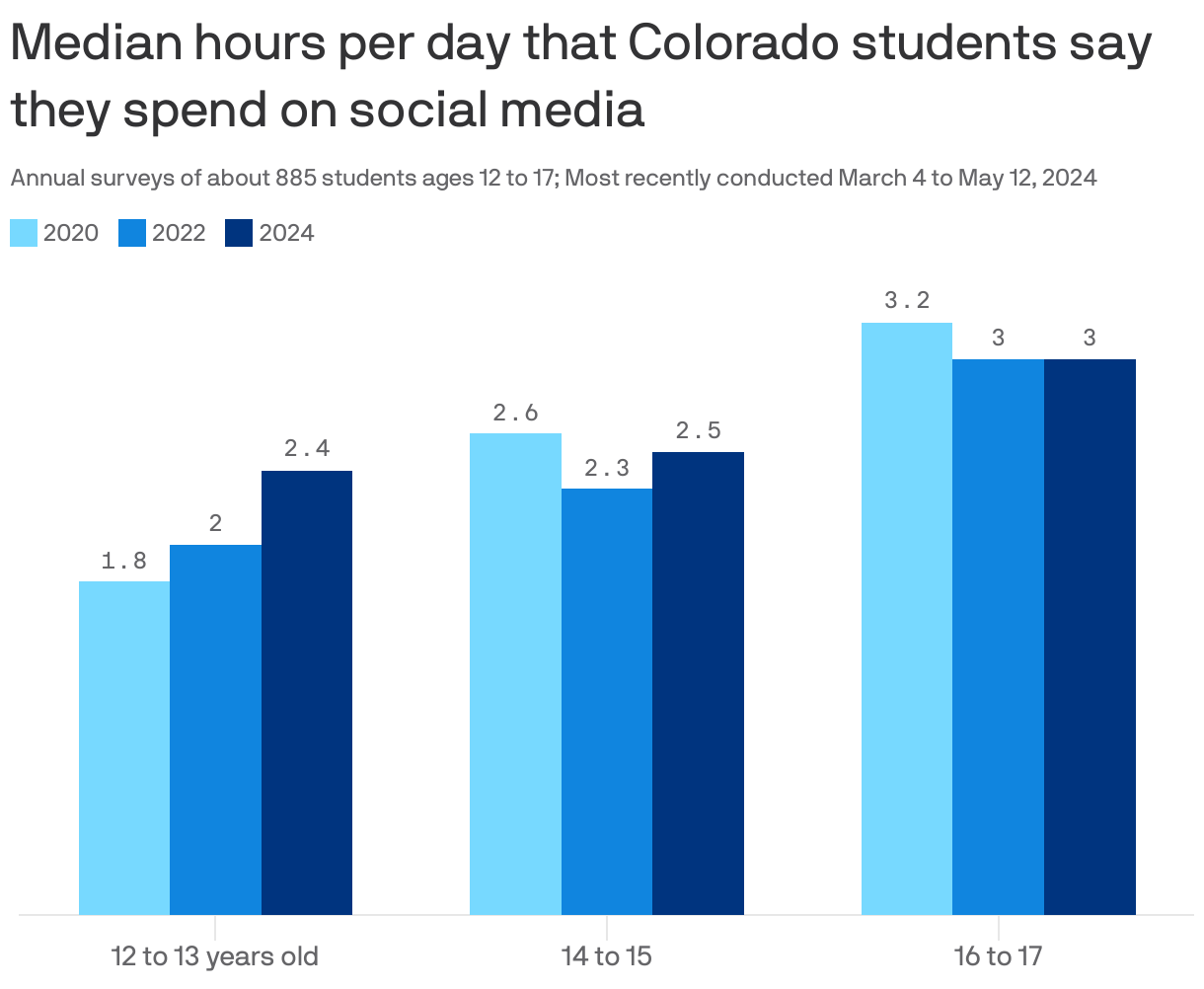
The youngest teens in Colorado are increasingly using social media, putting them at risk for negative behaviors, a new survey finds.
Why it matters: The alarming trend comes as research shows social media use and teen mental health are interrelated and may erode progress made in the last decade to address the issue.
Threat level: Younger teenagers who spend more time on social media are more likely to feel disconnected from friends and school and more inclined to vape and use marijuana, according to Rise Above Colorado, a statewide advocacy group behind the survey.
By the numbers: Colorado teenagers between 12 and 13 look at social media on average 2.4 hours a day — up from 1.8 hours in 2020, new data collected in an online survey earlier this year shows.
- That usage is essentially the same as teens ages 14 and 15, and slightly behind ages 16 and 17.
The big picture: A sense of connection to peers and the community is a protective factor that reduces risky behavior, experts say.
- The proportion of teenagers who feel supported by friends and accepted at school declined to 59%, down from 66% in 2022, the survey found.
Between the lines: Social media also is a factor that led Safe2Tell reports to surge 74% in September compared to the same month a year ago, the attorney general's office reports.
- A record number of duplicate reports were made about threats at school, driven by a small number of social media posts that were often shared, altered and misinterpreted to apply to multiple schools across the nation.
What they're saying: "It is encouraging to see mental health improvements among high school students, but the rising use of social media by pre-teens is deeply concerning," Colorado Attorney General Phil Weiser said in a statement.
- "Research clearly shows that these platforms are contributing to mental health challenges, sleep deprivation, and even providing dangerous pathways for young people to access substances like fentanyl."