Proposed mountain lion hunting ban divides experts as Colorado's election nears

Add Axios as your preferred source to
see more of our stories on Google.
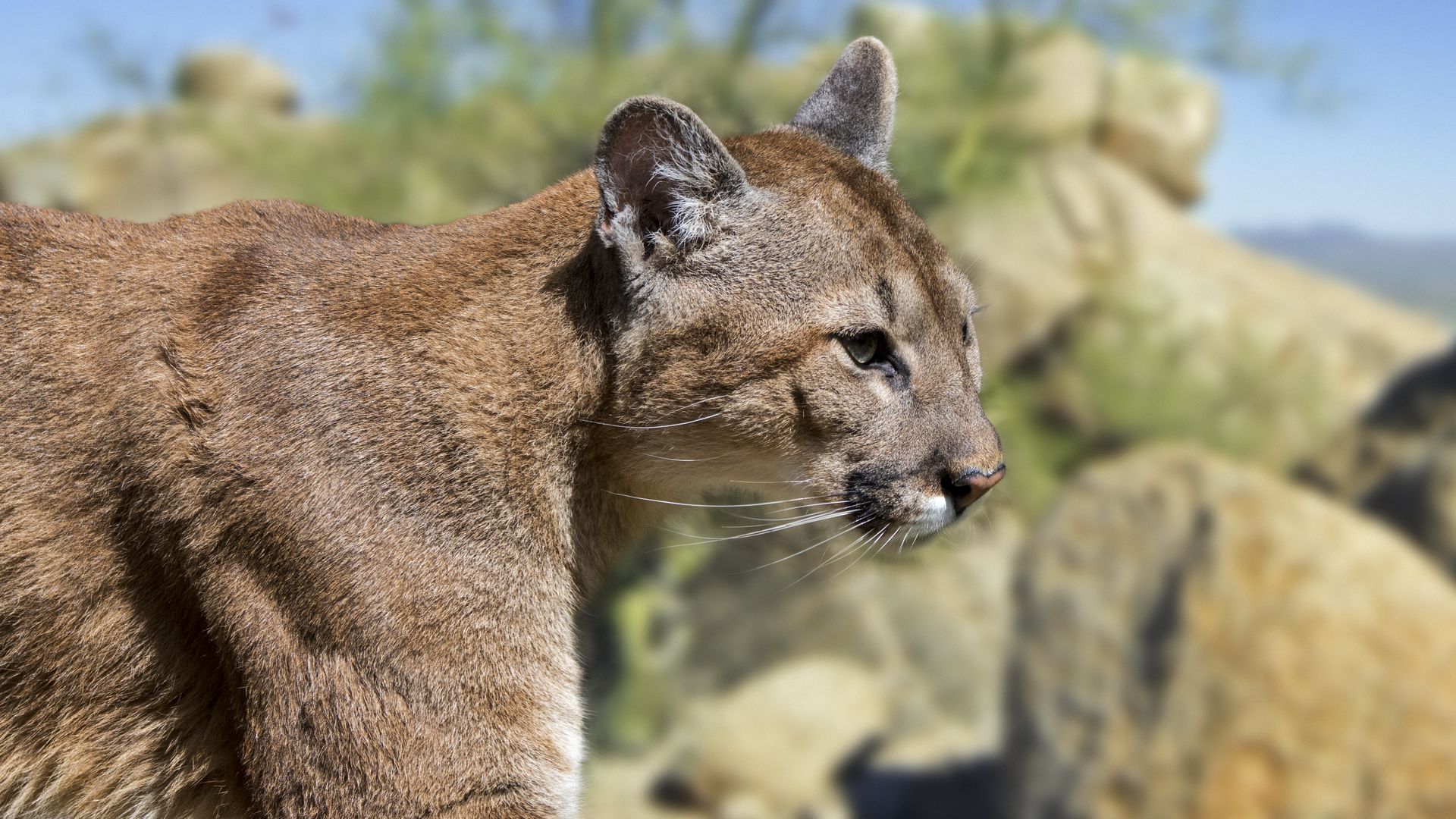
Photo: Arterra/Philippe Clément/Universal Images Group via Getty Images
A ballot measure to ban hunting of mountain lions, bobcats and lynx in Colorado is pitting scientists against each other.
Why it matters: Voters this November will once again be asked to decide on wildlife management in the state, just as in 2020, when they approved the controversial reintroduction of wolves to the Western Slope.
The big picture: Proposition 127 asks voters to prohibit shooting or trapping wildcats with a few exceptions, including if they threaten livestock or people.
Context: Colorado Parks and Wildlife has managed mountain lion hunting since 1965 with annual hunting limits and requires hunters to take an online class and exam before securing a license.
- CPW hasn't weighed in on Prop. 127, but its website states: "Managing lions and bobcats with harvest is one … tool to maintain more stable populations."
State of play: Proponents of the initiative argue trophy hunting is "inhumane" and "unnecessary." They point to research from California — the only U.S. state where mountain lion hunting is banned — as evidence the elusive feline populations are self-regulating and can stabilize based on available habitat and food.
- Prop. 127 has drawn support from some notable names, like iconic conservationist Jane Goodall, who was one of 20 wildlife scientists to recently pen a letter in favor.
The other side: Opponents argue a hunting ban would lead to a significant rise in the number of big cats, which could pose a threat to deer and elk herds. They also say science-based decisions should be left to wildlife managers, not voters.
- It will "irreparably harm wild [cat] management by banning hunting, the best tool to manage these populations," Jerry Apker, who worked as CPW's carnivore biologist for nearly two decades, wrote in an op-ed this month. "I can confidently say that without hunting, there would not be the abundance of wildlife that there [is] in Colorado today."
Between the lines: Apker says he believes, if the ban passes, it's likely mountain lion populations would spike in the first few years before balancing out. But due to the lack of statewide research, it's uncertain how lion populations would respond, he told the Denver Post.
By the numbers: Wildlife officials estimate there are between 3,800 to 4,400 mountain lions in the state — considered a stable population — with an average of 500 harvested per year, or 11-13%.
- It's unclear how many bobcats are in Colorado, but their population is considered widespread and stable statewide. An average of 880 bobcats are harvested annually.
- Lynx, listed as endangered and illegal to hunt under their protected status, also have a stable population. There have been no reported kills of the species in Colorado, per CPW.