Jury deliberations begin in trial of Boulder King Soopers shooter

Add Axios as your preferred source to
see more of our stories on Google.
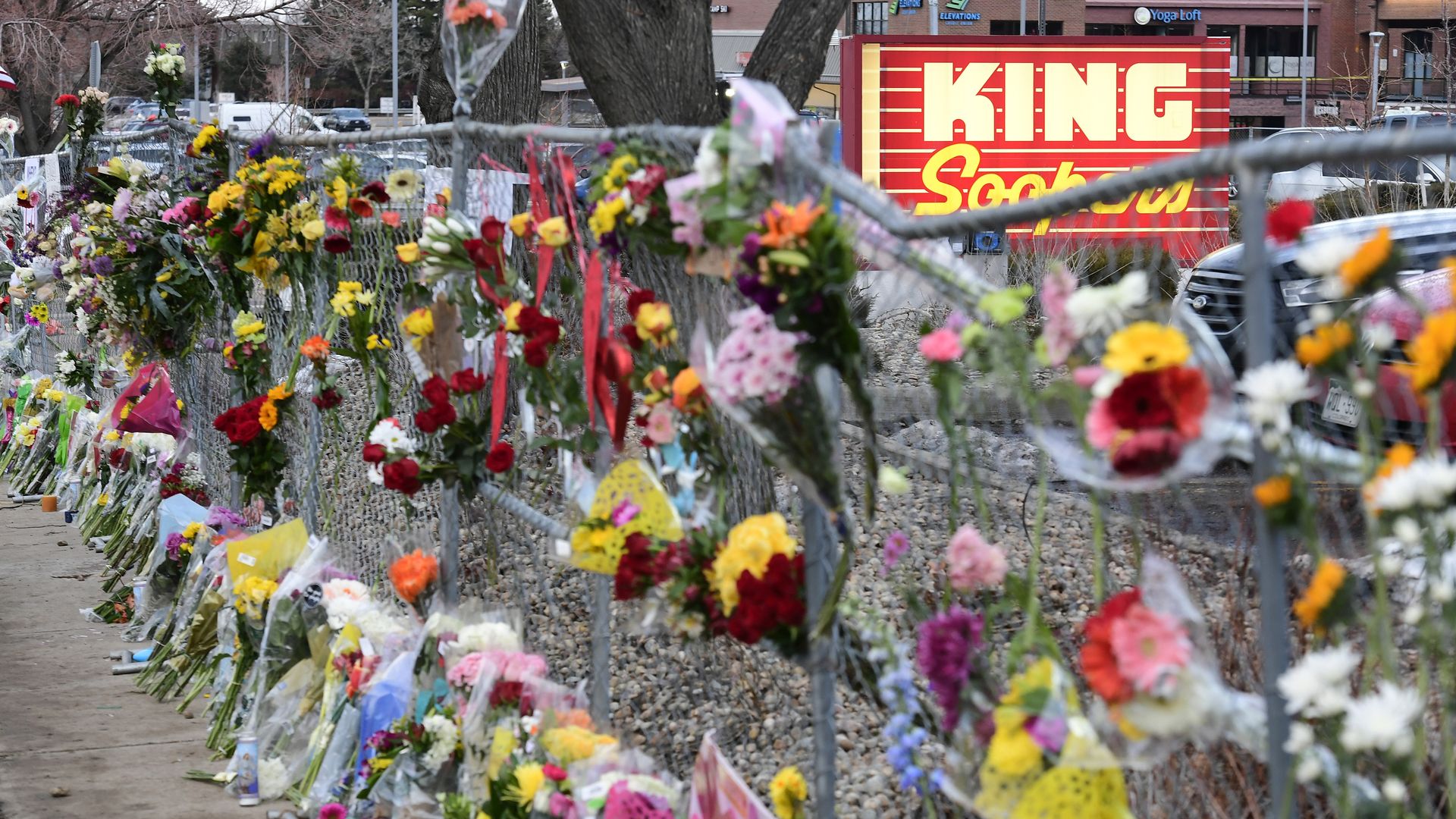
The memorial at the King Soopers on Table Mesa in Boulder in March 2021. Photo: Helen H. Richardson/MediaNews Group/Denver Post via Getty Images
A jury began deliberating Friday in the murder trial of Ahmad Al Aliwi Alissa, who faces over 100 charges for the 2021 Boulder King Soopers shooting that left 10 people dead, including a police officer.
The big picture: Alissa pleaded not guilty by reason of insanity. The jury's verdict will determine if he gets life in prison or is committed to a state mental hospital indefinitely.
- His trial has been delayed for years after experts repeatedly deemed him unfit to understand the legal process or assist in his own defense.
Driving the news: After three weeks of testimony, 12 jurors are deciding if Alissa — who declined to testify — was sane, intended to kill and understood his actions were wrong at the time of the shooting.
- The debate centers on Alissa's mental state; no one disputed he committed the shooting. His attorneys claim he was experiencing a "psychotic episode" due to severe, untreated schizophrenia.
- Prosecutors argue the shooting was "planned, deliberate and intentional," and that he knew right from wrong.
The latest: During closing arguments, Assistant District Attorney Ken Kupfner told a packed courtroom — with Alissa's family in the front row — that "mental illness does not mean you're insane."
- He pointed to testimony from one of the survivors, a pharmacist, who said Alissa shouted, "This is such fun. This is such fun," during the shooting spree.
- Kupfner highlighted Alissa's stockpile of weapons and his online activity in the 60 days before the shooting, including viewing over 6,000 images of firearms and researching "the most deadly type of round or bullet."
- He showed animations detailing each victim's death. "These lives were taken after deliberation and with intent," Kupfner said.
- Prosecutors emphasized that all doctors who evaluated Alissa found him sane at the time of the shooting, and that video of him running away when police arrived "says everything you need to know about [Alissa knowing] right versus wrong."
- "He wanted to kill as many people as he could," Kupfner said. "That's what the evidence in this case shows."
The other side: "Insanity is the only explanation for this tragedy," Alissa's defense attorney Kathryn Herold told jurors. "This tragedy was born out of disease, not choice."
- Alissa committed these crimes because he was "psychotic" and "delusional," Herold argued. "His mind was drowning in this illness. Drowning in the voices."
- "Kill! Kill! Kill! Kill!" Herold yelled, imitating the "killing voices" that Alissa told doctors he heard before the shooting.
- "My client could not have known right from wrong," she said, emphasizing the severity of his schizophrenia.
- She played a video of Alissa telling doctors, "Maybe if I committed the mass shooting, the voices would go away."
- Herold also reminded jurors that after the shooting, Alissa had to be hospitalized for three years and put on "the most potent" antipsychotic medication "because he's so sick."
Between the lines: During closing arguments, Alissa appeared alert, spoke to his attorneys frequently and listened intently.
The intrigue: Moustafa Alissa, the gunman's father, testified on Tuesday he believed his son may have been possessed by an evil spirit before the attack.
- He recalled his son talking to himself and, in one instance, seeing someone who wasn't there.
- He told District Attorney Michael Dougherty he didn't seek treatment for his son because it would have brought shame to their family, saying through an Arabic interpreter, "It's shameful in our culture."
What's next: The case now rests in the jury's hands. Chief District Judge Ingrid Bakke will determine Alissa's sentence.