Segregation in some Colorado public schools has increased the past three decades

Add Axios as your preferred source to
see more of our stories on Google.
Some Colorado public schools have become more segregated over the last three decades — albeit less significantly than other parts of the U.S., according to a new report.
Why it matters: Researchers have found school segregation disproportionately hurts Black and Latino students since those schools tend to have fewer resources, more teacher shortages, and fewer advanced classes.
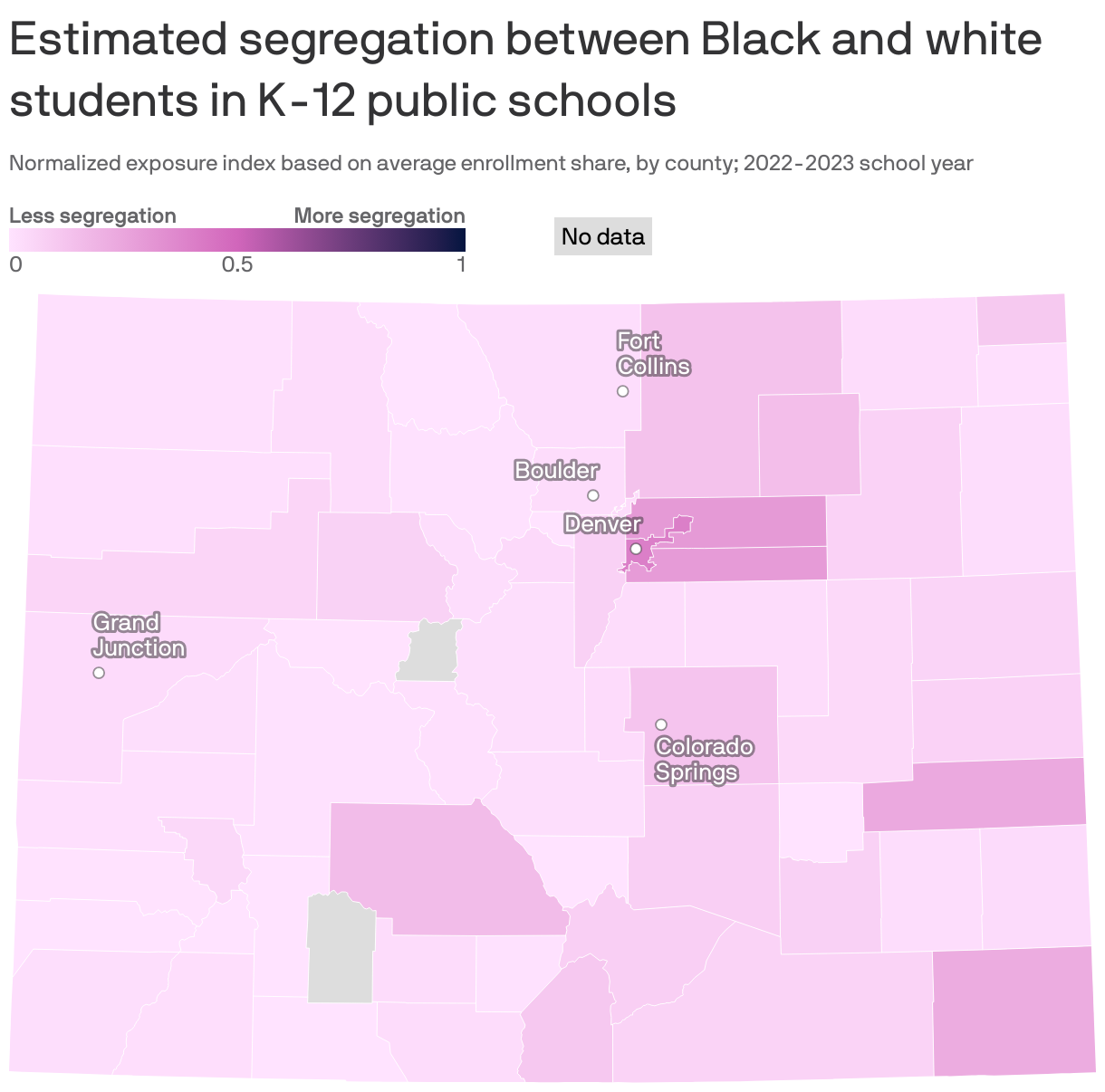
Zoom in: Segregation in Denver Public Schools peaked in 2004 and has remained steady from 2010 through 2022, a Stanford and University of Southern California study shows.
By the numbers: In 1991, DPS had a segregation rating of 0.27 for Black and white students and 0.21 for Hispanic and white students.
- By 2022, those ratings had jumped to 0.4 for Black and white students and 0.43 for Hispanic and white students.
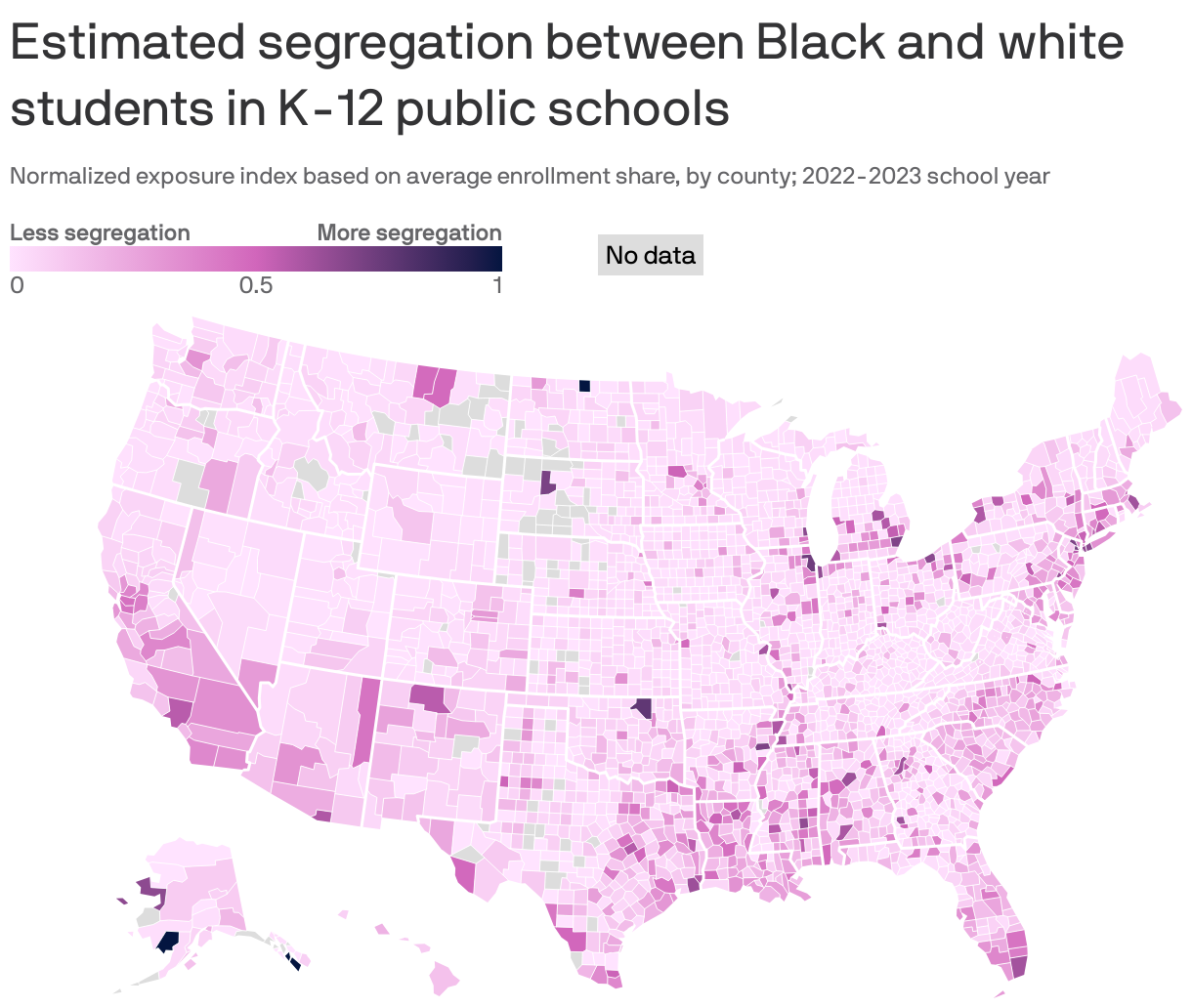
- The rating measures segregation by exposure of students of different races and ethnicities, with 0 being the least segregated and 1 being the most segregated.
The big picture: Nationwide, segregation between white and Black students has risen 64% since 1988 in the 100 largest districts, the study found.