How Colorado issues TABOR refunds is changing significantly

Add Axios as your preferred source to
see more of our stories on Google.
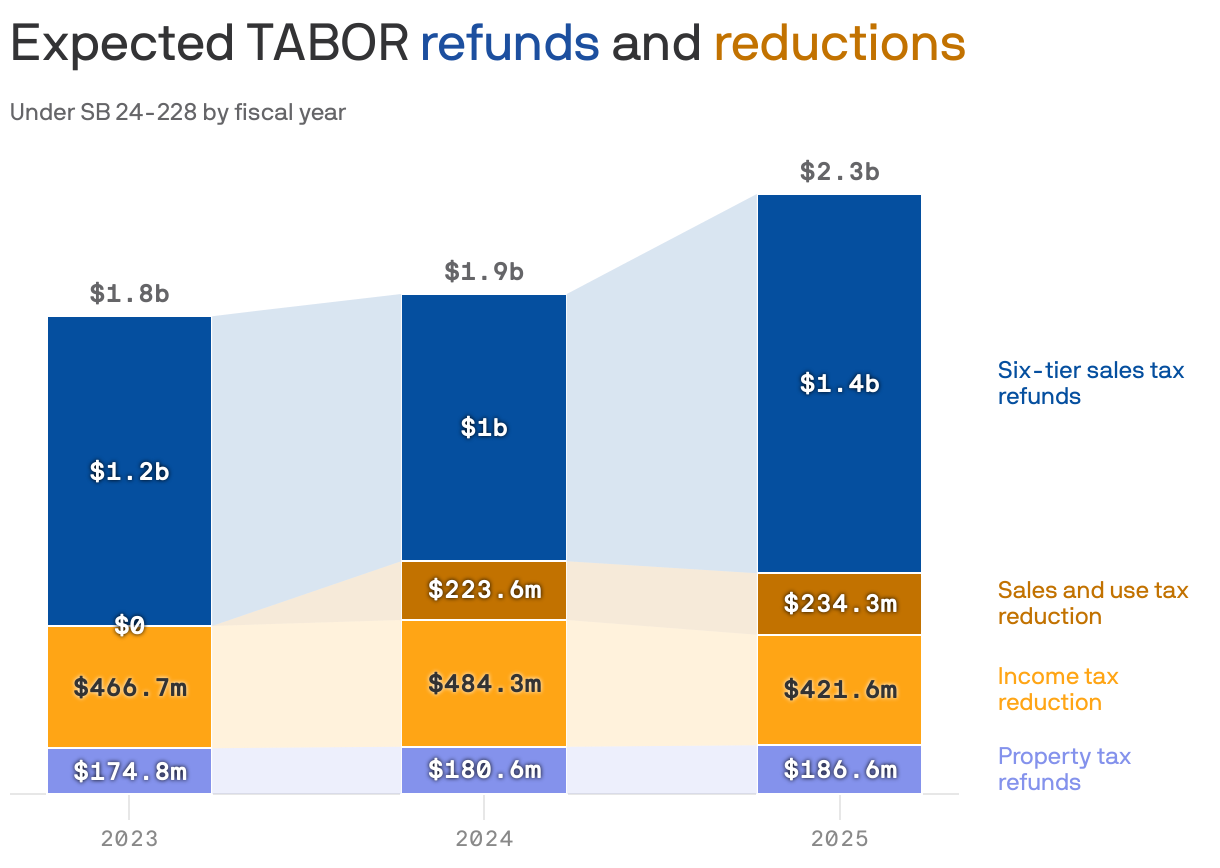
How much you will get in future taxpayer refunds is dramatically changing.
State of play: Gov. Jared Polis and bipartisan lawmakers are advancing a bill to refund excess state revenue through two new methods, which are dependent on the total rebate amount in the next 10 years.
- The first is a temporary income tax reduction, and the second is a cut in the state sales tax rate. Democrats say this method is more timely than rebate checks at tax filing.
- The current method, a sales tax refund based on income at tax filing, would come into play only in years with huge sums of excess revenue.
Why it matters: The Democratic shift in how Taxpayer's Bill of Rights refunds are issued is the most significant overhaul in recent years and gives the governor a conditional win on his long-standing promise to lower the state's income tax.
Context: TABOR, a constitutional amendment revered by conservatives, caps state tax collections at the rate of inflation and population growth. But it allows lawmakers to adjust the method of refunds.
- The state is forecast to refund $1.8 billion at tax filing next year, $1.9 billion the year after and $2.3 billion in 2027.
Yes, but: Two other major tax credits being pushed by Democrats threaten the future of TABOR refunds.
- A bill headed to passage that would provide child tax credits to parents and another that would expand the earned income tax credit for lower-income earners costs billions and reduces the size and likelihood of TABOR refunds.
The intrigue: An income tax cut in the TABOR bill overwhelmingly benefits the wealthy — and runs counter to efforts by Democratic lawmakers, but earlier this year, Polis issued an ultimatum to lawmakers that a reduction be part of any adjustments to TABOR.
Between the lines: The new TABOR refund mechanisms are contingent on support from the IRS, which is studying whether the rebates amount to taxable income.
What they are saying: "When we have an opportunity to cut taxes that's something that [residents] want us to do," Sen. Kyle Mullica (D-Northglenn) told Axios.