How Denver's population is changing

Add Axios as your preferred source to
see more of our stories on Google.
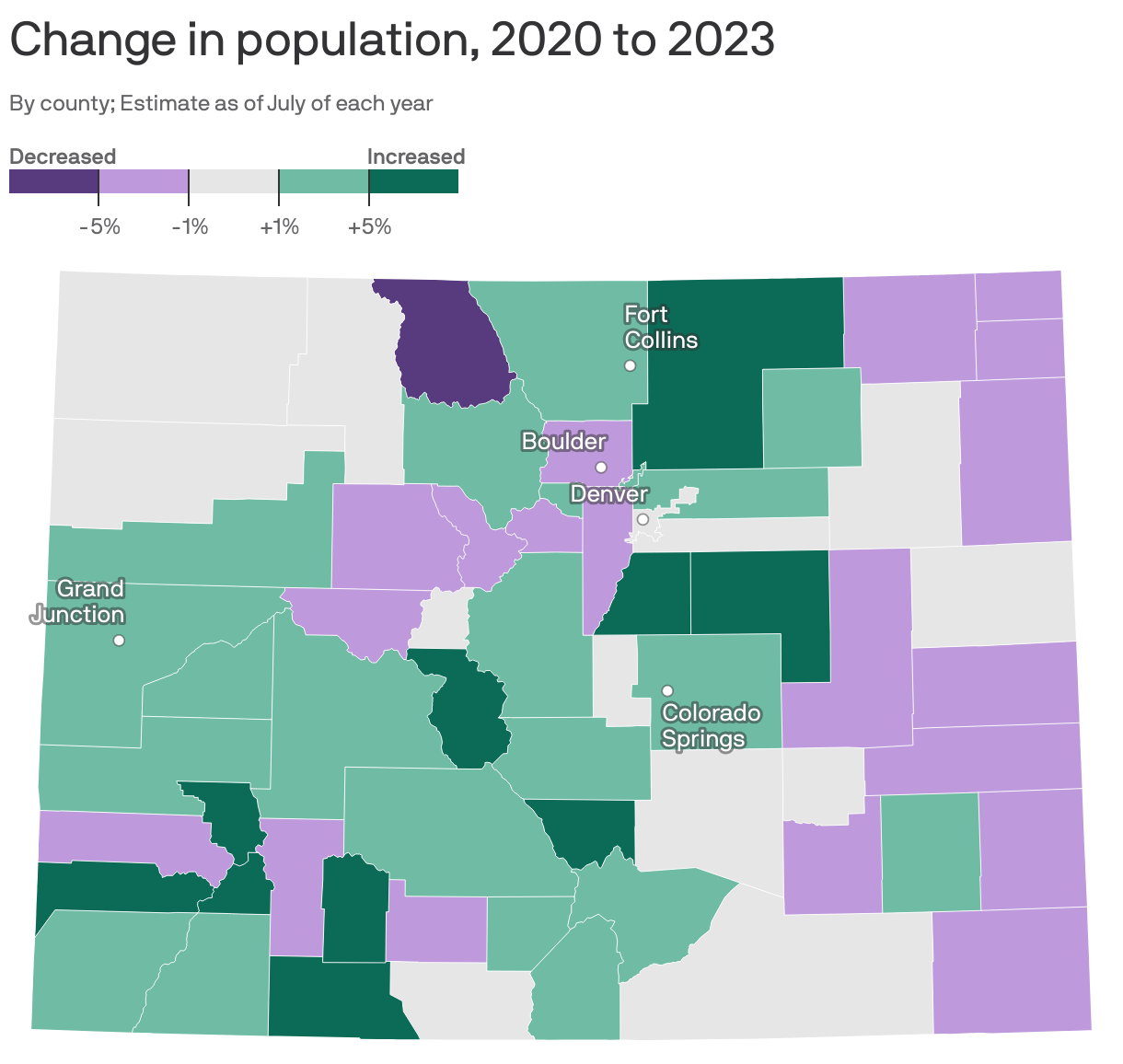
More people are moving to the Denver metro area, according to new estimates from the Census Bureau, fueling population growth and possibly your road rage.
By the numbers: The Denver-Aurora-Centennial metro area grew 1.2% between July 2020 and July 2023, with more than 35,000 new people calling the Mile High City region home.
- That's compared with a 1% population increase nationwide.
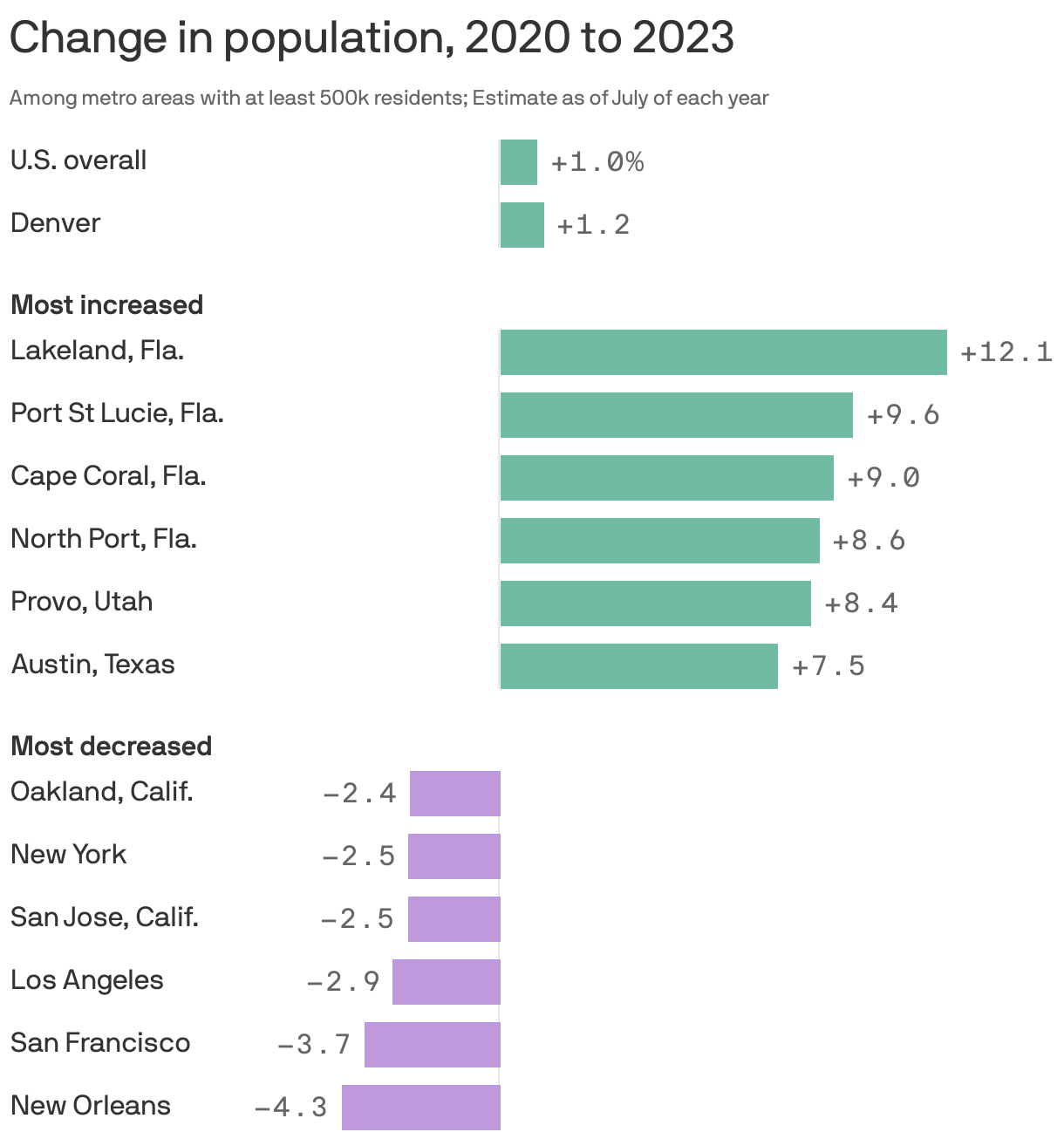
Yes, but: The metro area's growth rate pales in comparison to other major metros in the U.S., particularly in the South.
- Meanwhile, Denver County's population as a whole dipped 0.1%, as did populations in Boulder (-1.2%) and Jefferson (-1.2%) counties, census figures show.
- That's mostly on par with the trend from 2020 to 2022, when all three counties saw their populations dip 1% or less.
Zoom out: Between July 2020 and July 2023, the state's fastest-growing counties were also some of its smallest, including Custer (17.2%), San Juan (12.8%) and Elbert (9.9%), for a collective total of about 3,500 new people.
- Other notable counties that saw growth include Weld (8.4%), El Paso (1.6%), Mesa (2.4%) and Larimer (3%).
The other side: Colorado counties that saw the steepest drops in population were Jackson (-5.1%), Kiowa (-4.9%) and Pitkin (-4.1%), albeit they only lost about 850 people altogether.
The big picture: The country's top four fastest-growing metro areas over the past three years were all in Florida, with Provo, Utah, and Austin, Texas trailing just behind, according to new U.S. census figures.
- Unsurprisingly, the cost of living in those cities is lower than Denver's.
Between the lines: The data is part of the most recent release of the annual Population Estimates Program, which tracks population numbers between censuses.
- It uses administrative records and other sources to calculate annual changes in population and housing.