How Evergreen Lake saved its skating season from a heat spell

Add Axios as your preferred source to
see more of our stories on Google.
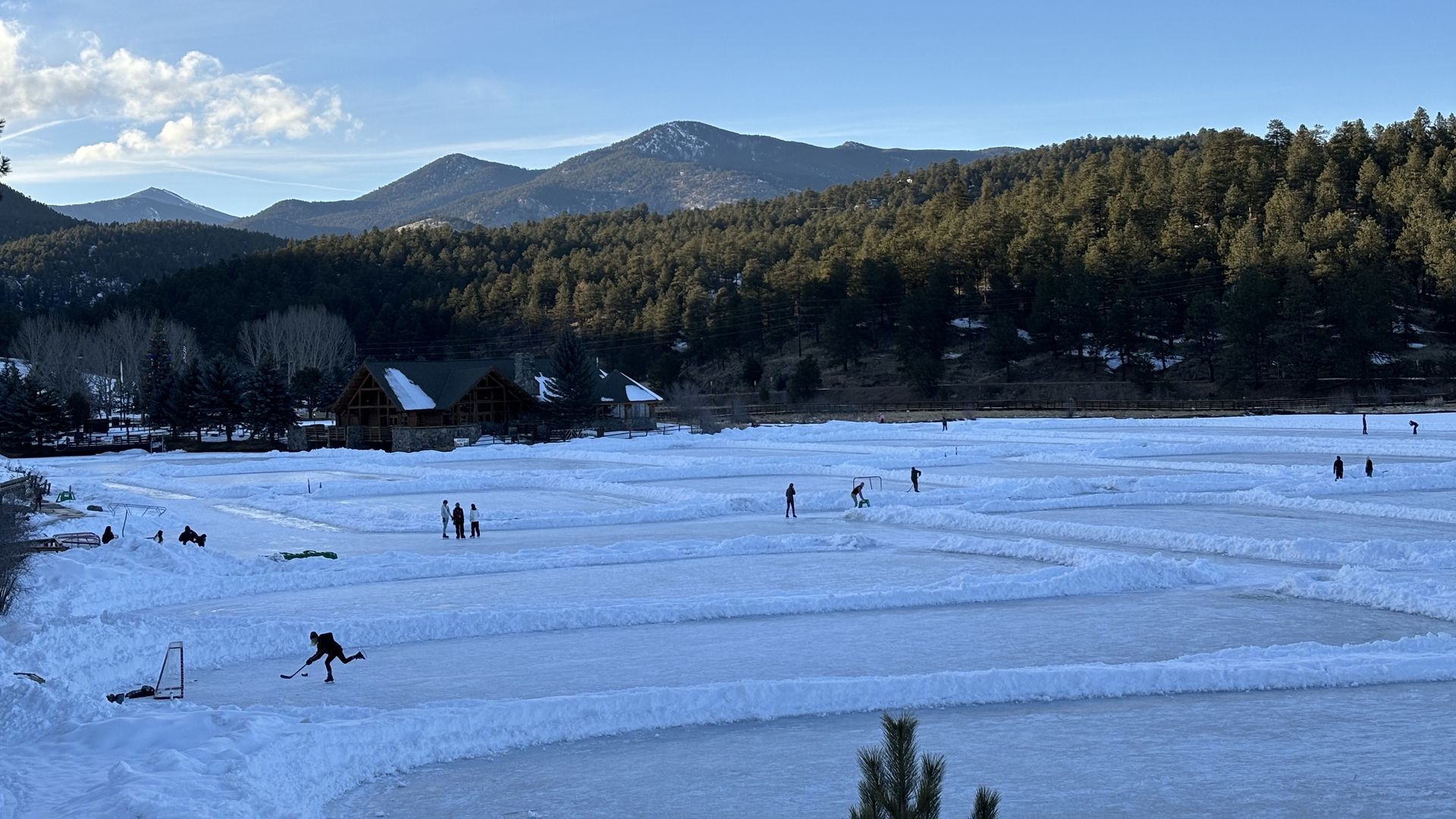
Skaters on a quiet Tuesday afternoon at Evergreen Lake. Photo: Emma Hurt/Axios
A warm spell this winter nearly ended the skating season early at Evergreen Lake, but officials are hopeful they'll at least make it to the end of February.
The big picture: Evergreen Lake, about 40 minutes west of Denver, describes itself as the "world's largest Zamboni-groomed outdoor ice rink."
Yes, but: Due to high temperatures, the lake just reopened after nearly two weeks and likely will not bring the Zamboni out again this year, Jarred Lilyhorn, parks operation manager for the Evergreen Parks and Recreation District, tells Axios.
Flashback: In 2022, a cold November made the season "stellar," but so far, this year has been "trying." Officials considered ending the season at the beginning of February.
- "This is probably one of the biggest heat spells that I've seen," Lilyhorn said.
Zoom out: Warming winters tied to human-caused climate change are posing an existential threat to seasonal activities and sports across the country, Axios' Ivana Saric reports.
- The Great Lakes have been "unusually ice-free this winter," according to Climate Central.
- Syracuse, New York's annual Pond Hockey Classic had to be moved to an artificial rink downtown due to thin ice.
Threat level: "Maybe not in our lifetime, but I think there will come a day you don't see ice skating on Evergreen Lake because of climate change," Lilyhorn said.
- "It's so unpredictable," Krista Emrich, the Lake House manager tells Axios.
- "I definitely feel like our seasons are getting shorter...if we get January and February, that's a win," she said.
Between the lines: Ice melting and bubbling causes dramatic changes in the quality and height of the ice, Lilyhorn explained.
- "Even though we have 17 to 20 inches of ice, as soon as that top layer goes as a viable skating surface, we have to decide from a risk management standpoint, is it worth us putting people out there?"
The intrigue: The department's main mitigation technique is "flooding." Crews go out overnight to "water" the ice and help build up depths and smooth the surface.
- While he was a little skeptical it would work, this year it did.
The bottom line: "I feel good about us trying to get to the end of February," Lilyhorn said.
⛸️ If you go: Check the lake's website and call its skating hotline first.