Colorado may ease residency rule and waiting times for medically assisted suicide


Add Axios as your preferred source to
see more of our stories on Google.
Even as the doctors question the controversial practice of prescribing life-ending drugs to patients, Colorado wants to make medically assisted suicide easier to access.
What to know: State lawmakers put forward a bill to remove the Colorado residency requirement and shorten the waiting period from 15 days to 48 hours.
- The legislation, which is set for a hearing Feb. 29, also requires insurance companies to pay out life insurance benefits for physician-assisted suicide patients, and prohibits coercing them to take the medication.
What they're saying: "We just want to make sure that those people are getting the care and the medication in the best way possible so that their lives will end in a more peaceful manner in the way they want at the time they want," state Sen. Joann Ginal (D-Fort Collins), a bill sponsor, told the Colorado Sun.
Context: Colorado voters approved a "medical aid-in-dying" ballot measure in 2016 to allow terminally ill patients with less than six months to voluntarily end their lives with doctor-prescribed medication.
- In its first six years, through 2022, 1,090 patients were prescribed the medication and 979 deaths were recorded, the state health department reports.
- Prescriptions increased 44% in 2022 from the previous year and deaths increased 20% to 243.
The big picture: The policy is gaining nationwide momentum because of personal anecdotes, experience from states where it's allowed and changing attitudes partly driven by the pandemic's devastation.
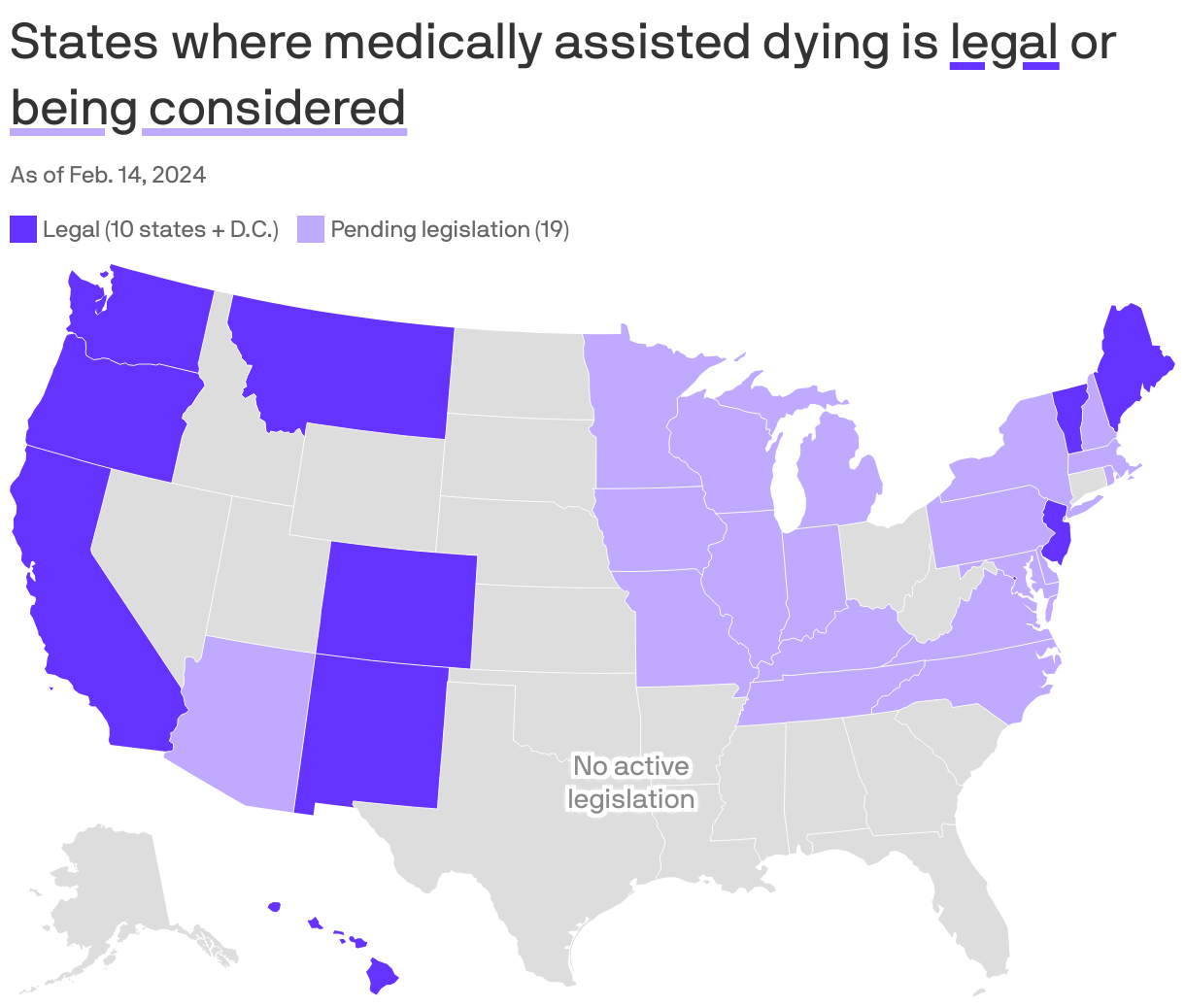
- It's legal in 10 states and the District of Columbia, and lawmakers in 19 states are considering permitting the practice.
Go deeper: More states are considering bills allowing medically assisted death this year