Attorney General Phil Weiser's office limited data on police accountability

Add Axios as your preferred source to
see more of our stories on Google.
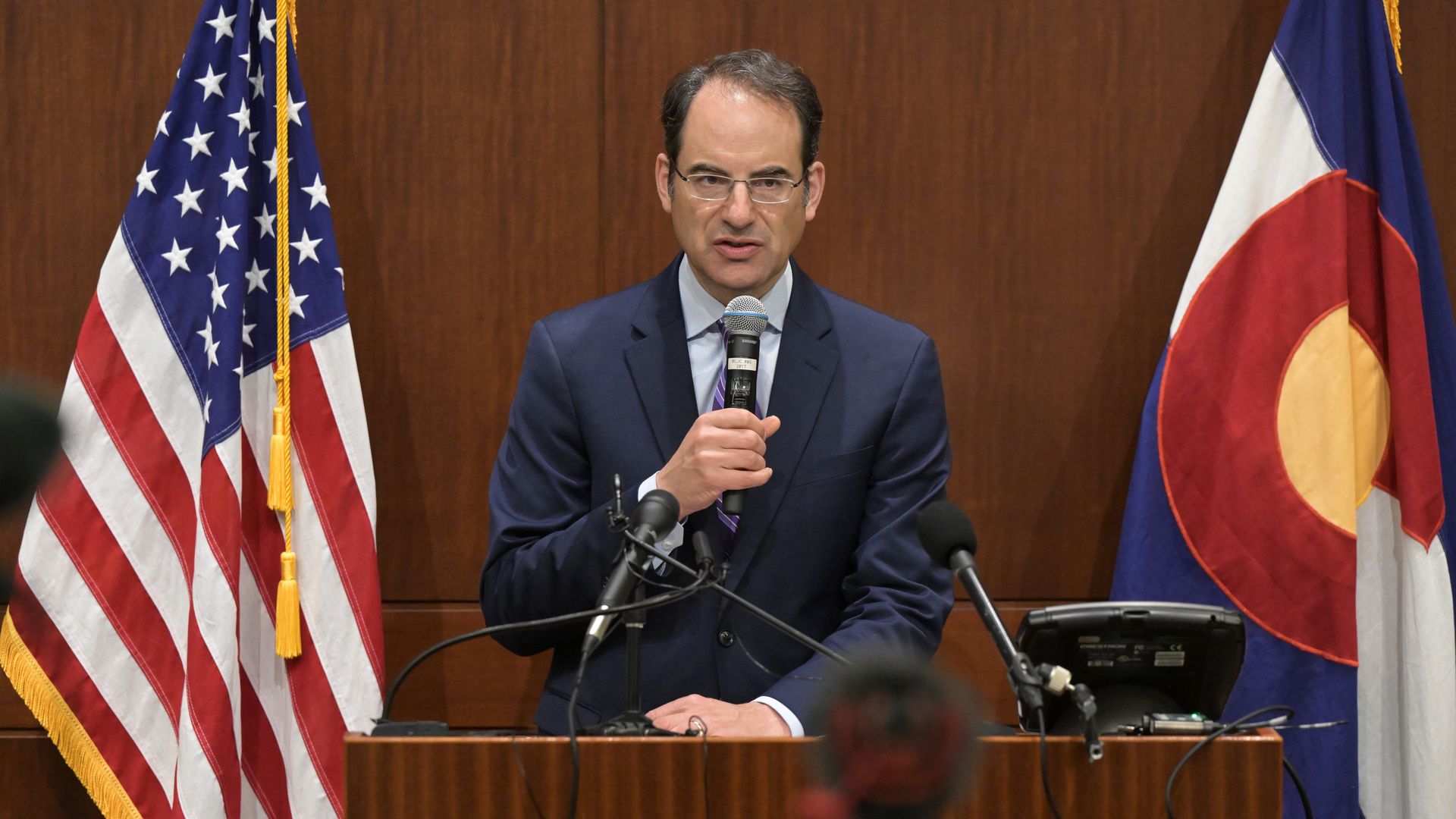
Colorado Attorney General Phil Weiser in June. Photo: Hyoung Chang/The Denver Post via Getty Images
Attorney General Phil Weiser, a second-term Democrat, is behind the decision to limit how much the public knows about troubled law enforcement officers in Colorado.
What to know: Weiser oversees police accountability as chairman of the POST board, and his office determined that any pre-2022 misconduct cases are exempt from being reported in the state's landmark new public database of cops with misconduct records, the Colorado News Collaborative investigation found.
- His office said the new law didn't clearly state whether older records should be included, and absent guardrails, attorneys cited a state statute that all new laws are "presumed to be prospective" rather than retrospective, Weiser spokesperson Lawrence Pacheco said.
Why it matters: The omission means the bulk of officers with disciplinary complaints who were fired or quit before last year remain hidden from public view.
Of note: The data is available. POST records include police discipline data dating to 1979. And the database initially included pre-2022 data until earlier this year before it was removed.
- Public testimony at the Capitol on the police accountability bills never referenced excluding records prior to 2022.
Between the lines: Weiser acknowledged the new system isn't working as intended but he has declined to withhold state funding or impose fines on law enforcement agencies that do not report misconduct for the database, saying he prefers to educate rather than punish as they adjust to the new requirements.
- He said the POST board doesn't have the power to investigate officers if local agencies won't do so, defending the state's "federated approach" to police discipline.
What he's saying: "I start from a position of trusting local and regional actors to act appropriately." Asked by the news collaborative if he would maintain that trust in the face of documented instances of non-reporting, Weiser wouldn't comment.
- "I try not to worry about things I can't control," Weiser added.
The other side: Colorado State Public Defender Megan Ring says her attorneys know the bad actors. "Yet these bad officers show up over and over again in our cases," she said. "Clearly, not enough is [being] done to root them out."
What's next: Two state lawmakers who led the police accountability efforts, Rep. Leslie Herod (D-Denver) and Sen. Rhonda Fields (D-Aurora), said they are considering a bill to force the public disclosure of police misconduct prior to 2022.
Reality check: Other lawmakers say the momentum behind police accountability legislation has faded without headline-grabbing police killings in the news, such as George Floyd's, and few are interested in addressing gaps in the current laws.
Go deeper: Colorado's police accountability system is broken, investigation finds