Jury deliberations begin in trial of two police officers charged in Elijah McClain's death

Add Axios as your preferred source to
see more of our stories on Google.
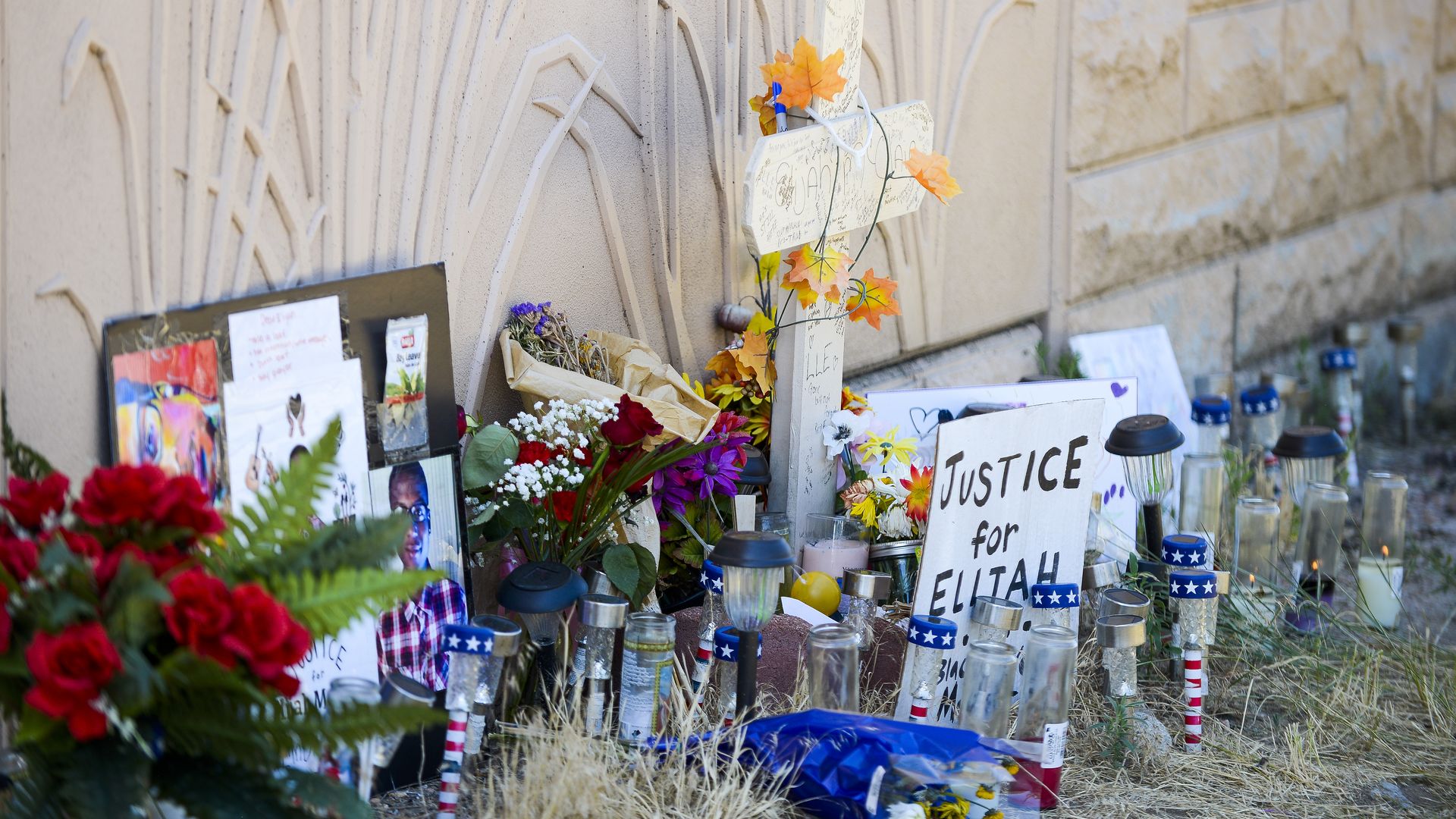
A memorial near where Elijah McClain was forcibly restrained by Aurora police officers is shown in 2020 in Aurora. Photo: Michael Ciaglo/Getty Images
A jury on Tuesday began deliberating the case against Aurora officer Randy Roedema and former officer Jason Rosenblatt, who face charges in the 2019 killing of Elijah McClain.
- McClain, a 23-year-old unarmed Black man, was put in a neck hold and restrained by police before paramedics injected him with ketamine.
Why it matters: Roedema and Rosenblatt are the first of five first responders to stand trial for McClain's death. The outcome of the case could shape the others to come.
Driving the news: Following nearly three weeks of testimony, 12 jurors are weighing whether the officers are guilty of second-degree assault, reckless manslaughter and criminally negligent homicide.
- The debate will center on whether the restraint they used sparked other health complications that made McClain more susceptible to a fatal overdose — like prosecutors argue — or if it was solely ketamine that killed him, as defense attorneys claim.
- An amended autopsy report in September 2022 determined McClain's cause of death was complications from administration of ketamine after forcible restraint.
Details: During closing arguments in front of a packed courtroom — with McClain's mother in the front row — state prosecutor Duane Lyons told jurors the evidence shows injuries inflicted by police contributed to his death and the officers are "guilty of crimes." They also failed to follow protocol and "encouraged" paramedics to use ketamine, he said.
- "The issue in this case is the amount of force that they used … and the choices they made to repeatedly choose force at every opportunity," Lyons said.
- He showed enhanced body worn camera footage of McClain gasping for air, choking on vomit and repeatedly telling officers he couldn't breathe.
The other side: Defense attorneys told jurors that McClain's only cause of death was the administration of ketamine, a decision they argue was made entirely by paramedics.
- They justified officers' use of force, saying they were operating in a "high-crime area" and "had no choice but to take action" after they thought McClain attempted to grab Rosenblatt's gun and he continued to actively resist them.
- They also attempted to poke holes in the state's case, telling jurors that prosecutors were simply trying to play to their emotions. "Just because there is a tragedy does not mean there is criminality," said Don Sission, Roedema's attorney.
The intrigue: Harvey Steinberg, Rosenblatt's lawyer, attempted to shift the blame to Roedema and reminded jurors that the officers can be convicted on separate charges.
- "Rosenblatt didn't jerk his arm. It was Roedema. Rosenblatt didn't have his knee in his back. It was Roedema," Steinberg said.
Of note: Neither Rosenblatt nor Roedema took the stand during the trial.
What's next: The jury's ruling is expected to come by the end of the week. If convicted of assault, the most serious penalty, they each face up to 16 years in prison, AP reports. Roedema is currently suspended without pay. Rosenblatt was fired in 2020.
- The manslaughter trial for a third officer involved, Nathan Woodyard, is slated to start Friday.
- Jeremy Cooper and Peter Cichuniec, the two paramedics involved in administering ketamine to McClain, will appear in court in November.