These Colorado breweries make grain-to-glass beer

Add Axios as your preferred source to
see more of our stories on Google.
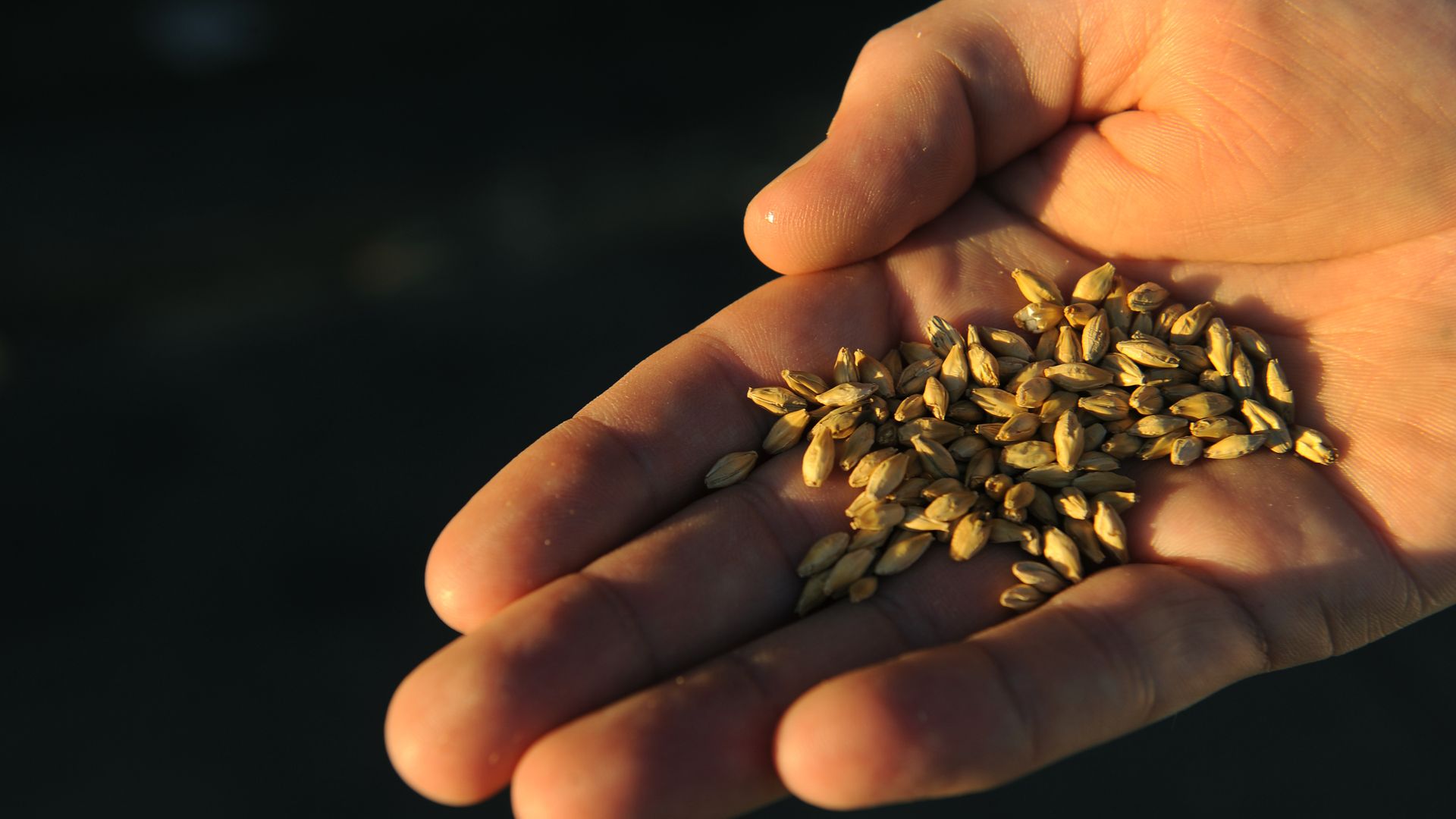
A handful of malted barley. Photo: Karl Gehring/The Denver Post via Getty Images
In Colorado, where locally made beer is ubiquitous, a handful of craft breweries are redefining what it means to be homegrown.
State of the pint: Building on the state's agricultural legacy, small Colorado brewers are operating farms to grow their own barley and produce truly unique beers.
- This grain-to-glass credibility makes them stand out in the crowded beer market and exemplifies the industry's focus on sustainable practices.
- At least three Colorado craft breweries are at the forefront of the trend: Square Peg Brewerks in Alamosa and Creede; Colorado Farm Brewery in Alamosa; and Chrysalis in Paonia.
What they're saying: "It's reassuring to [customers] that they know exactly where that malt came from. It makes it just a little bit more local," Derek Heersink, Square Peg's co-owner, said.
Why it matters: The growing interest in farm breweries is a potential antidote to the decline of the family farm and represents a tourism driver for rural areas.
- Tennessee created a farm-to-tap initiative to connect brewers to farmers and help build a more stable supply chain.
- A lobbying campaign in Maryland is working to change alcohol laws and regulations to make it easier to grow and brew.
Between the lines: The ability to grow your own grain may prove especially crucial this year after challenging growing conditions led to the lowest barley production in a century.
- Shawn Larson at Chrysalis said he's sitting on 12,000 pounds of malt from a prior harvest grown by partner Adam Hall.
- It gives him peace of mind. "There's going to be a pinch for a lot of small breweries seeing the ability to get grain," he said.
The backstory: Heersink's farm in the San Luis Valley, the state's breadbasket, once grew barley for Coors Brewing in Golden. But they severed ties when the large brewer reduced orders and added stringent growing specifications.
Zoom in: Now, his 500-acre farm grows barley and alfalfa, while the grain he doesn't use is sold to Proximity Malt House, one of a growing number of craft maltsters in Colorado that support small breweries.
- The brewer-farmers focus on low-impact agriculture practices when it comes to pesticides, water usage and tilling. Chrysalis even uses an antique seed sorter.
- "I think there was a level of sustainability, as well as … we really wanted to create something that is original," said Shawn Larson at Chrysalis, which specializes in sour beers.
The bottom line: The local grain gives the beer a touch of terroir, but you won't taste much difference. It's more about what it represents.
- "It's cool to see the final product, and people enjoying what you spent all summer growing," Heersink said.
This story first appeared in the Axios Denver newsletter, designed to help readers get smarter, faster on the most consequential news unfolding in their own backyard. Subscribe here.