Northeast Ohio Flock fight reaches Congress

Add Axios as your preferred source to
see more of our stories on Google.
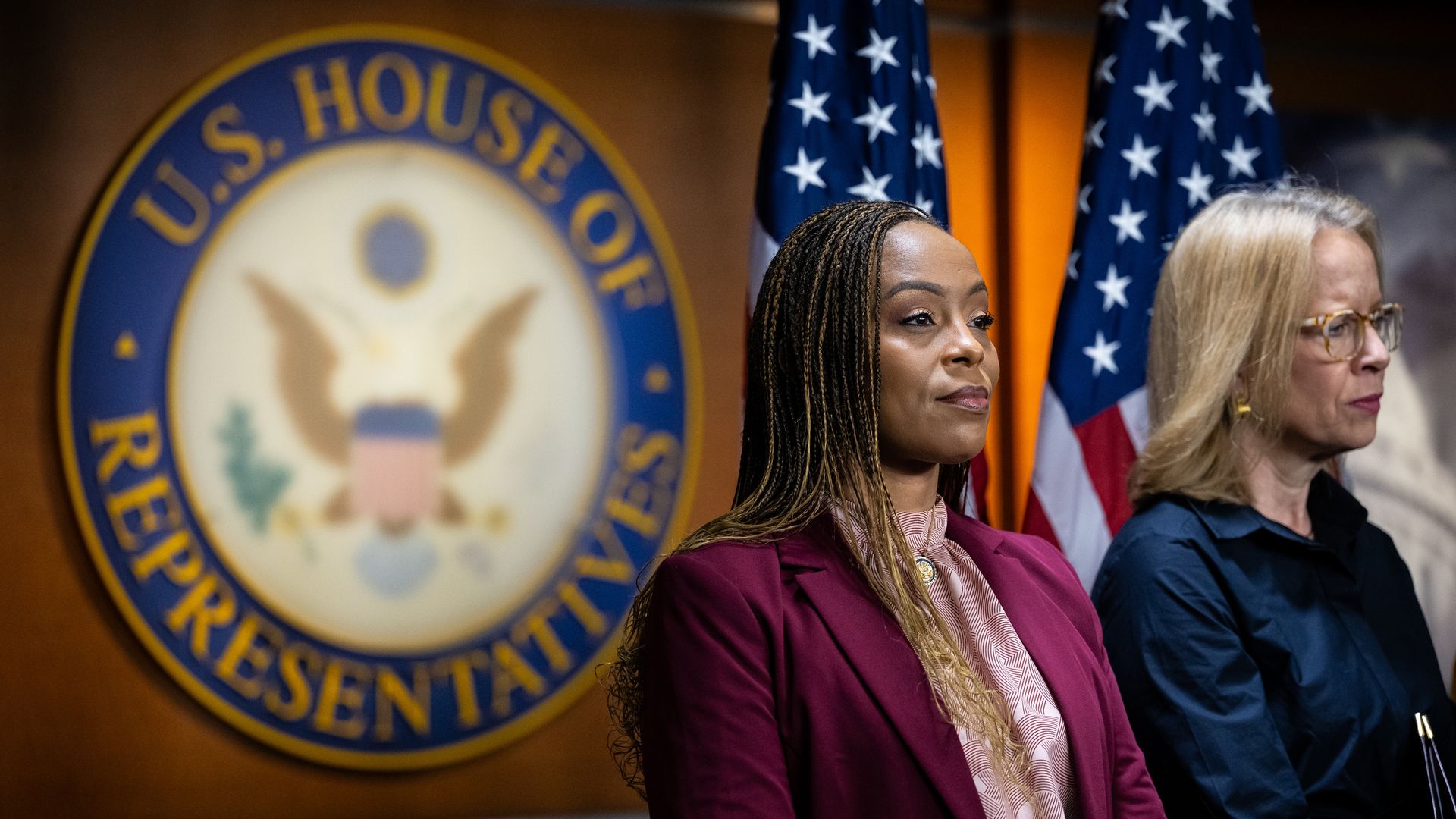
Photo: Graeme Sloan/Bloomberg via Getty Images
U.S. Reps. Shontel Brown (D-Warrensville Heights) and Greg Casar (D-Texas) are demanding answers about an FBI plan to obtain nationwide access to automatic license plate reader networks.
Why it matters: The lawmakers warned in a recent letter that "dramatically" expanding FBI access to networks operated by companies like Flock and Motorola would enable "near real time" surveillance of civilians.
State of play: Brown, the ranking Democrat on a House cybersecurity, IT and government innovation subcommittee, wants to know what safeguards will be put in place to prevent abuse.
- She also wants the FBI to explain how it would use, store and share the data, including with ICE and Customs and Border Protection.
The big picture: Brown's questions reflect increasing anxiety about automatic license plate readers (ALPRs) across Northeast Ohio, and whether safeguards in individual communities can prevent data from traveling elsewhere.
Zoom in: Cleveland Heights for Immigrant Rights, a grassroots opposition group, says city records show 134 law enforcement agencies conducted more than 132,000 searches of its local Flock network during May and June.
- This was after Cleveland Heights instituted guardrails designed to restrict access.
What they're saying: "There is no safe version of this contract, and the city should cancel it," Cleveland Heights resident Mike Corradini said in the group's statement.
The other side: Ohio Attorney General Andy Wilson has defended ALPRs as valuable law-enforcement tools and suggested that misuse is "rare."
- The "Ohio General Assembly should criminalize the misuse of Flock just as it currently criminalizes the misuse of other law enforcement technology," he wrote in a Sept. 16 statement.
Yes, but: Anti-Flock groups from Cleveland, Akron, Medina County and the Mahoning Valley aren't buying it. In a collective statement responding to Wilson, the groups contend ALPRs are "faulty, invasive, and ultimately incompatible with the principles of a free society."
- "The only way to solve the problem of ALPRs is to ban them altogether."
What's next: Brown and Casar are asking FBI director Kash Patel to respond with information by Oct. 16.
- In Cleveland, the Community Police Commission recently voted to pause the city's use of its nearly 100 ALPRs on Jan. 1.