CMSD is walking an AI tightrope

Add Axios as your preferred source to
see more of our stories on Google.
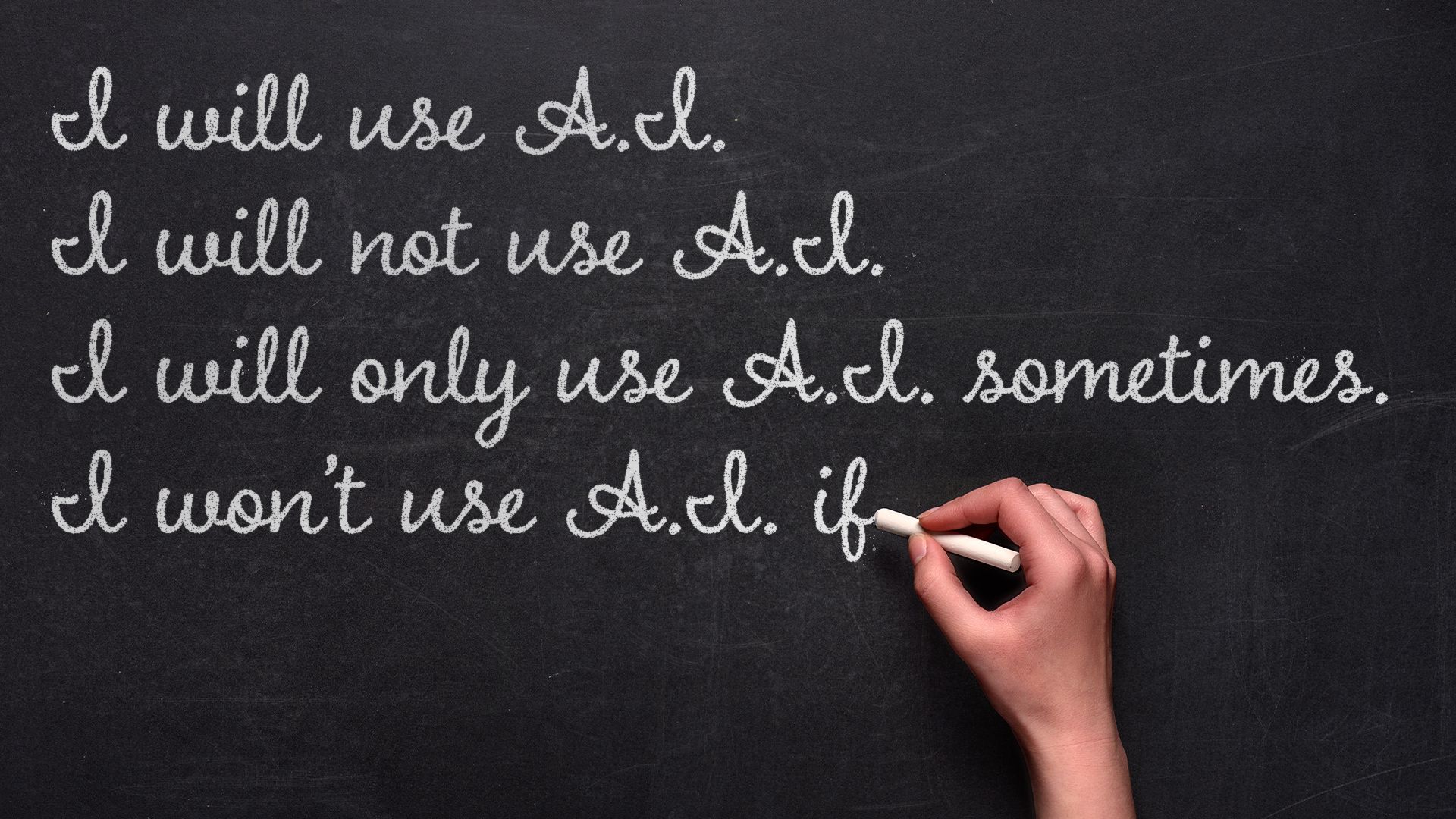
Illustration: Aïda Amer/Axios
The Cleveland Metropolitan School District is crossing its fingers that students and educators will adhere to its new AI policy safely and responsibly.
Why it matters: School officials and policymakers nationwide are grappling with AI's potential to simultaneously enhance and undermine learning.
- CMSD's new policy treads a fine line: embracing "AI literacy" while trying to prevent students from outsourcing learning itself.
- New York City, by contrast, last week imposed a one-year moratorium on generative AI through the eighth grade, arguing there isn't enough evidence yet that the technology benefits younger students.
Catch up quick: Ohio law required every public school district to adopt an AI policy by July 1.
- CMSD approved its version in June, closely following a state template designed to encourage AI integration while establishing safeguards around academic integrity, privacy and security.
Zoom in: "AI implementation shall be human-centered and shall empower students, educators, and communities," CMSD's policy reads.
- "It is a tool to support learning and teaching, not a substitute for student effort or the role of the educator."
Friction point: The policy prohibits students from submitting AI-generated work as their own, a rule that has becoming increasingly difficult to police in the age of sophisticated large language models.
Reality check: Students are already side-stepping the policy. One CMSD student described a popular use of AI to Signal Cleveland as a "study buddy, which can do your homework for you."
- Not help with your homework. Do it for you.
By the numbers: A recent study of nearly 27,000 middle and high school students in China found generative AI improved homework performance by 18% but reduced exam scores by 20%.
- "Our findings show that generative AI … has a substantial negative impact on student learning," researchers wrote.
Zoom out: That's precisely the concern driving New York's more restrictive experiment.
- Students "learn best when they are wrestling with hard problems, when they're getting it wrong, when they're trying again and finally getting it right," NYC schools chancellor Kamar Samuels recently said. "No app, chatbot, or algorithm can replicate that productive struggle for a child."
What's next: CMSD's policy calls for an ongoing AI workgroup to advise the district as the technology and research evolve.