Cleveland startup is fighting fire with sound

Add Axios as your preferred source to
see more of our stories on Google.
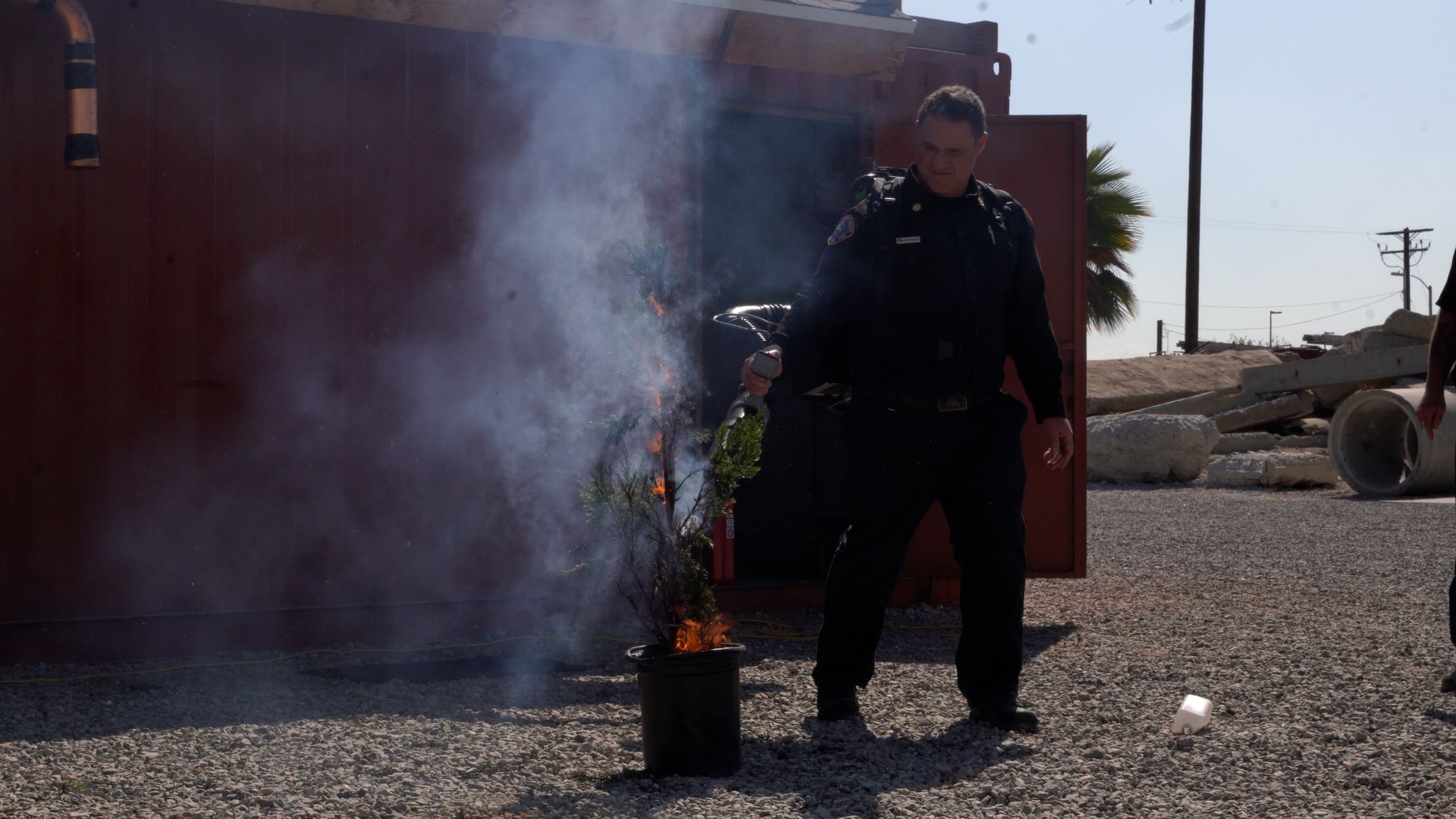
A fire suppression demo with Sonic's backpack fire extinguisher. Photo: Courtesy Sonic Fire Tech.
A Cleveland startup has raised $15 million to scale up a NASA-inspired technology that fights fire with inaudible sound.
Why it matters: Sonic Fire Tech is developing fire suppression systems that look almost like magic.
- They use no water or chemicals to extinguish flames, with potential applications in homes, industrial facilities and forests.
Driving the news: The O.H.I.O. Fund, a Cleveland-based investment firm devoted to Buckeye-state startups, led the latest round of investment, with early backers, including Khosla Ventures, doubling down as well.
- "The O.H.I.O. Fund and Khosla Ventures aren't just writing a check; they're betting on Ohio as the place to build the future of fire safety," said Sonic Fire Tech CEO and co-founder Geoff Bruder in a statement.
How it works: When sensors detect a flame — or conditions indicating that one is about to ignite — the Sonic system directs extremely low-frequency sound waves, called "infrasound," toward the source.
The big picture: Fire requires heat, fuel and oxygen to sustain its chemical reaction.
- Sonic says the sound waves rapidly vibrate surrounding oxygen, disrupting the flame's ability to consume it.
State of play: Sonic is developing automated home systems and a backpack-style extinguisher that firefighters can point at flames.
- Third-party engineers have found Sonic's performance in homes to be equivalent to that of residential sprinklers, according to the company.
The intrigue: Bruder is a former NASA Glenn aerospace engineer whose work included developing technology to convert heat into acoustic waves.
- He co-founded Sonic in 2019 and now employs nine people at an office off West 41st Street in Ohio City.
What's next: Bruder told Crain's the latest funding will help accelerate certification and manufacturing while roughly doubling the workforce over the next year.