Cuyahoga County Jail saga continues with vote to secure funding

Add Axios as your preferred source to
see more of our stories on Google.
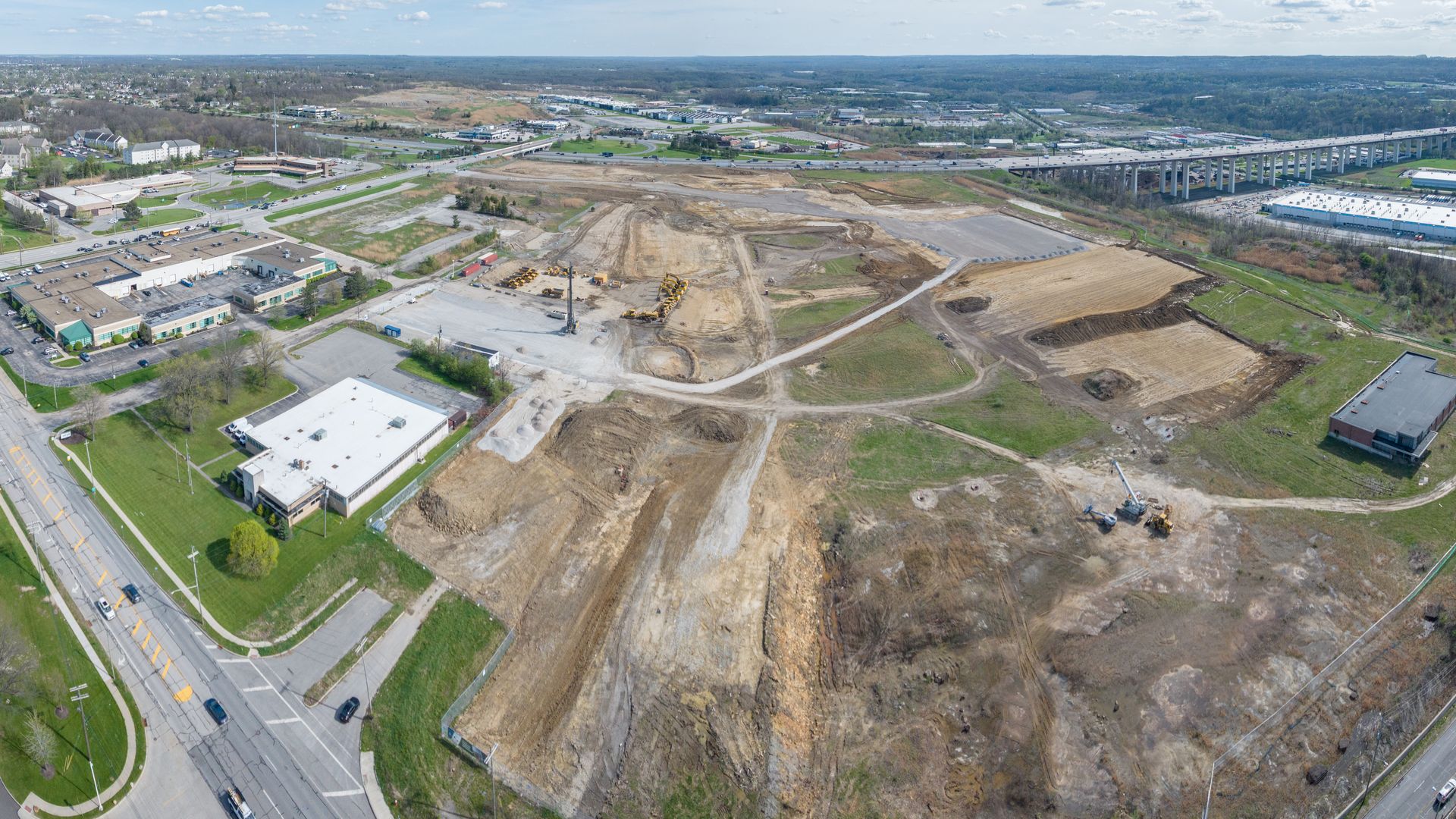
Panoramic view of the Cuyahoga County Jail site in Garfield Heights. Photo: Courtesy of Cuyahoga County
Cuyahoga County finally took action Tuesday to secure funding for the controversial new jail in Garfield Heights.
Why it matters: The nearly $1 billion public project is the most expensive in county history and has been a fiasco since its inception.
- Officials have scrambled to greenlight financing, lest the costs continue to rise, all while being warned they may have already broken the law.
🛑 Catch up quick: Last month, Prosecutor Michael O'Malley ordered the county to halt all work on the jail, saying required approvals were skipped.
- State Auditor Keith Faber launched an investigation last week, raising the possibility of personal liability for Cuyahoga County Executive Chris Ronayne and county council members.
The intrigue: O'Malley's cease-and-desist prompted a key oversight meeting to obtain a vote on the project. But the meeting was scheduled last week, canceled, then rescheduled for Monday.
- In the interim, judges backed out of a $150 million side deal to renovate the downtown justice center after concerns that it looked like a quid pro quo.
The latest: The four-member oversight panel voted 3-0 on Monday to keep the project alive, with Sheriff Harold Pretel abstaining.
- County Council then voted Tuesday to borrow nearly $1 billion, locking in the project despite the ongoing investigation.
Friction point: County officials have argued, and the oversight panel agreed, that additional delays could push project costs well past $1 billion.
What they're saying: "This is not McDonald's hamburgers we're talking about," former deputy court administrator Christopher Russ, one of the voting panelists, said Monday, per NEOtrans.
- "We're talking taxpayer dollars. It could be $1 billion. If we wait any longer, it could be $1.2 billion. It could be $1.5 billion. I mean, those are staggering numbers."
Yes, but: The vote doesn't resolve the issue Faber is reviewing: whether earlier spending was illegal.
- If Faber determines the panel's Monday vote cannot legally be applied retroactively, county officials could be forced to repay funds personally.
The other side: The county was given 45 days to provide Faber with its perspective on compliance. County spokeswoman Kelly Woodard tells Axios the county has not yet submitted its response.
What's next: If all goes according to plan, the 900,000 square foot, 1,886-bed campus in Garfield Heights would open in the fall of 2029.