Ohio lawmakers use AI, but are unsure how to regulate it

Add Axios as your preferred source to
see more of our stories on Google.

Illustration: Sarah Grillo/Axios
The majority of Ohio General Assembly members who responded to a recent poll on artificial intelligence report using AI in their work as legislators and believe the technology allows them to work more efficiently.
Why it matters: Confusion and indecision persist on how AI should be regulated, and who should do the regulating.
The big picture: The Gongwer-Werth Legislative Opinion Poll is a recurring anonymous survey of the Ohio General Assembly. It gathers pulse-check data about how members view major policy issues of the day.
The fine print: A March 2 survey asked six questions about AI usage and policy. Forty members responded.
What it found: Despite wide levels of personal adoption, uncertainty dominates.
- 38% of respondents are "undecided" about whether AI should be used more in government operations.
- 39% are undecided about whether students should be using AI to assist with schoolwork.
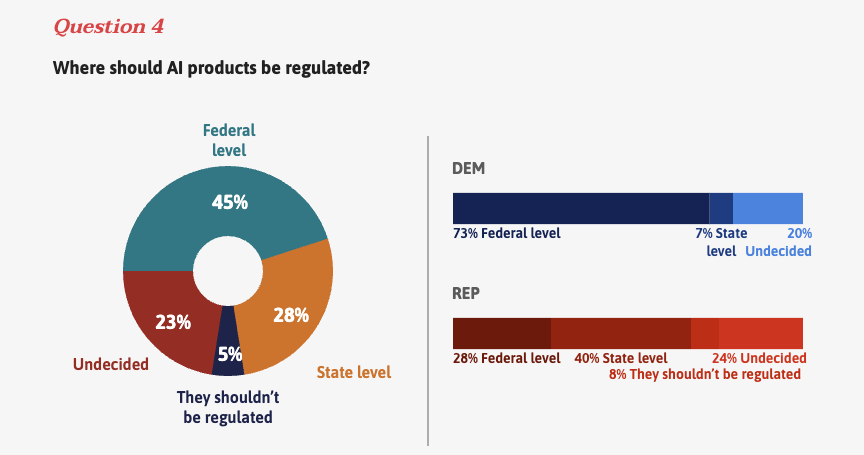
Between the lines: A partisan divide between Democratic and Republican respondents became pronounced in questions about regulation.
- Among Democrats, 73% believe AI should be regulated at the federal level and 7% at the state level, while 20% are undecided.
- Among Republicans, the figures are 28% for federal regulation, 40% for state and 24% undecided. Another 8% think AI shouldn't be regulated at all.
The bottom line: The overwhelming impression from the poll is that state lawmakers view AI as a positive technological advancement that will save time in work and life.
- Only 10% responded that their primary view of AI is one of job displacement. Only 3% said they believe AI should be avoided.