Ohio uses fluoride in its water but that could change


Add Axios as your preferred source to
see more of our stories on Google.
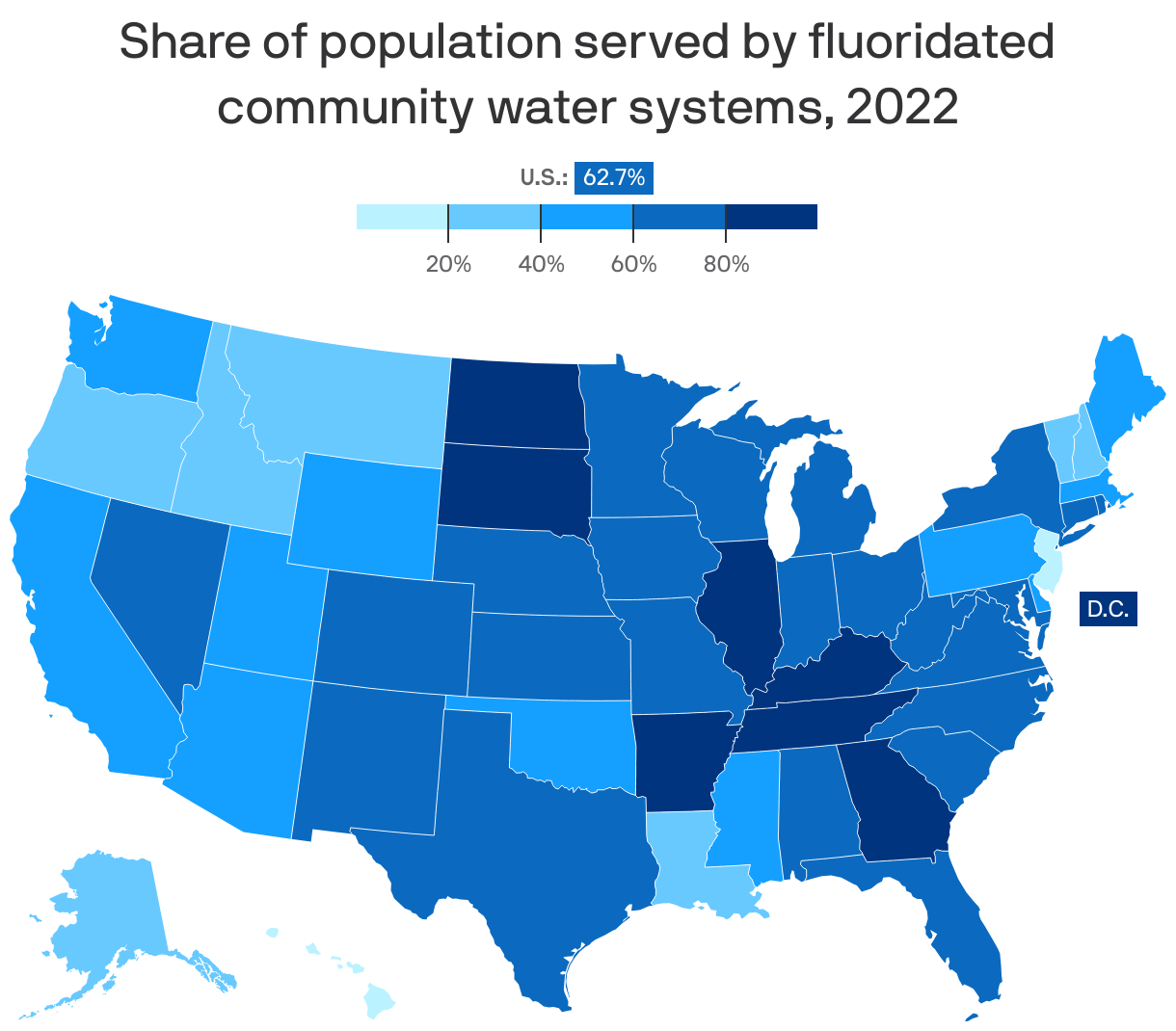
Roughly 80% of Ohio's population was served by fluoridated community water systems as of 2022, per CDC estimates.
Why it matters: Fluoridation is once again becoming a political flashpoint, with Utah and Florida recently moving to ban the practice — a step encouraged by Health and Human Services Secretary Robert F. Kennedy Jr.
The big picture: Dental and public health experts have long argued in favor of community fluoridation, wherein fluoride is added to public water supplies to help prevent tooth decay.
- Nearly 63% of the U.S. population was served by fluoridated water systems as of 2022.
- In March, a group of Ohio Republican lawmakers introduced House Bill 182, which would ban public water systems from adding fluoride.
How it works: Current Ohio law requires public water systems serving 5,000 or more people to fluoridate their water if the natural fluoride content is less than 0.8 milligrams per liter (mg/L).
- The target range for fluoride in Ohio public water systems is 0.8 to 1.3 mg/L.
Zoom in: Cleveland Water Department adds 0.7 to 0.9 mg/L of fluoride to its drinking water, which already has 0.1 to 0.3 mg/L of fluoride naturally found in Lake Erie.