Cleveland rainstorms are getting more intense amid climate change


Add Axios as your preferred source to
see more of our stories on Google.
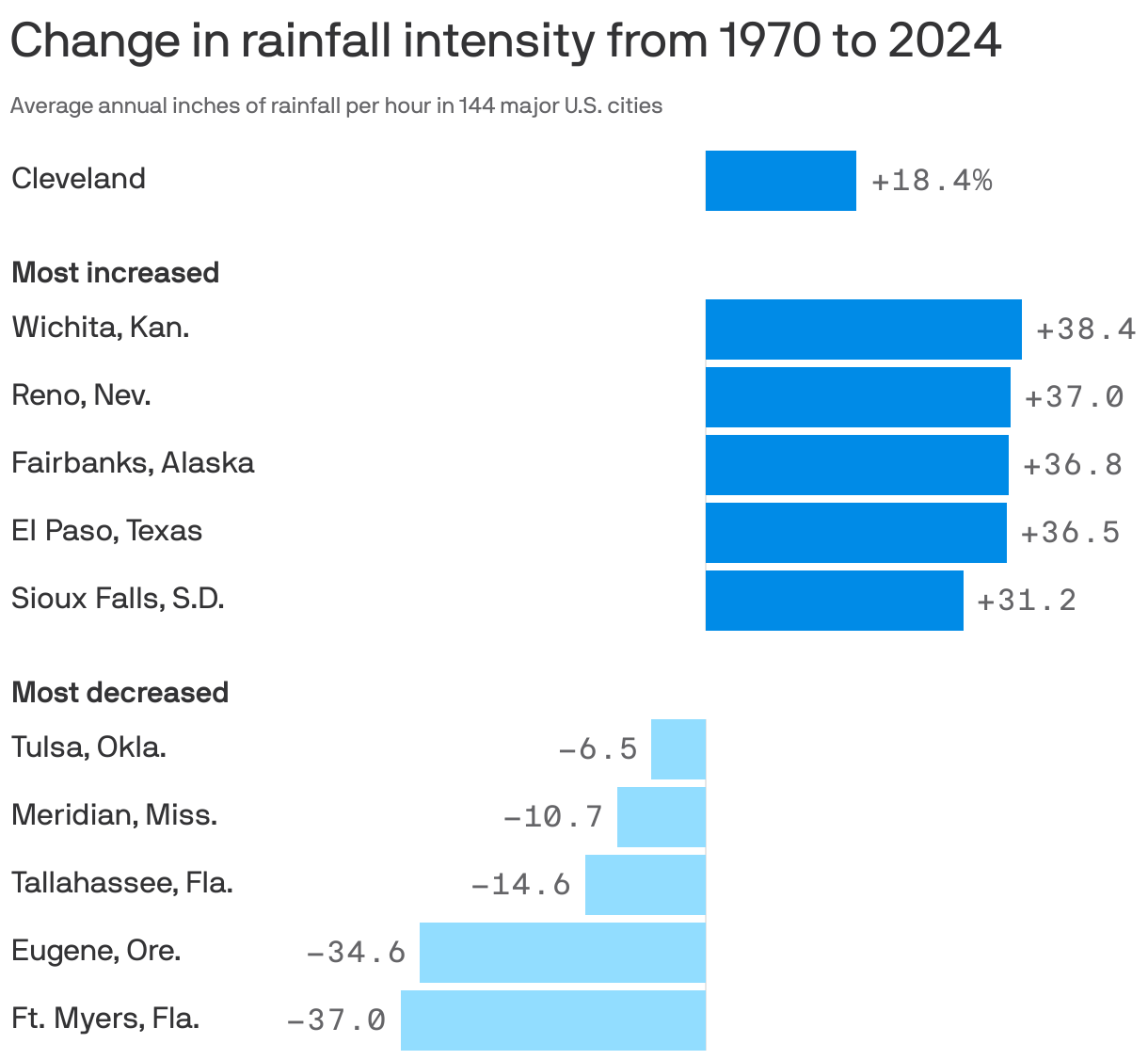
Rainstorms are getting more intense in Cleveland and across the U.S. amid human-driven climate change, a new analysis finds.
Why it matters: More intense precipitation events can cause flash-flooding, landslides, dangerous driving conditions and other potentially deadly hazards.
Driving the news: Rainfall in Northeast Ohio could exceed four inches this weekend, and the National Weather Service has issued a flood watch active until 8am Sunday.
By the numbers: Hourly rainfall intensity increased between by more than 18% in Cleveland from 1970 and 2024.
- We're not alone. Nearly 90% of the 144 locations analyzed in a new report saw increases, per Climate Central, a research and communications group.
How it works: The researchers divided each location's total annual rainfall by its total hours of annual rainfall, using NOAA weather station data.
- That approach quantifies how much rain fell for each hour it was raining in a given year — in other words, rainfall intensity.
Between the lines: Human-driven climate change is resulting in warmer air, which holds more moisture and thus can drive more intense precipitation.
- Hotter temperatures also evaporate more water vapor from lakes, oceans and vegetation.
Zoom in: Wichita, Kansas (+38%), Reno, Nevada (+37%) and Fairbanks, Alaska (+37%) had the biggest gains.
- That Reno is in the top three underscores Climate Central's point that rainfall intensity is rising in places that are generally dry, not just those that get at least a decent amount of annual rainfall.
Threat level: Flooding costs the U.S. economy up to nearly $500 billion annually, by one estimate, and is creating "climate abandonment" zones as people flee for safer areas, Axios' Andrew Freedman reports.
What's next: The group recommends that people stay aware of their area's flooding risks, and suggests homeowners carry flood insurance and improve their home's resiliency against flooding as able.