Why rents in Cleveland are so high


Add Axios as your preferred source to
see more of our stories on Google.
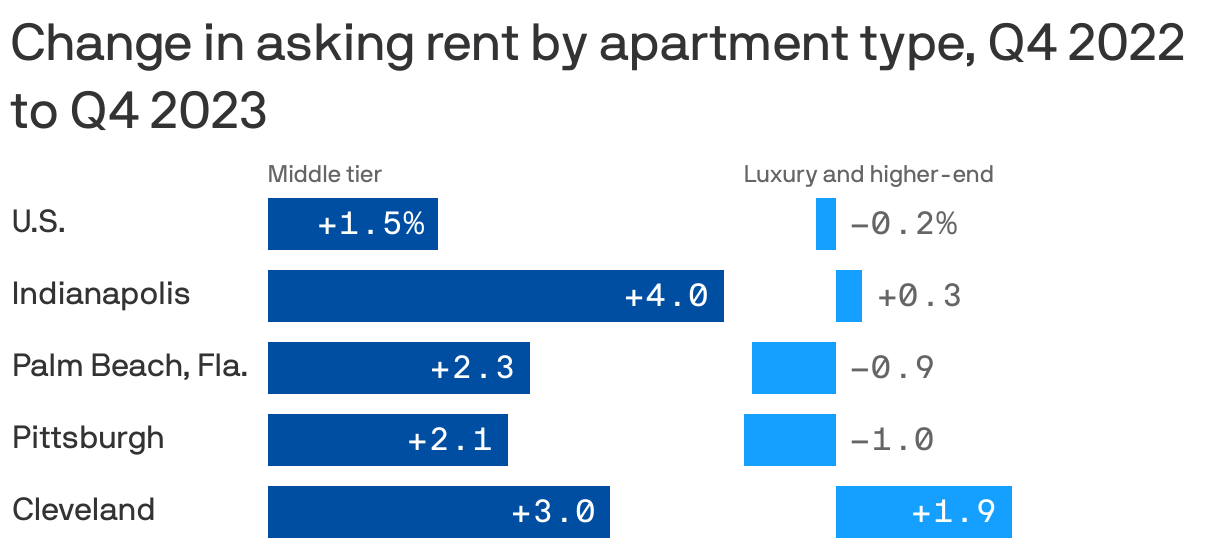
Rent prices are too damn high in Cleveland, with asking prices for both middle-tier and high-end units rising through 2023, according to real estate firm CoStar Group.
Why it matters: Until supply catches up with demand in Northeast Ohio, renters are unlikely to catch a break.
The big picture: Demand for more affordable apartments is helping to keep middle-of-the-road rent prices elevated, Jay Lybik, CoStar's national director of multifamily analytics, tells Axios.
- U.S. rents are generally still above pre-pandemic levels, analysts say.
Yes, but: A flood of new construction nationwide is pushing down rents at the high end, where there are often more apartments than renters who want them.
- That means the renters with the deepest pockets are more likely than others to score a deal.
What's next: It could be a few years before there's enough demand to soak up the excess supply overwhelming markets like Austin, Texas, and Phoenix, Lybik says.
Zoom out: CoStar's data is echoed by the latest Zumper National Rent Report, as reported by the New York Times.
- Cities with construction booms like Austin; Albuquerque, New Mexico; and Scottsdale, Arizona (a Phoenix suburb), were among the communities with the biggest rent decreases in 2023.
By the numbers: In Cleveland, where demand is still outpacing supply, the median one-bedroom asking rental price rose 16% last year, to $1,270.
- Columbus also saw asking rents rise by 17%, among the biggest increases in 2023.
The intrigue: Cleveland has historically incentivized development with a standard 15-year tax abatement for new construction.
- But the abatements have a cost — the Cleveland Metropolitan School District has lost out on more than $200 million in tax revenue from 2017-2023 due to them, Signal Cleveland reported yesterday.